P1810 Code: Vehicle-Specific Meaning, Symptoms and Diagnosis
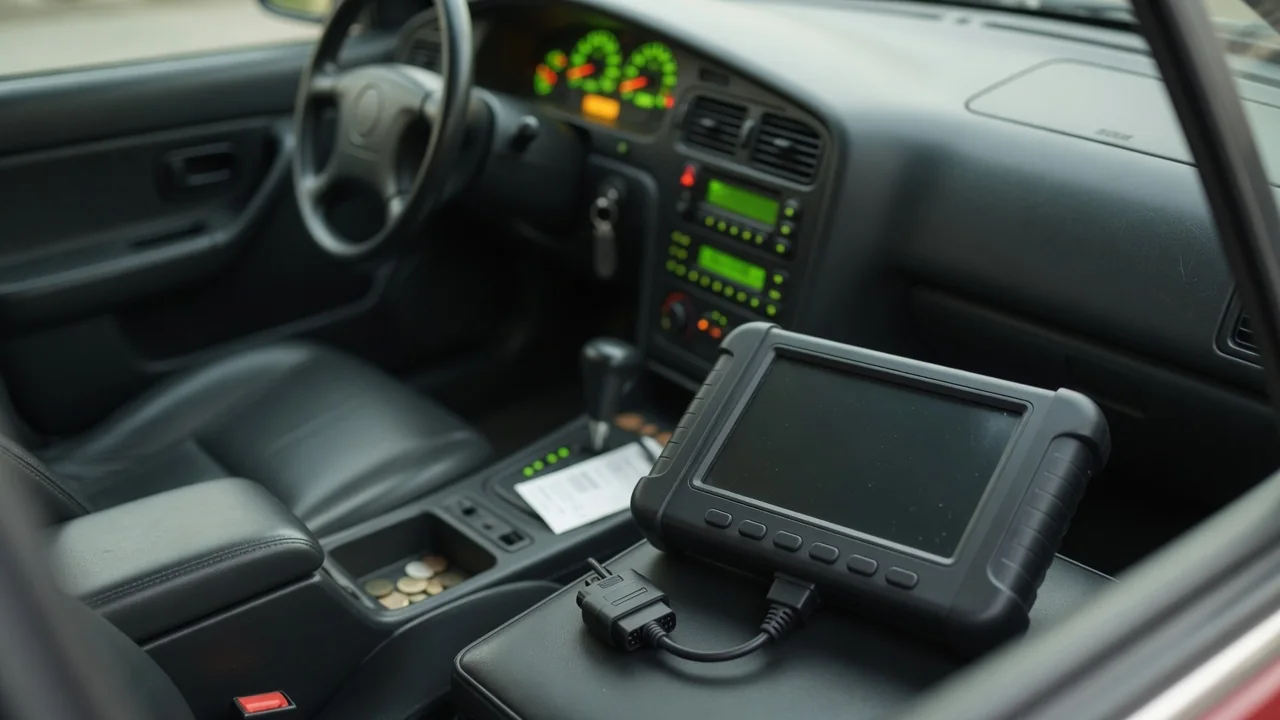
P1810 is a manufacturer-specific diagnostic trouble code, so its meaning depends on year, make, model, and transmission before any interpretation. On some applications it relates to a transmission fluid pressure switch or a manual valve position circuit, but that association is not universal. The stored code reports a detected condition. It does not, by itself, prove that a sensor, switch, valve, or transmission has failed, and P1810 symptoms vary with the confirmed definition.
Verify What P1810 Means for Your Vehicle
A P1810 label on a scan tool is not a universal definition. Service information for that vehicle's year, make, model, and transmission must confirm what the transmission control module actually monitored when it stored the code. Some families use P1810 for a transmission fluid pressure switch circuit, others for a manual valve position disagreement, and still others for a different internal strategy. Until that confirmation is in hand, treating the code as a known sensor or valve failure leads diagnosis in the wrong direction.
Even after the applicable definition is identified, P1810 still describes a detected condition rather than a failed part. A pressure switch, position circuit, or related hydraulic path may be out of expected range while remaining electrically intact, or the signal may be implausible because of wiring or module communication rather than the component itself. Distinguishing those possibilities belongs after the vehicle-specific meaning is confirmed. The code is evidence to interpret against setting conditions, not proof that a sensor, switch, valve, or transmission has already failed.
Possible Symptoms and When to Stop Driving
When P1810 symptoms appear, they often track the verified circuit: harsh or delayed shifts, delayed engagement from park or neutral, restricted gear selection, or a transmission or check-engine warning. Those driving complaints are consistent with some pressure-switch or manual-valve-position strategies, but they are not unique to this code and can overlap with unrelated hydraulic or control issues. A stored P1810 may also be present with no obvious change in how the vehicle drives. Symptoms alone cannot establish the fault, and a quiet driveline does not mean the detected condition is unimportant.
If the vehicle loses drive, engages unpredictably, slips severely, shows smoke, or displays an overheating warning, stop in a safe location and arrange professional assistance rather than continuing to a destination. Remaining motion is not a reason to assume the transmission is still operating within a safe envelope. Harsh or delayed engagement can worsen if the control strategy is compensating for an implausible pressure or valve-position signal. Do not try to force extra gears or reproduce the complaint on the road. Record what happened and have the vehicle evaluated before further driving is considered.
Potential Causes Within the Confirmed P1810 Circuit
Once the vehicle-specific definition is confirmed, damaged transmission wiring, corroded terminals, or a loose connector at a pressure switch or manual valve position sensor can produce the same stored code as a failed switch. Intermittent opens, high resistance, or a short to power or ground may appear only when the harness flexes with temperature or gear selection. Those electrical possibilities belong in the diagnostic path when the code definition points at a circuit, not as a default parts list. A switch or sensor should be considered only after the applicable circuit is identified.
Fluid condition, hydraulic response, or actual manual valve travel may also enter the investigation when the published procedure for that transmission calls for them. An electrical signal fault is not the same finding as a confirmed mechanical or hydraulic problem, and neither finding by itself authorizes replacing an internal clutch pack or the transmission control module. Internal transmission failure or a module fault should be attributed only after test evidence rules out wiring, connections, and the monitored switch or sensor. The code label does not specify which of those layers is at fault.
Safe Observations to Record Before a Service Visit
Before anything is cleared, record every available code and any freeze-frame data the scan tool can display. Freeze-frame captures operating conditions at the moment P1810 set and can show whether gear selection, temperature, or load was involved. A basic reader may not reach transmission-control data, so a blank transmission page is not proof that no related information exists. Note whether engagement issues appeared on the first start, after warm-up, or in a particular range, using what already happened rather than trying to recreate unsafe behavior on the road.
From a safe standing position, look for visible fluid spots under the vehicle without crawling beneath an unsupported chassis or touching hot components. If the owner's manual describes a user-accessible fluid check that can be followed without removing sealed hardware or relying on a specific operating temperature you cannot verify, that observation can be useful to a technician. Leave sealed, dipstick-less, or temperature-dependent fluid checks to the shop. Do not add fluid, open cooling lines, or disturb transmission wiring while gathering notes for the visit.
How Professional Testing Narrows the Fault
A technician starts with the verified P1810 definition, the conditions required to set it, and any companion codes rather than with a parts guess. Companion information can show whether the transmission control module also logged range, pressure, or communication faults that change the diagnostic path. Setting conditions matter because a code that requires a particular gear, temperature, or pressure-switch pattern is not diagnosed the same way as a continuous circuit fault. That context decides whether electrical checks, data comparison, or hydraulic evaluation comes first.
Live data is then compared with the expected states specified for that transmission: commanded gear selection versus reported range, and pressure switch or sensor status versus the hydraulic or valve position the strategy expects at that moment. Professional circuit testing can isolate opens, shorts, and poor connections, and hydraulic pressure measurement or internal inspection is used only when the procedure indicates it. Intermittent faults often need connector inspection and recorded data over several drive cycles before a repair is justified, because a single snapshot may miss the condition that actually set P1810.
Repair Decisions and Confirmation After Service
Repair choices should follow confirmed findings, such as a documented wiring defect or a component that failed its specified tests, rather than the P1810 label itself. Replacing a transmission fluid pressure switch, a valve-body related part, or the transmission control module because the code exists is not a diagnosis. Clearing P1810 or disconnecting the battery can erase the stored record and freeze-frame data without correcting the underlying condition. If the setting conditions return, the code typically comes back, which is why a silent scan after a reset is not confirmation of a successful repair.
After work is performed, verification should follow the applicable service procedure: a rescan for P1810 and related codes, and confirmation that the original symptoms and the original code-setting condition have resolved under comparable operation. Ask the shop for the vehicle-specific definition used, the test findings, and the evidence that supports the proposed or completed repair. That record helps distinguish a repaired circuit from a substituted part that was never shown to be at fault. Keep the original freeze-frame notes so any returning complaint can be compared with the first event.