P1776 Code: Vehicle-Specific Meaning, Symptoms and Repair Steps
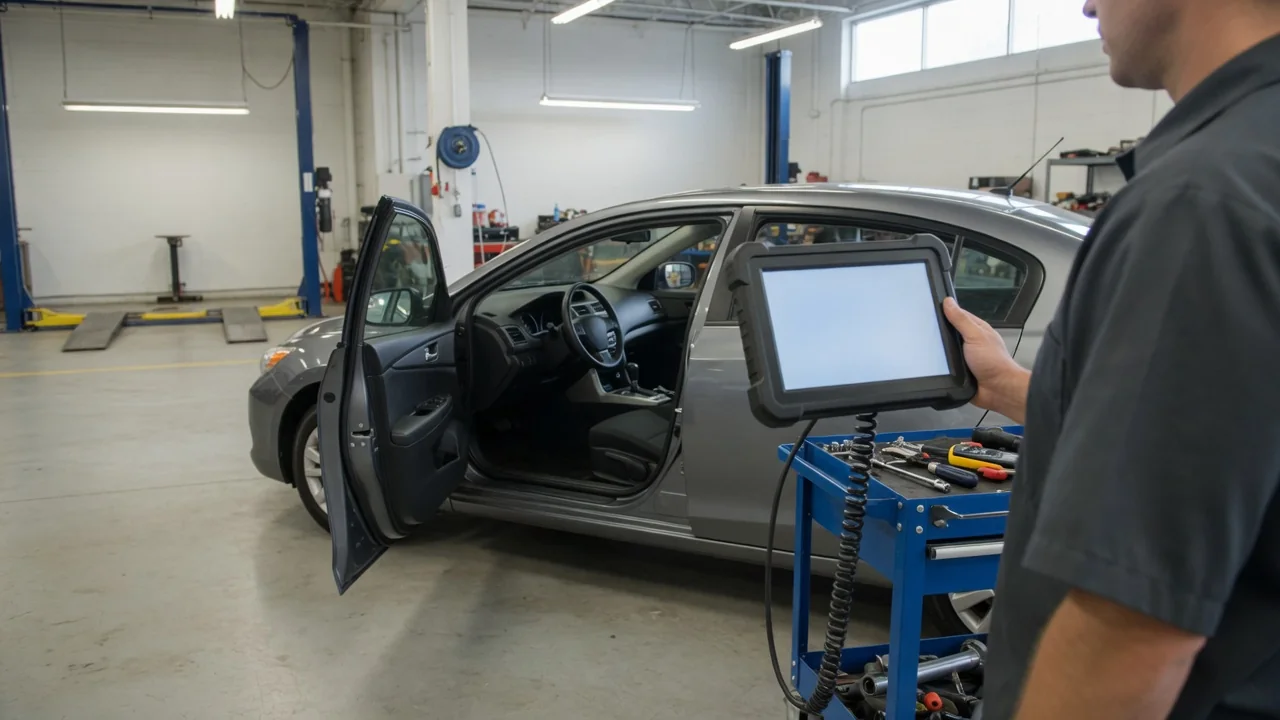
P1776 is a manufacturer-specific trouble code, so the same number can describe different monitored conditions depending on the vehicle. A scan tool label for P1776 or a p1776 code is not enough to name a failed part. Confirm the definition with service information for the make, model, year, engine, and transmission, using the vehicle identification number when available.
Verify What P1776 Means for Your Vehicle
Before treating a p1776 code as a diagnosis, verify what the number means on the vehicle in front of you. Many powertrain and transmission controllers assign P1776 as a manufacturer-specific trouble code rather than a universal SAE definition, so the monitored circuit, solenoid, range, or internal condition can differ by brand and even by model year. Record the make, model, year, engine family, and transmission identification first. When the vehicle identification number is available, use it to pull the matching service information instead of relying on a generic code list.
A handheld scanner often prints a short label next to P1776, but that phrase is only a starting clue. Compare the exact code description and enable criteria with the factory or equivalent service information written for that vehicle. The stored result tells you that a control module observed a condition outside its programmed limits; it does not, by itself, prove that a solenoid, sensor, clutch pack, or wiring harness has failed. Interpreting the fault without that vehicle-specific confirmation can send diagnostic testing toward the wrong system.
Record the Code and the Conditions Around It
Save a complete scan snapshot before any reset. Note which module reported P1776, typically the transmission control module or another powertrain controller, along with the full code text, pending or stored status, and every companion code present at the same time. Capture freeze-frame data if the tool provides it, including vehicle speed, throttle or load, transmission range, fluid or coolant temperature, and engine speed at the moment the fault set. Those values show the operating window in which the monitor failed and keep later diagnostic testing aligned with the original event.
Also write down which warning lamps or messages were on and the circumstances when the fault appeared, such as a cold start, a hot highway pull, a shift into reverse, or a stop-and-go commute. That context can separate an intermittent wiring and connector fault from a condition that only appears under load or after heat soak. Do not clear the p1776 code until this record is saved. Erasing memory removes freeze-frame data and companion codes and does not establish that the underlying condition is repaired; it only hides evidence the next technician will need.
Recognize Symptoms and Decide Whether to Stop Driving
Driving symptoms tied to P1776 depend on the verified definition for that vehicle, not on the number itself. Some applications store the code with little more than a lamp or a message, while others change shift strategy. Where the confirmed description concerns transmission operation, you may notice delayed engagement, harsh or missing shifts, or a restricted limp mode that limits available ranges. Those behaviors are observations, not proof of a failed clutch, solenoid, or control module. A stored p1776 code can also exist without any obvious change in how the vehicle drives.
Do not treat the presence of P1776 as a green light to keep driving, and do not stage a road test to reproduce dangerous behavior. If the vehicle loses propulsion, moves unpredictably, leaks fluid in a substantial amount, or shows an overheating warning, stop in a safe location, shut the engine down if the owner's manual allows, and arrange professional assistance. Limited or delayed movement can become a traffic hazard even when the code looks like a minor monitor. Safety comes from what the vehicle is doing now, not from a generic interpretation of the number.
Identify Plausible Causes Without Assuming a Failed Part
Plausible causes for a p1776 code follow the verified manufacturer definition and the diagnostic procedure written for that vehicle, not a universal parts list. If the description points to a circuit, solenoid command, or sensor correlation, diagnostic testing should include wiring and connector faults, power and ground integrity, and the ability of the transmission control module to command and observe the circuit. Corrosion, a stretched terminal, a chafed harness, or an intermittent supply can set the same monitor as a failed component. Until those paths are checked against the published tests, replacement is only a guess.
Hydraulic, fluid-related, or internal mechanical possibilities belong in the discussion only when the vehicle-specific fault description actually supports them. A code that monitors solenoid performance, line pressure control, or clutch engagement may later involve fluid condition, a restricted passage, or an internal leak, but those findings come from the procedure, not from the number P1776. Do not assume a most common failed part across all brands, and do not authorize a solenoid pack, valve body, or transmission replacement solely because the code is stored. Confirmed test results decide whether the problem is electrical, hydraulic, or mechanical.
Separate Safe Observations From Professional Testing
From a safely parked vehicle, note what you can see without going underneath or handling hot fluid. Record warning messages, any fluid visible on the pavement, recent service, and whether symptoms appear at start-up, after a long drive, or only in a particular range. If the owner's manual describes a permitted fluid check, follow that method and no other. Do not crawl under the vehicle, open hot lines, or add fluid by an improvised procedure, which can burn, contaminate the system, or hide a leak.
A qualified technician then uses the applicable service information, the saved companion codes, and freeze-frame data to choose the next tests rather than swapping parts. Electrical work may include connector inspection, circuit continuity, and commanded output checks at the transmission control module. Hydraulic or mechanical paths, when the definition supports them, may require pressure testing, component activation, or internal inspection. Circuit probing, pressure gauges, bidirectional controls, and transmission disassembly all need the correct equipment and expertise. Those procedures are not driveway experiments; incorrect probing can damage a control module or create a new wiring and connector fault.
Choose a Confirmed Repair and Verify the Result
Repair recommendations should follow confirmed test results, not the mere presence of P1776. On one vehicle the published procedure may isolate a connector pin, a harness short, or a power supply problem; on another it may confirm a solenoid, sensor, or control-module fault that actually failed the monitor. When the vehicle-specific tests demonstrate an internal hydraulic or mechanical problem, the repair scope can grow to a valve body or a unit repair. The correct path is the one the diagnostic testing proved. Replacing a part because a p1776 code is stored still leaves the original condition unproven.
After the confirmed repair, complete the verification steps in the applicable service information. That usually includes a follow-up scan of the transmission control module, confirmation that P1776 and related companion codes do not return, and a check that the original warning lamps and driving symptoms are gone under the freeze-frame conditions. Ask the shop what the code means on this vehicle, which tests confirmed the cause, and how the repair will be verified before the vehicle is returned. Those answers keep the work tied to evidence rather than to the number alone.