P1757 Code: Vehicle-Specific Meaning, Symptoms and Diagnosis
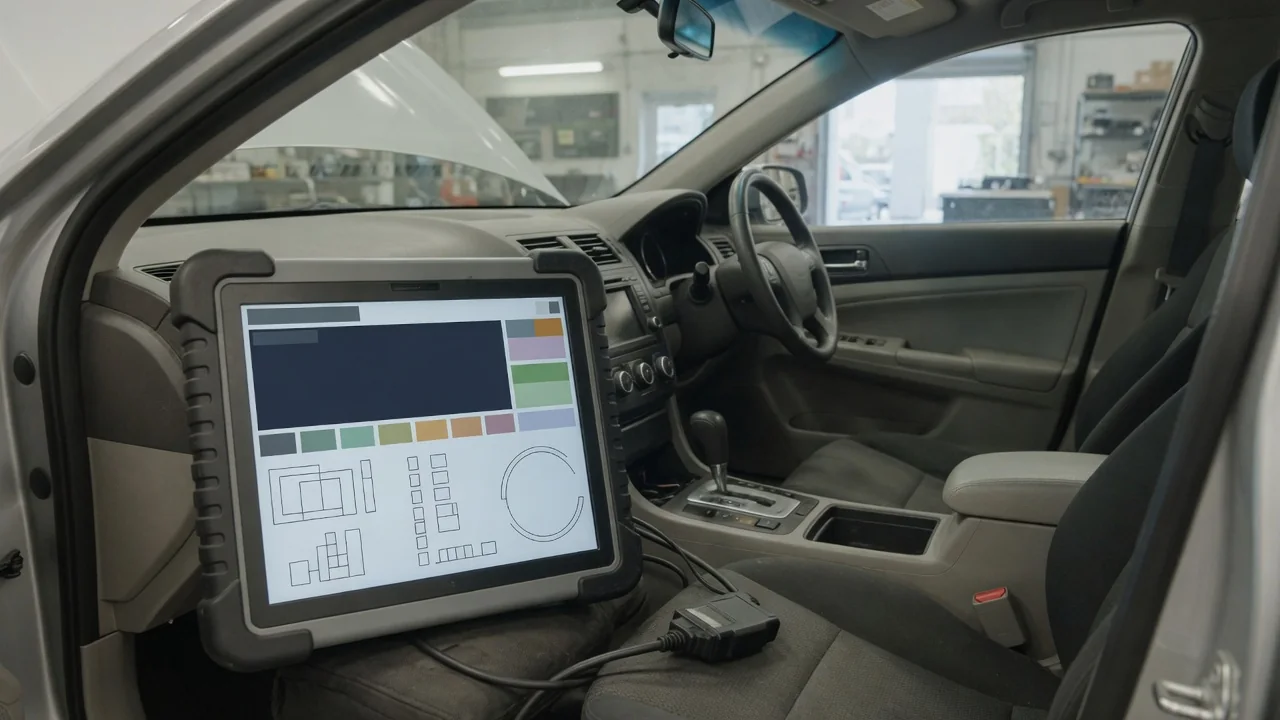
P1757 is a manufacturer-specific trouble code, so the same alphanumeric label can describe different monitored conditions depending on the vehicle that stored it. A diagnostic scan that reports a P1757 code is a starting point, not a parts list. Before linking the result to a failed component, confirm the definition for that make, model, year, and powertrain, then record P1757 symptoms, companion codes, and freeze-frame data so later testing stays aligned with what the module actually reported.
Verify What P1757 Means for Your Vehicle
Unlike many generic powertrain codes, P1757 is manufacturer-dependent and cannot be given a universal component or failure definition. One brand may use that identifier for a transmission-related circuit, while another may assign it to a different monitored condition entirely. Interpreting the result therefore starts with vehicle-specific service information for the exact make, model, year, and powertrain, plus the reporting module that stored the code. Until that definition is confirmed, treating P1757 as a named part failure is guesswork rather than diagnosis.
An incomplete or generic scanner description can misdirect diagnosis by substituting a catch-all phrase for the manufacturer's wording. Some tools display a shortened label that sounds like a solenoid, sensor, or shift function even when the factory description is narrower, or when that description does not apply to the vehicle being scanned. Make-specific meanings belong in the interpretation only when they are supported by verified information for that application. If the scanner cannot identify the module, the powertrain, or a matching factory definition, that unresolved limit should be recorded before any circuit or component is treated as the fault.
Symptoms to Record When P1757 Appears
When a P1757 code appears, note any warning lights, messages, and changes in how the vehicle starts, moves, or shifts, but do not treat those observations as a fixed symptom pattern attached to the number itself. The same identifier can be stored with a dashboard lamp and little else, or with a drivability complaint that still needs confirmation. When the verified definition concerns transmission operation, record any delayed engagement, abnormal shifts, or restricted operation. Those behaviors are possible associations for that confirmed meaning, not universal P1757 symptoms for every make.
A stored P1757 result may also be present without noticeable driving symptoms, especially if the condition was intermittent, occurred under a specific load or temperature, or was captured during a single monitor run. P1757 symptoms still cannot identify a failed part; they only describe what the driver experienced while a module set a code. If the vehicle loses propulsion, moves unpredictably, or cannot maintain safe operation, stop in a safe location and arrange assistance rather than continuing to drive. Do not try to recreate a dangerous condition just to confirm that the warning returns.
Potential Causes Depend on the Confirmed Definition
Once the factory definition is confirmed, potential causes should be organized around the circuit, component, or monitored condition that definition actually names. Wiring and connectors, a related control component, supply-voltage problems, or control-module issues belong on the candidate list only when the applicable diagnostic procedure includes them for that vehicle. A transmission-related definition, for example, may point the technician toward a hydraulic or electrical path described in the service information, while a different definition would send testing elsewhere. Skipping that confirmation and substituting a generic cause list is how unrelated parts get replaced.
A detected circuit or performance problem is evidence that a monitor ran outside its expected range, not proof that the named component needs replacement. Open circuits, high resistance, poor grounds, connector corrosion, and control-strategy responses can all produce the same stored identifier as a failed part. Because P1757 is manufacturer-dependent, there is no justified most-common cause that applies across brands, and no basis for recommending a solenoid, sensor, or module without vehicle-specific diagnostic evidence. The useful next step is the factory test path for that confirmed definition, not a parts order based on the code number alone.
Safe Observations and Professional Diagnostic Checks
Before clearing anything, save the full scan report, including the reporting module, companion codes, code status, and any freeze-frame data the tool captured. Freeze-frame snapshots can show speed, load, temperature, and gear or throttle context at the moment the monitor failed, which helps a technician decide whether the event matches the driver's complaint. Also record when the warning appeared, the operating conditions at that time, any recent battery disconnects or charging problems, and recent service that involved the transmission, engine, or related wiring. That history is diagnostic evidence; erasing it first can make an intermittent P1757 much harder to interpret.
Owner observations should stay limited to dashboard messages and visible signs from a safe position, such as fluid spots on the ground after parking or a warning that remains after a restart. Under-vehicle access, electrical probing, and component disassembly are not owner tasks for this code, because safe test points come from vehicle-specific service information. A technician may need electrical checks, live scan-data comparison, or mechanical testing depending on the verified definition. Those steps confirm whether the stored condition is still present and which part of the monitored path is actually out of range.
Choose a Repair Based on Test Results
Any repair discussion should be tied to a demonstrated fault, such as a confirmed connection problem, a wiring defect located by the prescribed test, or a component that fails the checks in the applicable procedure. Replacing a named part because P1757 appeared is not a diagnosis. Clearing the code also does not establish that its cause has been corrected; many monitors need a complete drive cycle, and an intermittent circuit can look healthy immediately after a reset. If the original condition remains, the identifier can return even though the scan tool briefly showed no stored result.
Repair verification should follow the applicable service procedure, then a follow-up diagnostic scan and a check that the original operating complaint is resolved. Confirm the verified definition of P1757, review the supporting test results, agree on the proposed repair scope, and ask how successful repair will be confirmed, including whether companion codes and freeze-frame data were considered. Ask the shop what failed the prescribed test, what will be repaired or replaced, and what road test or monitor completion will show the condition is no longer present. Those questions keep the work aligned with evidence rather than the code number alone.