P1745 Code: Vehicle-Specific Meaning, Diagnosis and Repairs
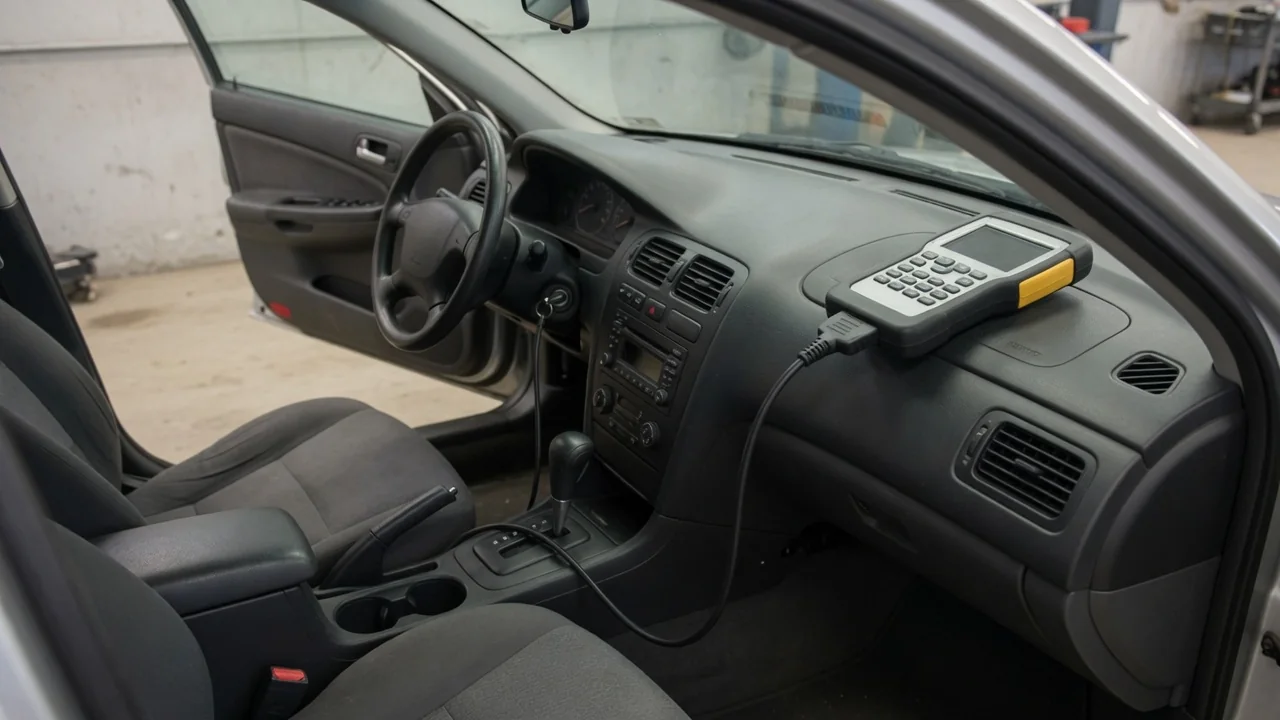
P1745 is a manufacturer-specific trouble code, so its meaning changes with the vehicle that stored it. A generic scanner may show a short label, but that text can be incomplete or mismatched. Confirm year, make, model, powertrain, transmission, and the reporting module against service information before you interpret a P1745 code. The code flags a detected condition; it does not, by itself, prove a part has failed.
Verify What P1745 Means for Your Vehicle
Unlike many generic powertrain codes, P1745 is manufacturer-specific and cannot be assigned one universal definition. Two vehicles can store the same five-character identifier for entirely different monitored conditions, and the reporting module may be a transmission control module or another controller, depending on the design. Before you treat the P1745 code as a diagnosis, match the exact year, make, model, powertrain, and transmission to vehicle-specific service information. That lookup establishes the detection criteria the manufacturer actually used.
A generic scanner's text description is a convenience, not a substitute for that confirmation. The displayed phrase may be incomplete, borrowed from another application, or simply mismatched to the vehicle in front of you. Even after the wording is verified, remember what the code is: evidence of a condition the control system detected, not proof that a solenoid, sensor, harness, or clutch pack has failed. Manufacturer-dependent codes require vehicle-specific confirmation before any part is condemned or replaced.
Symptoms to Record and Signs to Stop Driving
Once the verified meaning is known, symptoms can range from a transmission warning light or check-engine lamp to altered shifting, delayed engagement, or a reduced-power mode that limits gear range. Some vehicles store P1745 with little or no driver-noticeable change. Record when anything unusual happens during startup, acceleration, warm operation, and gear selection, without deliberately recreating a fault. Note whether the lamp stays on, flashes, or appears only after a particular shift. That timeline later helps a technician compare freeze-frame data with real-world behavior.
Do not assume driving is safe based only on the P1745 code. Loss of propulsion, severe slipping, unexpected vehicle movement, smoke, or a burning smell means stop in a safe location and arrange professional assistance. Milder drivability changes still deserve caution because the next step depends on symptoms plus vehicle-specific guidance, not on the five-character identifier alone. If the vehicle enters a protective strategy, treat that as a warning that the control system has limited operation, not as permission to continue a long trip.
Potential Causes Depend on the Confirmed Definition
Possible causes must follow the verified detection criteria rather than a universal P1745 parts list. If the applicable diagnostic procedure points to power supply, wiring, connectors, or control inputs, electrical circuit testing comes first because an open, short, high resistance, or poor ground can set the same identifier as a failed component. Companion fault codes stored in the same or related modules often show whether the condition is isolated or part of a broader communication, voltage, or sensor-range problem. Recent battery, charging-system, or harness work belongs in that same review.
Fluid condition, pressure control, or internal transmission concerns are relevant only where the vehicle-specific definition and test results support them. A hydraulic or mechanical path should not be assumed simply because the identifier looks transmission-related. Repair history can reveal an incomplete prior repair, a skipped connector reseat, or a fluid service that did not address the monitored condition. Clearing the code does not fix the cause; if the detection criteria are still met, the P1745 code can return as soon as the control module completes its next valid test.
Information Owners Can Gather Safely
Before any codes are erased, save the complete scan report, including code status for current, pending, or stored entries, and any freeze-frame data the scan tool captured. Freeze-frame snapshots show operating conditions at the moment the fault was recorded and later help a technician judge whether the event matches your notes. Also record mileage, warning messages, symptom timing, and recent battery, electrical, or transmission work. That package is more useful than a lone P1745 identifier because it preserves context that disappears when memory is cleared.
Limit owner observations to accessible warning displays and, while the vehicle is parked on level ground, any visible fluid spots under the car. Do not crawl beneath an unsupported vehicle or touch hot exhaust, converter, or transmission components. A fluid-level check is appropriate only when the owner's manual gives an explicit, owner-safe procedure for that powertrain; many transmissions require a specific temperature and a qualified technician's method. Inaccessible, hot, or temperature-dependent checks should wait for professional inspection rather than improvised under-car work.
How a Technician Diagnoses a P1745 Code
A technician starts with the confirmed vehicle-specific definition, detection criteria, and published diagnostic procedure rather than a generic flowchart. Scanning relevant modules for current, pending, and stored codes, then reviewing those results together, shows whether P1745 stands alone or rides with companion fault codes that change the path. Power-supply integrity, circuit continuity, and live data from the transmission control module or related controllers are compared against the conditions the manufacturer uses to set the code. That context prevents replacing a part that merely reacted to an upstream electrical or communication fault.
Pressure testing, specialized transmission checks, or internal inspection are used only with appropriate equipment and supporting evidence from the procedure. Ask for a clear statement of the confirmed fault, the tests that isolated it, and why the proposed repair addresses the detected condition rather than a convenient part. Repair verification planning should be part of that discussion so later road testing matches the conditions that originally set P1745. Without that evidence trail, a parts swap remains a guess even if the warning lamp later goes out.
Repair Options and Confirmation That the Fault Is Resolved
Repair options should follow demonstrated findings. Electrical repair, a control-system correction, or transmission work may all be appropriate, but only when tests support that path. Fluid service, software updates, and component replacement belong on the estimate only when specified for the vehicle and justified by diagnosis. After the underlying problem is corrected, code clearing, adaptations, or relearn procedures must follow applicable service information; skipping those steps can leave shift quality or monitor readiness incomplete even when hardware is sound.
Post-repair scanning and technician-led operational verification under suitable conditions are required to confirm the P1745 code does not return. A transmission warning light going out is not, by itself, proof the repair succeeded; monitors may need a complete drive cycle, and intermittent circuit faults can hide until similar loads reappear. Diagnostic labor, part accessibility, and the confirmed repair scope all affect the estimate, so quotes should describe the work that diagnosis actually supports rather than a one-size parts package. Keep the original scan record for comparison if the condition recurs.