P1734 Code: Verify the Meaning, Diagnose the Cause, and Plan Repairs
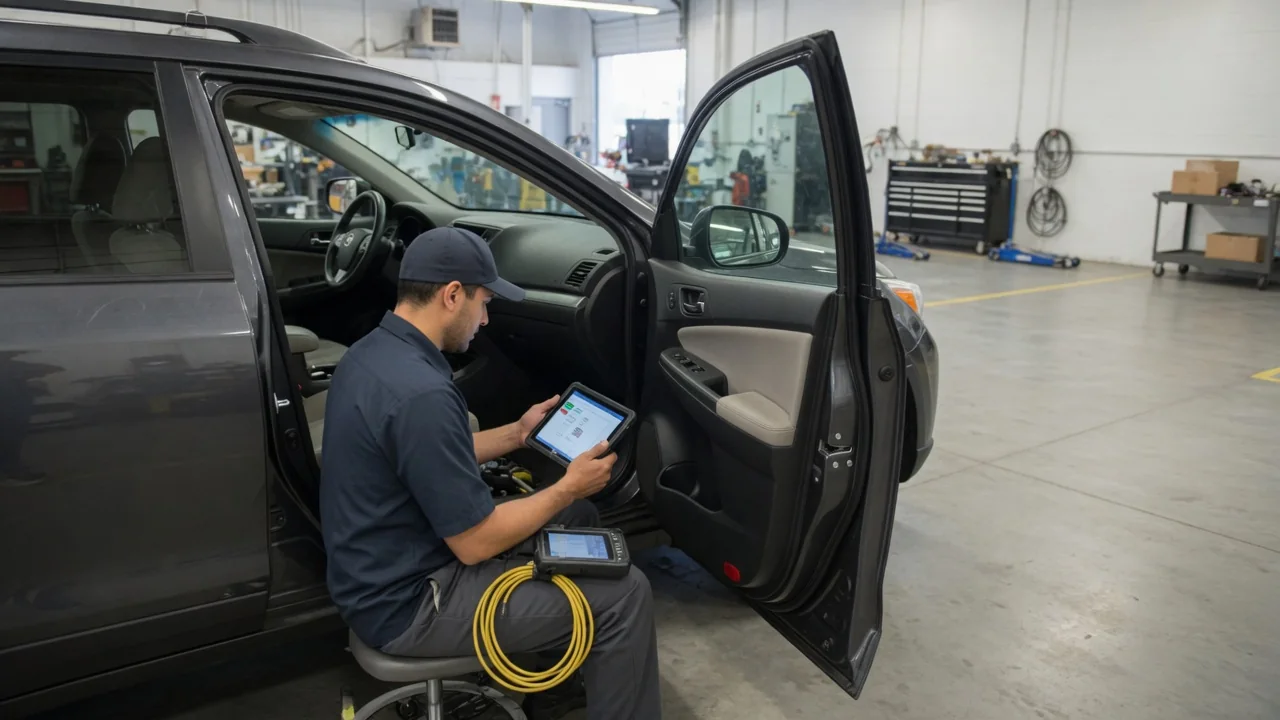
A P1734 code can appear in different vehicles, but its meaning changes by manufacturer, model, and year. Treat it as a starting point, not a verdict. The code reports that a control module detected an unexpected condition in a monitored system. Before guessing at parts, confirm the exact definition for your vehicle. Symptoms may be obvious or subtle, and the right repair path depends on that verified meaning.
Verify What P1734 Means for Your Vehicle
P1734 is manufacturer-specific, so one number can point to different systems in different vehicles. On one model it may relate to transmission control; on another, a clutch or shift circuit. Always check the vehicle identification and applicable service information. The reporting control module and exact scanner description matter because a generic label may hide a more precise internal definition used by the manufacturer.
The code is evidence of a detected condition, not proof that a particular component has failed. A sensor reading out of an expected range can trigger P1734 even when the sensor is fine but wiring, supply voltage, or a mechanical state is the true cause. Write down the full code text and module before clearing anything, since that detail guides the next diagnostic step.
Record Symptoms and Recognize When to Stop Driving
Note what the driver experiences: warning lights, messages, rough shifting, hesitation, or no noticeable change at all. Record when symptoms occur—during startup, after warm-up, under acceleration, or when selecting a gear. These observations are clues, not causes, but they help a technician reproduce and prioritize the concern. A vehicle that seems normal may still have an intermittent fault.
If the car loses propulsion, moves unpredictably, overheats, or cannot be controlled safely, pull over as soon as it is safe and arrange professional help. Do not perform a road test to provoke severe behavior. Transmission-related symptoms can worsen suddenly, so stop driving rather than continuing with jerking, slipping, or refusal to engage a gear until the verified definition is understood.
Consider Causes Only After Confirming the Definition
Once the exact P1734 definition is confirmed for your vehicle, possible causes should center on what that system monitors. This could involve electrical supply, wiring, connectors, sensors, actuators, control logic, or mechanical operation. A cause that is plausible for one definition may be irrelevant for another, so service information for the specific powertrain keeps the diagnosis focused.
Companion codes and freeze-frame data are powerful sorting tools. If another code points to a shared power or ground circuit, that path may deserve attention first. The recorded operating conditions—temperature, gear, speed, voltage—help a technician decide between electrical and mechanical possibilities. Without that context, any list of suspected parts remains guesswork, not diagnosis.
Preserve Useful Evidence Before the Appointment
Save the complete scan report before clearing codes or disconnecting the battery. The exact code text, reporting module, code status, and freeze-frame data can disappear when memory is erased, and some modules reset learned values or readiness monitors. Losing that evidence may force a technician to wait for the fault to recur instead of using stored clues immediately.
Note any recent repairs, battery events, or service work, even if the connection seems remote. A weak battery or a replaced connector can disturb communication or voltage that the monitored system relies on. Record the sequence of symptoms as they happened. From a safe position, you may also check for visible leaks or damage under the hood, but avoid probing wiring, opening hot systems, or getting under an unsupported vehicle.
Understand the Professional Diagnostic Process
A professional starts by confirming the P1734 definition in the manufacturer's service information, then follows the applicable diagnostic procedure. The scan tool must communicate with the relevant module to read companion codes, view live data, and run functional tests where supported. A tool that only reads generic powertrain codes may miss body or chassis modules that carry related information.
The technician selects electrical, functional, or mechanical tests based on the recorded evidence. That might mean checking a circuit with a digital multimeter, commanding an actuator with a scan tool, or performing a mechanical check allowed by the service manual. An intermittent condition may require a data recorder or repeated freeze-frame capture before a repair can be justified, because replacing parts on a hunch often leaves the fault unresolved.
Choose an Evidence-Based Repair and Verify the Result
A repair is justified only when a specific fault has been confirmed through testing. Replacing a component simply because P1734 appeared can waste time and money, and the code may return if the true cause is a wiring issue, poor connection, or control problem. The service procedure should state what to repair, adjust, or reprogram based on the findings, not on a generic interpretation of the code.
After the repair, follow the manufacturer's procedure for any setup or relearn steps. Then verify the result by driving or operating under the conditions that set the code, performing any applicable checks, and scanning again to confirm the code stays gone and readiness monitors complete as expected. An erased code alone does not prove success. Final cost depends on the confirmed cause and the testing required to find it.