P1717 Code: Verify Its Meaning, Causes, and Repair Options
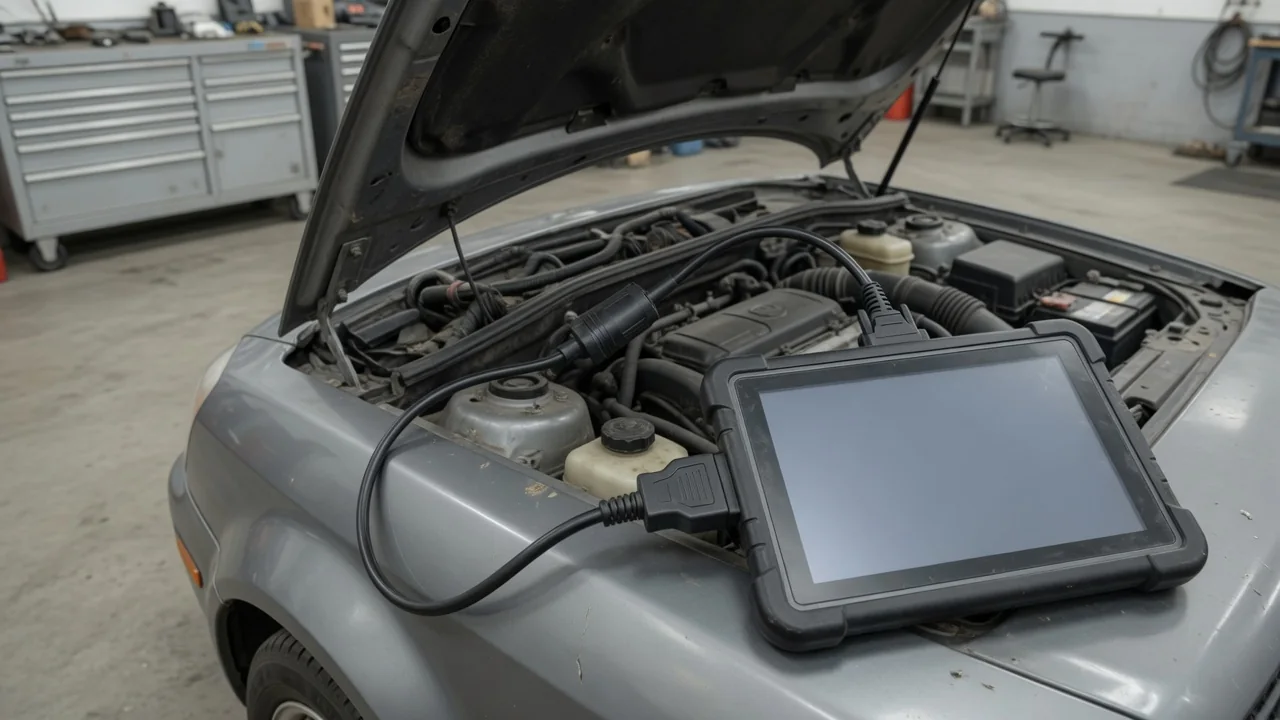
The P1717 code is a manufacturer-specific trouble code, so its meaning depends on the vehicle that stored it. Before linking warning lights, shifting complaints, or a named part to P1717, confirm the definition against make, model, year, powertrain, and the reporting control module. A generic scan-tool label is only a starting point. Vehicle-specific service information, freeze-frame data, and related codes together decide how to interpret P1717 and what to check next.
Verify What P1717 Means for Your Vehicle
P1717 does not have one universal meaning across manufacturers. The same five-character identifier can describe different monitored conditions depending on the make, model, year, and powertrain, and even on which module reported the fault. Code verification starts with the vehicle identification number and the reporting control module, then with factory service information that states the official description and the conditions required to set the code. Until that definition is confirmed, symptoms and suspect parts should not be treated as established.
A generic diagnostic scan tool often displays a brief title for P1717, but that short text may be incomplete, borrowed from another application, or too vague to choose a diagnostic path. Vehicle-specific service information is what establishes the true description, the enabling conditions, and the tests that apply. Pending codes, stored codes, and freeze-frame data should be read in that context. Interpreting P1717 from a handheld label alone can send diagnosis toward the wrong circuit, sensor, or control module.
Record Symptoms and Decide Whether to Keep Driving
Write down every warning light, message, and change in how the vehicle behaves, along with when the P1717 code appeared. Note whether the fault showed as pending or stored, whether it returned after a restart, and whether drivability changed at the same time. Shifting or gear-selection complaints belong in that record only when the verified, vehicle-specific definition actually involves transmission control. The code by itself does not prove a drivability problem, and it does not identify which system the driver felt.
P1717 cannot, by itself, tell you whether continued driving is safe. Safety depends on what the vehicle is doing, not on the identifier stored in a module. If the vehicle loses drive, engages a gear unpredictably, or will not select a gear reliably, stop in a safe place and arrange professional assistance rather than continuing. Mild warning-lamp-only cases still deserve prompt diagnosis, because the same code can represent different risks once the manufacturer definition is known.
Identify Possible Causes Without Guessing at Parts
Candidate causes for P1717 should follow the confirmed definition and the manufacturer’s diagnostic procedure, not a parts list guessed from the code title. When that procedure implicates a circuit, wiring and connectors, a power or ground supply, or a monitored component may all need testing. Accompanying codes and the timing of symptoms help decide which of those checks are relevant. A transmission control module mention in a description, for example, is a clue about where the fault was observed, not a verdict that the module has failed.
A component named in a code description is not automatically defective. Manufacturer-dependent codes often flag a condition the control system could not confirm, which can come from an open or shorted circuit, a poor connection, incorrect supply voltage, or a sensor or actuator that is out of range. Freeze-frame data and related pending codes narrow which of those possibilities matches the event. Replacing a named part before those checks are complete can leave the original P1717 condition in place.
Preserve Useful Evidence Before the Appointment
Before a shop appointment, record the exact P1717 code, the scanner’s displayed description, the reporting module, and any additional codes. Do not clear them. If the diagnostic scan tool can show freeze-frame data and code status, save or photograph those screens so a technician can see the operating conditions when the fault set. Pending codes, history codes, and companion faults often matter as much as P1717 itself, because they show whether the event was isolated or part of a larger communication or power problem.
Note recent battery issues, charging concerns, repair work, intermittent symptoms, and the speeds, temperatures, or gear ranges present when the warning appeared, without assuming any of those items caused the fault. Owner observations should stay with accessible displays and records. Connector probing, component removal, and under-vehicle inspection belong to a qualified technician who can follow the vehicle-specific procedure without creating new opens, shorts, or contamination. Preserved evidence shortens diagnosis; premature disassembly often erases the conditions that set P1717.
Understand the Professional Diagnostic Process
A technician begins by confirming vehicle identity, the applicable meaning of P1717, and which modules stored faults. That step uses the vehicle identification number, the reporting control module, and factory information rather than a generic code library. Only after the definition is locked in do vehicle-specific diagnostic steps, relevant live data, and electrical tests make sense. Those tests exist to distinguish a wiring or connector problem from a failed component, which a code title cannot do on its own.
Intermittent faults may not be present when the vehicle arrives. Reproducing them safely can require the documented operating conditions from freeze-frame data or a controlled road test, not random parts swapping. A basic code reader may lack the module access, bidirectional functions, and live-data coverage needed to complete that work, especially when a transmission control module or another specialized controller stored P1717. Expect the shop to use a capable diagnostic scan tool and the manufacturer procedure rather than treating the code as a parts order.
Choose Repairs Based on Findings and Confirm the Result
Wiring repairs, connector service, and component replacement are options only after testing supports them. If the applicable vehicle procedure also requires programming, adjustment, or a relearn after a repair, that step is part of the fix, not an optional extra. Clearing P1717 without completing the indicated work does not prove the underlying problem is gone; the same enabling conditions can set the code again on the next drive cycle. Repair choices should track the confirmed circuit or component findings, not the shortest description on a scan tool.
After any repair, the technician should check for returning codes and for the original symptoms under safe, appropriate conditions. That confirmation matters more than a blank code list immediately after clearing memory. Cost follows diagnostic time and the actual repair scope; a manufacturer-specific trouble code does not automatically mean a major assembly must be replaced. When P1717 stays gone and the recorded complaints do not return, the work can be considered complete. If the code or the symptoms come back, further testing is still required.