P1715 Code: Vehicle-Specific Meaning, Symptoms and Diagnosis
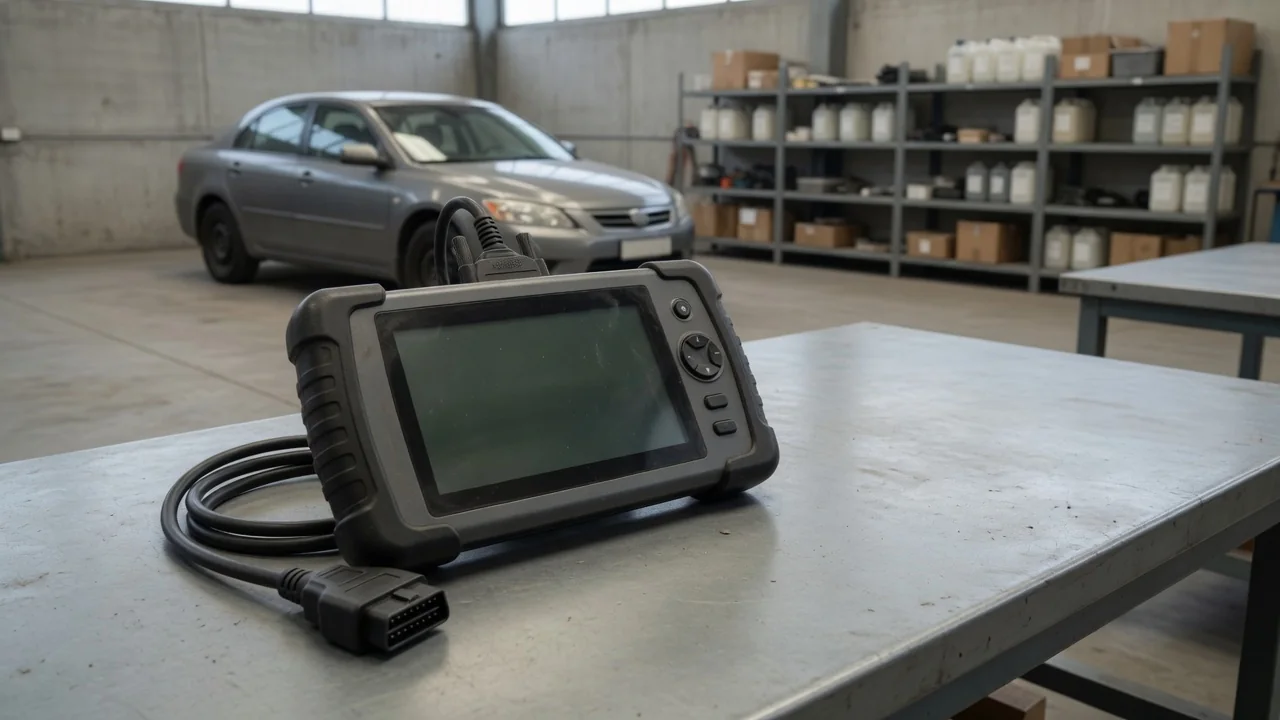
P1715 is a manufacturer-specific diagnostic trouble code, so its meaning depends on the vehicle identification details stored in the reporting control module. A diagnostic scan tool can retrieve P1715, freeze-frame data, and companion codes, but those records describe a detected condition rather than a confirmed failed part. Confirm the definition in service information for the exact make, model, year, and powertrain before interpreting P1715 symptoms or planning tests.
What P1715 Means for Your Vehicle
Unlike generic powertrain codes that share one industry definition, P1715 is a manufacturer-specific trouble code. Two vehicles can store the same number while monitoring completely different systems, so a definition copied from an unrelated make is not reliable. Before interpreting P1715, identify the reporting control module and match the code to service information for that exact make, model, model year, and powertrain. Vehicle identification on the data plate and in the scan tool should agree with the document you use.
Present a make-specific meaning only after that verification, and keep the wording tied to the vehicles it actually covers. If service information is missing or the module is unidentified, treat the description as unconfirmed rather than guessing from similar-looking codes. A diagnostic trouble code reports that a control module detected a condition that met its set criteria. That evidence supports further testing; it does not, by itself, prove that a sensor, solenoid, wiring harness, or module has failed and needs replacement.
Symptoms That May Accompany P1715
P1715 symptoms follow the verified vehicle-specific meaning rather than a single shared complaint pattern. Some drivers notice only a malfunction indicator or another warning lamp, with no change in how the vehicle feels. Shifting, acceleration, or reduced-power concerns belong in the discussion only when the applicable code definition involves a transmission, torque-management, or related powertrain function. If the confirmed definition points elsewhere, those drivability complaints may come from a different condition stored as companion codes.
Note when any change appears during cold starts, after warm-up, or during ordinary driving, without trying to recreate a fault. Timing notes help a technician compare owner observations with freeze-frame data captured when P1715 set. Observed symptoms still cannot confirm the cause, because similar feel can come from several monitored systems. Record accompanying codes, their status, and the module that reported them; those companion codes often explain the complaint more clearly than P1715 in isolation.
Potential Causes After the Code Definition Is Confirmed
Once the definition is confirmed, organize possible causes around the system that module was monitoring. If the procedure addresses a circuit, power supply, ground integrity, and connection quality belong among the possibilities before a named component is assumed to have failed. Wiring damage, loose terminals, poor grounds, and interrupted power can all produce a stored condition that looks like a failed part. Electrical circuit testing belongs in the diagnostic plan only where the vehicle-specific path calls for those checks.
Mechanical, hydraulic, or control-module causes should be considered only when the same procedure supports them for that vehicle. A transmission-related definition may later involve fluid condition or valve-body function, while a different definition may never reach those items. Causes should not be ranked by how often they appear in general discussions, and a named sensor is not a confirmed failure simply because it appears in the code title. Component signals matter when the test plan measures them against the criteria in that procedure.
Safe Information to Collect Before a Shop Visit
Before any codes are cleared, save the full scan report from a diagnostic scan tool, including P1715, code status, the reporting module, and available freeze-frame data. Freeze-frame snapshots show operating conditions at the moment the module stored the fault and become difficult to reconstruct later. Write down recent repairs, battery disconnects or charging problems, warning messages, and any change in vehicle behavior. That history helps a technician decide whether the condition is new, intermittent, or leftover from earlier work.
Limit owner observations to what can be seen safely with the vehicle parked and switched off, such as warning lamps that remain on after a restart or obvious fluid on the ground. Leave connector probing, harness tracing, disassembly, and under-vehicle inspection to a qualified technician. Clearing codes or disconnecting the battery can erase freeze-frame data and change code status without correcting the underlying problem. The shop then has less evidence for electrical circuit testing and may need extra drive cycles to recapture P1715.
How Professional Testing Determines the Repair
A technician starts with the diagnostic procedure written for that make, model, year, and reporting module, then uses companion codes to choose the next test instead of jumping to a part. Live data from the diagnostic scan tool shows whether the monitored signal is plausible while related circuits are checked for power, ground, and continuity where the procedure requires it. Those results help establish whether the problem lies in a signal path, an electrical circuit, a component, or a related system that shares the same inputs.
Potential repairs should follow confirmed findings. Replacing a sensor, solenoid, or module solely because P1715 named it skips the distinction between a detected condition and a failed part. After a justified repair, verification means checking relevant data and code status under the manufacturer's prescribed conditions, which may include a drive cycle or monitor-ready state. If P1715 returns or freeze-frame data still looks abnormal, the original cause was not isolated and further testing is required rather than repeating the same replacement.
When to Stop Driving and Arrange Assistance
P1715 alone is not enough to decide whether continued driving is appropriate, because the same code number can represent different monitored conditions on different vehicles. Stop safely and arrange assistance if the vehicle loses propulsion, cannot maintain a safe speed, shifts violently, or displays an urgent stop warning. Those situations affect control of the vehicle regardless of which module stored the diagnostic trouble code. Continuing a trip to see whether the warning clears is unwise when the vehicle cannot be driven predictably.
If the vehicle appears to operate normally, schedule prompt diagnosis rather than ignoring the stored code, and follow the owner's manual for any displayed warning. Bring the shop the saved scan report, freeze-frame data, and a brief symptom history that includes when P1715 symptoms appeared. Ask which test results support the proposed repair so the recommendation is tied to measurements, not to the code number alone. That conversation keeps vehicle identification, companion codes, and electrical circuit testing in view before parts are ordered.