P1702 Code: Verify Its Meaning, Causes and Repair Steps
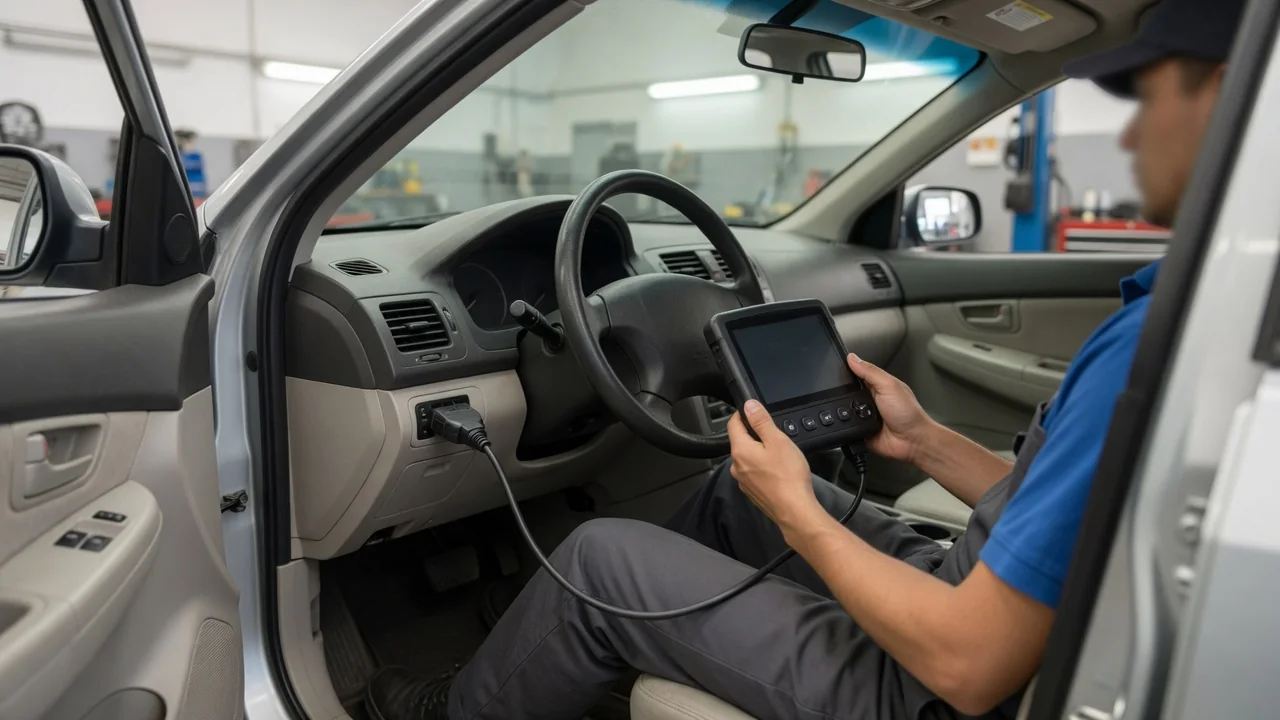
A P1702 code can appear on a range of vehicles, but its exact meaning is not universal. Because this is a manufacturer-specific trouble code, the correct definition depends on the make, model, year, powertrain, and transmission control module configuration. Without confirming the vehicle-specific interpretation, misdiagnosis can lead to unnecessary repairs. The first step is to retrieve the full diagnostic scan report and note which module reported the code. A generic scanner may display only a brief label, so deeper verification through service information is essential before interpreting P1702 as a confirmed fault.
Verify What P1702 Means for the Vehicle
P1702 is not assigned a single definition across the automotive industry. Different manufacturers use this code to indicate different conditions, such as a transmission range sensor circuit issue, a transfer case control fault, or a manufacturer-specific diagnostic request. For some vehicles, it may relate to a control module internal performance problem, while for others it could signal a communication error. Therefore, treating P1702 as having one universal meaning is a mistake. The code must be decoded using the vehicle identification number and the relevant manufacturer service information to learn the exact detection criteria.
After pulling the code, verify which control module reported P1702 and the exact description stored. A generic scan tool may label it simply as 'Transmission Control System Malfunction' without the necessary context. The detection criteria describe the conditions that set the code—such as a signal out of range for a specified time—not that a particular component has failed. P1702 is evidence of a condition that the module monitored, not proof of a defective part. Without confirming the vehicle-specific definition, any cause-based conclusion is premature.
Document Symptoms and Decide Whether to Drive
Observe and record all symptoms when P1702 appears. Warning lights, such as the check engine or transmission light, may be illuminated. Starting behavior, gear indicator display, and shift quality can change depending on the underlying condition. Some drivers notice harsh or delayed engagement, while others may see no change in operation. Record whether the concern is present at startup, when selecting a gear, or only during driving. These observations help a technician correlate the code with the actual fault condition and avoid assuming every vehicle experiences the same drivability issue.
A stored P1702 may not produce an obvious complaint. The code can be set during a transient electrical glitch or a pending condition that has not yet caused functional failure. However, if gear engagement becomes unpredictable, propulsion is lost, or the vehicle cannot be controlled reliably, stop driving and arrange professional assistance. Do not continue to operate the vehicle or attempt a test drive to reproduce a dangerous symptom. Safety must come first, and a tow to a repair facility is the best action when the vehicle's behavior poses a risk.
Identify Cause Categories Only After Confirming the Definition
Potential causes of P1702 can only be identified after confirming the manufacturer-specific definition and diagnostic criteria. For example, if the code is defined as a transmission range sensor circuit range/performance problem, then the reporting module has detected a signal that does not match expected values. Possible causes might include a faulty range sensor, damaged wiring, poor connector contact, or a mismatch in the transmission control module's learned values. However, these possibilities are not universal and must be evaluated using the applicable diagnostic procedure for the exact vehicle.
Wiring and connector issues, such as corrosion, loose terminals, or chafed insulation, can cause intermittent electrical faults that set P1702. Supply-voltage problems, such as low battery voltage or a failing alternator, can also affect module operation and may be relevant if accompanying evidence supports that direction. However, P1702 alone does not indicate that the transmission or a control module needs replacement. Without confirming the definition and following the diagnostic tree, no cause should be assumed or ranked by unsupported frequency. The code is a starting point, not a verdict.
Preserve Diagnostic Evidence Before Clearing Codes
Before clearing any codes, preserve all diagnostic evidence. Save the complete scan report, including the status of P1702 (stored, pending, or active), the full list of companion fault codes, and any available freeze-frame data. Freeze-frame data captures operating conditions at the moment the code was set, such as engine speed, temperature, and gear position. This snapshot can be critical for diagnosing intermittent issues. Also note any recent battery disconnections, repairs, or events that preceded the warning light. Without this context, the diagnostic trail may be lost.
Disconnecting the battery to clear the code can erase freeze-frame data and companion codes that a technician would need for an accurate diagnosis. Clearing codes only removes the symptom of the warning light; it does not correct the underlying fault. If the condition recurs, the code will be stored again, but the previous evidence is gone. In a safe, parked position, you can photograph dashboard messages and inspect visible accessible areas for obvious damage, such as loose wires or fluid leaks. Limit checks to observations and leave deeper testing to a professional.
Understand What Professional Testing Must Establish
Professional testing must establish the true cause of P1702 using a scan tool capable of communicating with the reporting module. A technician will access the manufacturer's diagnostic procedure for P1702, which outlines specific tests and expected values. Companion codes and live data can narrow the investigation—for instance, if a range sensor code accompanies P1702, live data may show an implausible gear selection. The technician evaluates fault conditions and uses the freeze-frame data to replicate the circumstances that set the code, rather than guessing at a component failure.
Electrical and component testing should be performed according to the service manual, but this often involves connector probing, energized circuits, and under-vehicle access. These tasks carry risk and require proper tools and training. A qualified technician will test circuit continuity, resistance, and reference voltages where applicable, and compare findings to specifications. Only after test evidence links the fault to a specific circuit, component, or software issue should a repair be recommended. A P1702 code without supporting test results is insufficient justification for replacing any part.
Choose an Evidence-Based Repair and Verify the Result
Repairs should be based on confirmed test findings. For example, if testing identifies a corroded connector causing an open circuit, the repair is to clean or replace that connector. If a component is proven defective through specified tests, replacement is appropriate. Some P1702 codes may be resolved through a software update, but only when the manufacturer has issued a bulletin that applies to the specific vehicle and fault condition. Guessing at a repair without evidence can waste time and money and may not clear the code.
After any repair, verification is essential. The technician should clear the codes, run the applicable monitors, and confirm that P1702 does not return under the same conditions. Relevant operating data should be checked to ensure the original complaint is resolved under safe conditions. Ask the shop for the confirmed P1702 definition, the test findings, the proposed repair scope, and verification results. Clearing the warning light alone does not prove success; the vehicle must operate correctly and the code must stay away.