P1698 Code: Vehicle-Specific Meaning, Causes and Diagnosis
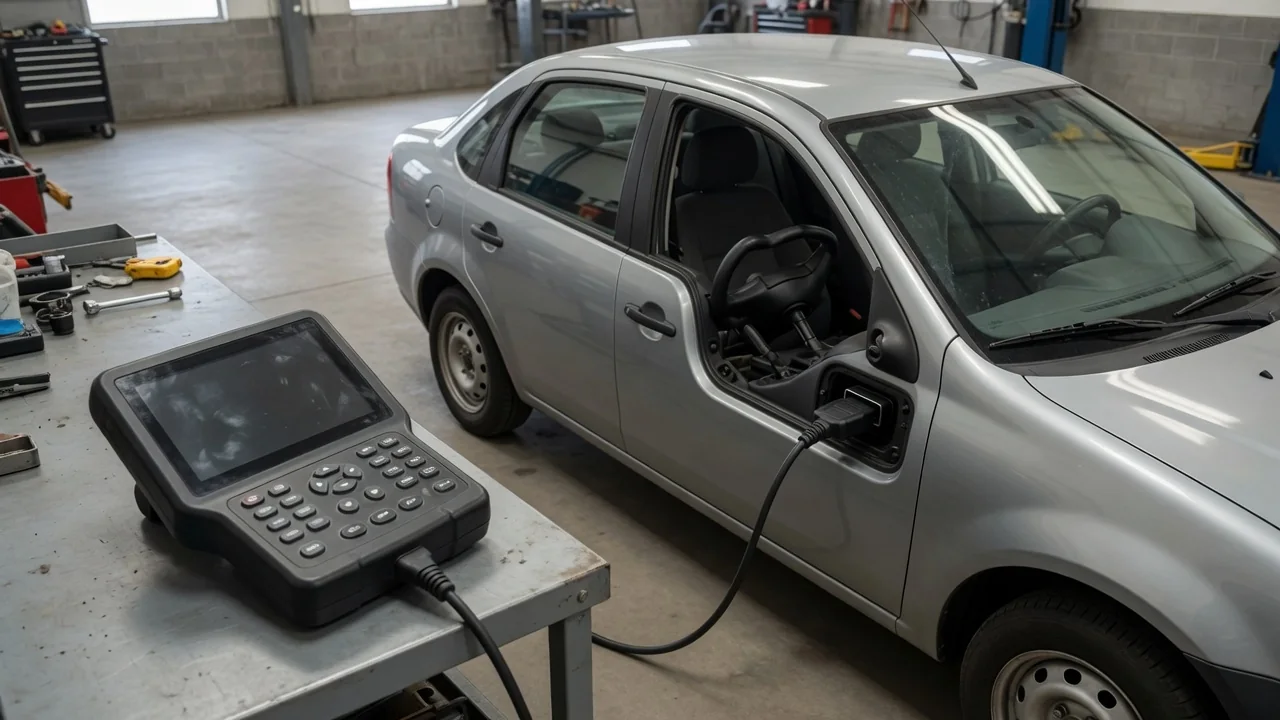
The P1698 code is a manufacturer-specific trouble code, so its definition is not the same on every vehicle. Before interpreting a scan result, confirm year, make, model, engine, and the reporting control module. A generic scanner description can be incomplete. P1698 identifies a detected condition, not an automatic parts list, and diagnosis must follow vehicle-specific service information.
Verify What P1698 Means for Your Vehicle
P1698 has manufacturer-dependent meaning, and the same number can describe different conditions depending on the vehicle identification data. Start with year, make, model, engine, and which control module stored the code, because those details determine the correct definition and the conditions under which it is set. Vehicle-specific service information is required to confirm that definition. A generic scan-tool label may name a circuit, a network, or a module in broad terms without matching the manufacturer's diagnostic criteria for that application.
Treat the stored P1698 code as evidence that a control module detected a condition that met its calibrated criteria, not as proof that a particular part has failed. Companion fault codes on the same diagnostic scan report often show related module communication, power, or sensor issues that change how the definition should be read. Until the vehicle-specific flowchart is in hand, avoid assuming a replacement. The reporting module, the enable conditions, and any pending versus confirmed status all matter for interpretation.
Symptoms and Whether to Keep Driving
Once the verified meaning is known, possible symptoms can be judged against that system. A warning lamp, a message, hard starting, stalling, or unusual operation may appear if the confirmed definition involves powertrain control, module communication, or a related circuit. Those signs are not guaranteed. A stored P1698 code can exist without an obvious driving complaint, especially if the condition was momentary or occurred outside current operating conditions. Dashboard lights and drivability changes also have many other causes, so symptoms alone cannot confirm why the code set.
The code number by itself cannot establish that continued driving is safe, because P1698 does not describe one universal failure mode. If the vehicle stalls, loses power, or behaves unpredictably, stop in a safe location and arrange assistance rather than trying to interpret the scan result from the road. A vehicle that still starts and drives may still have an unresolved electrical or communication issue that can return without warning. Safety depends on observed behavior and the confirmed system, not on the four-digit identifier.
Potential Causes After the Definition Is Confirmed
After the manufacturer definition is confirmed, possible causes should be organized around the affected system named in that service information, not around a generic parts catalog. Depending on the application, diagnostic testing may point toward battery voltage supply, grounds, wiring and connectors, or a network path used for module communication. Those electrical and communication faults belong in the discussion only when they fit the confirmed definition and the published procedure. Jumping to a sensor, relay, or control unit without that match treats the code as a shopping list.
Recent battery trouble, a jump-start, electrical accessory work, or water around harnesses and connectors can provide useful context because low voltage and corrosion often disturb module communication. Context is not causation. The same history can leave a stored P1698 code after the original disturbance has already ended, or it can be unrelated coincidence. An internal control-module fault remains a possibility, but it requires supporting evidence from the vehicle-specific tests. Module replacement is not an automatic next step simply because the code names a controller.
Safe Observations to Record Before Diagnosis
Before diagnostic testing begins, record when any symptom occurs, what dashboard messages appear, how the engine starts, and whether the problem is intermittent or constant. That timeline helps a technician decide whether the condition matches the enable criteria for P1698 on that vehicle. Save the complete diagnostic scan report, including code status and any freeze-frame data, before codes are cleared. Freeze-frame snapshots of engine speed, load, and voltage at the moment of detection can be lost if memory is erased too early.
Note recent repairs, jump-starts, battery discharge, or accessory installation, because those events often affect battery voltage and wiring and connectors even when they are not the confirmed root cause. Limit owner checks to accessible visual observations with the vehicle parked and powered off. Look for obvious damaged harnesses, loose battery cables, or standing water near modules, then stop. Electrical probing, connector removal, and component disassembly belong to a qualified technician using the published procedure, not to informal testing that can create new faults.
Professional Tests That Narrow the Cause
A vehicle-capable scan tool is often needed because a basic reader may not identify the reporting control module or retrieve companion fault codes stored in other controllers. Those related codes put P1698 in context, showing whether the issue is isolated or part of a wider module communication or power-supply pattern. The technician should then follow the confirmed vehicle-specific diagnostic procedure rather than a generic flowchart. Related codes must be evaluated together so that a secondary effect is not treated as the original fault.
Professional checks typically include measuring relevant power supplies and grounds, inspecting circuits, and evaluating network communication between modules when those tests appear in the confirmed procedure. The goal is to document whether voltage, continuity, or communication data meet the manufacturer's criteria, not to improvise repairs at the harness. An intermittent P1698 code may require reproducing the reported conditions, such as a particular temperature or load, and recording evidence before any part is recommended. Without that documentation, a replacement can address a symptom that never repeats.
Choose an Evidence-Based Repair and Verify the Result
Each repair should be tied to a confirmed test result for that vehicle, not to a universal fix for P1698. If diagnosis supports a wiring repair, a power-supply correction, or a module service, the work should match those findings. When the evidence points to a control module, replacement, configuration, or programming may require vehicle-specific procedures, including identification of the correct part and any required setup. Those steps are justified only after the published tests show that the module, not an upstream circuit, is at fault.
Clearing the P1698 code or disconnecting the battery does not demonstrate that the underlying problem is fixed; it only removes stored evidence. After the repair, a post-repair scan should confirm that the code has not immediately returned and that related companion fault codes are understood. Appropriate operational verification, matching the conditions in the service information, is needed to show the detection criteria are no longer met. An intermittent issue may still need follow-up monitoring because a single short drive can miss the original set conditions.