P1694 Code: Vehicle-Specific Meaning, Causes and Diagnosis
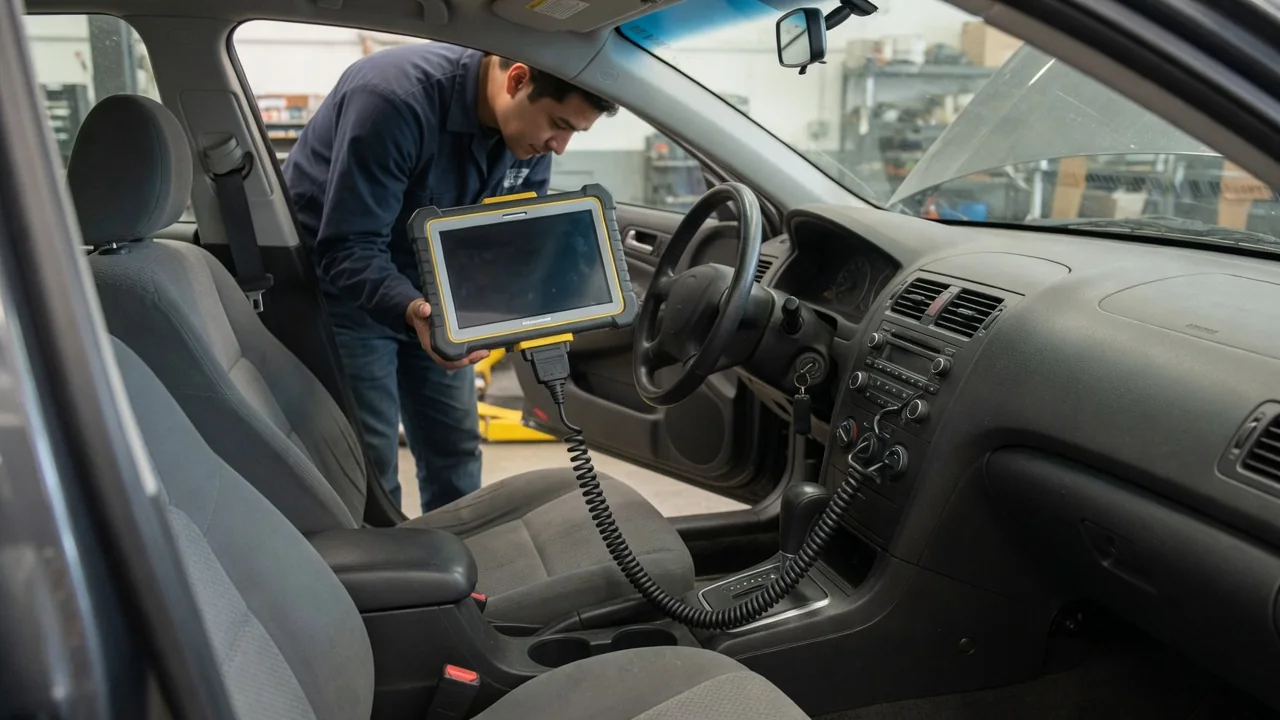
A P1694 trouble code is a manufacturer-specific fault that cannot be interpreted correctly from a generic scan tool alone. Its meaning shifts between makes, models, and powertrains, ranging from communication errors to internal control module checks. Before replacing any part, the exact vehicle definition must be identified. Understanding the associated symptoms, freeze-frame data, and companion codes provides a more reliable path to diagnosis and repair.
Verify What P1694 Means for Your Vehicle
P1694 is not a standardized OBD-II code, so the same number can point to entirely different circuits on different vehicles. A definition for one model may involve a transmission control module signal, while on another it refers to a body controller or gateway fault. The make, model, year, engine, and transmission type all narrow down which system is reporting the issue. A professional service information system is the proper source for that exact application.
A generic hand-held scanner may show only a brief label such as 'manufacturer control' without the detail required for a diagnosis. The reporting module itself matters because the same numeric code can be stored by more than one controller. The exact text, status, and any companion codes should be preserved before clearing. Accurate identification prevents misdirected repairs and avoids treating a symptom described by an unrelated code definition.
Symptoms to Record and Signs to Stop Driving
Symptoms associated with P1694 vary widely depending on the verified definition. A driver might notice an illuminated malfunction indicator lamp, starting difficulty, stalling, or abnormal shifting behavior, but some faults produce no noticeable drivability change at all. The absence of symptoms does not make the code harmless, nor does a severe symptom prove the fault is critical. The relationship between the code and vehicle behavior should be documented before diagnosis.
Recording when a symptom appears, such as only during cold starts or after driving for several minutes, helps a technician correlate the code with operating conditions. If the vehicle stalls unpredictably or loses power while moving, the safest action is to pull over and arrange professional assistance. Do not intentionally provoke a fault that could create a hazard. A stored code alone does not establish that the vehicle is unsafe to drive, but changing drivability does require caution.
Possible Causes Under the Verified Code Definition
When the verified definition describes a communication fault between modules, the cause is often an electrical supply or network issue rather than a failed computer. A control module depends on clean power and ground connections to transmit data. Corroded terminals, loose connectors, damaged wiring, or a weak battery can interrupt messages and set a P1694 code. The module named in the description is frequently the receiver that noticed a problem, not the origin of the fault.
Recent events such as a dead battery, jump start, electrical repair, or water exposure provide useful context. These situations can disturb stored data or create temporary communication failures without causing permanent damage. They should be noted for the technician but do not automatically explain the code. Water intrusion into connectors or wiring harnesses may also create intermittent connections that trigger a communication code only under certain conditions.
Safe Checks Before a Diagnostic Appointment
Before any diagnostic appointment, the stored code and available scanner data should be recorded. Freeze-frame information captures the operating conditions when the fault set, such as engine temperature, vehicle speed, and battery voltage. Clearing codes before this data is saved removes evidence that could narrow down the cause. The exact wording and status of P1694 should be preserved as well, since a pending versus confirmed difference matters.
Owners can make limited visual checks with the vehicle parked and switched off. Look for obvious damage, corrosion, or moisture around accessible connectors and wiring, but do not unplug modules or probe electrical circuits. A basic code reader may only communicate with the engine control module, so an incomplete scan cannot rule out faults stored in other controllers. A full system scan by a professional tool is often necessary to reveal associated codes from the same event.
Professional Tests That Can Identify the Fault
A professional diagnostic sequence begins with confirming the vehicle-specific definition of P1694 and then scanning all modules, not just the primary engine controller. Companion codes often reveal a pattern, such as a shared power circuit or a bus-segment failure. After reviewing the stored data, the technician checks the relevant electrical supplies and ground points before suspecting a control module. Voltage drop tests and connector inspections are typical first steps.
If the verified definition involves communication, the technician may examine the network wiring for resistance, short circuits, or intermittent openings. A scan can capture a fault in progress, but if the issue is intermittent, the vehicle may need to be driven while live data is monitored. The original freeze-frame data then helps the technician recreate similar conditions. A single scan without further testing is rarely enough to confirm an intermittent P1694 cause.
Repairs and Confirmation That P1694 Is Resolved
Effective repairs address the confirmed fault. If a poor ground or corroded connector is identified through testing, repairing that circuit often resolves the code. Replacing a control module based only on a P1694 code is not a supported decision, since many other faults can set the same number. A module should be condemned only after power, ground, wiring, and communication checks all pass and the module still fails to respond correctly.
If a module is genuinely defective and requires replacement, the new unit may need vehicle-specific programming or configuration. A qualified professional with the appropriate scan tool and access to manufacturer software must perform this step. After the repair, the system is rescanned, codes are cleared, and the vehicle is tested under conditions similar to the original fault. Confirmation that P1694 remains absent while the relevant system operates normally completes the repair.