P1693 Code: Vehicle-Specific Meaning, Causes and Diagnosis
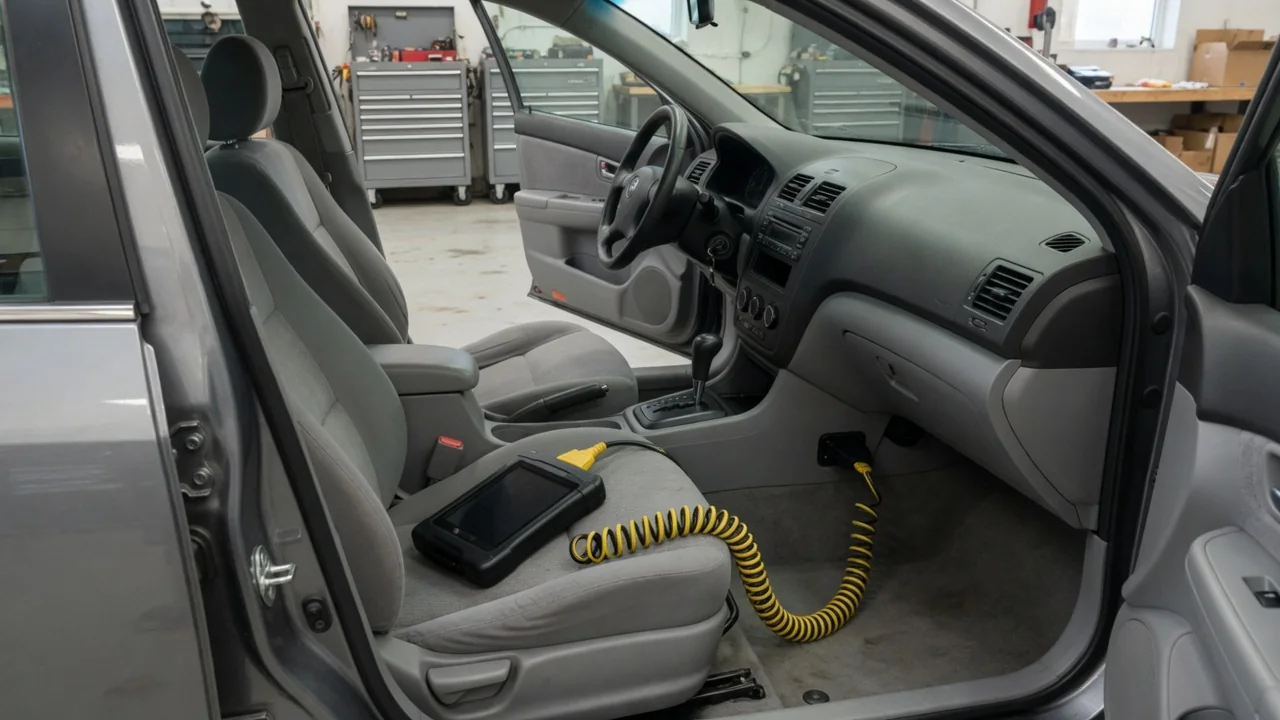
The P1693 code is a manufacturer-specific trouble code whose meaning is not the same on every vehicle. A diagnostic scan can store P1693 in more than one control module, and a brief scanner label is not enough to interpret it. Confirm the definition in vehicle service information for your make, model, year, engine, and the module that reported the code before deciding what the warning light actually represents.
What P1693 Means for Your Specific Vehicle
P1693 does not have a single industry-wide definition. On some platforms it describes one monitored condition, and on others it is only a notification that another control module stored a related fault. Treat any generic description as incomplete until you match the code to the exact vehicle. You need the make, model, model year, engine, and the module that set P1693, because the same alphanumeric label can point to different systems depending on those details.
Vehicle service information is the source that confirms what P1693 means on that application, including which module reports it and how it relates to other stored faults. A handheld reader often shows only a short phrase that omits those relationships, so the displayed text can sound more conclusive than it is. When the verified definition identifies P1693 as a companion code or a notification that another fault exists, the additional stored codes become the primary path for the investigation rather than P1693 in isolation.
Symptoms and Warning Signs to Record
An illuminated warning light is often the first indication that a P1693 code is stored, but that light does not describe how the vehicle will behave. Some drivers notice starting difficulty, stalling, or reduced power around the same time the code appears; others notice no drivability change at all. Those observations are possible, not guaranteed, and they do not establish how severe the underlying condition is. Record what you actually see rather than assuming P1693 always produces the same symptoms.
Write down when any symptoms occur, which warning lights appear, and whether recent battery work or other repairs preceded the code. That timeline helps a technician compare stored data with what you experienced. Stop driving and seek assistance if the vehicle stalls repeatedly, overheats, loses substantial power, or shows a critical oil-pressure warning. Those conditions can become unsafe quickly, and they are reasons to halt operation regardless of whether P1693 is the only code present.
How the Confirmed Definition Narrows Possible Causes
Possible causes only make sense after the vehicle-specific definition and any accompanying codes are confirmed. If the verified procedure points to a monitored-system fault, a power or ground problem, wiring damage, or a communication issue, those paths deserve investigation because the applicable diagnostic steps support them. Guessing from a generic list of parts is not a substitute for that procedure. P1693 is evidence that a condition was detected, not proof that any particular component has failed.
A control module that reports P1693 is documenting a condition it was programmed to watch; that report is not proof the module itself has failed. Power supply problems, poor grounds, damaged circuits, or another module's stored fault can produce the same notification depending on the application. Avoid treating any single cause as the most common explanation, and avoid replacing a sensor, harness, or module solely because P1693 appeared. Replacement is justified only when testing for that vehicle supports it.
What to Save Before Clearing the Code
Before any change, record the exact P1693 code text, the reporting module, and the available code status, such as current, pending, or stored if the tool displays those labels. Save every accompanying code and any freeze-frame data the scan provides. Freeze-frame snapshots capture operating conditions at the moment a fault was recorded, but not every control module offers the same detail. Missing that record can leave later testing without the context needed to compare conditions.
A basic code reader may communicate with only one module and miss faults stored elsewhere, so a professional scan tool with broader module access may be required to complete the picture. Clearing codes or disconnecting the battery merely to turn off a warning light removes stored evidence, including companion codes and freeze-frame data that may not return immediately if the condition is intermittent. Keep the original diagnostic scan results until the investigation is finished.
Safe Checks and When Professional Testing Is Needed
Owner checks should stay limited to recording symptoms and looking at accessible areas with the vehicle parked and the engine off. Note obvious loose connections, visible corrosion, or damaged wiring that can be seen without disturbing anything. Leave connectors plugged in, avoid probing circuits, and stay clear of hazardous components such as cooling fans, exhaust parts, or high-energy ignition and hybrid systems. A visual note can help a technician start in the right area; it is not a substitute for the confirmed test procedure.
Professional diagnosis follows the test procedure for the confirmed P1693 definition and may evaluate power supplies, grounds, wiring integrity, communication between modules, or relevant system operation as that procedure requires. Seek that testing when the definition remains uncertain, when relevant modules cannot be scanned with the tools on hand, or when symptoms affect safe operation. Manufacturer-dependent codes need vehicle-specific confirmation, and continuing to drive without that confirmation is unwise if stalling, overheating, or severe power loss is already occurring.
Choosing a Repair and Confirming the Result
The appropriate repair addresses the fault established through testing, not the mere presence of P1693. That code alone does not justify replacing a sensor, wiring harness, or control module. A technician should connect the test findings to the recommended repair and explain any remaining uncertainty, including cases where a companion code still needs further evaluation. If testing has not isolated the cause, further diagnosis is the next step rather than parts replacement based on the code number.
After the repair, a follow-up diagnostic scan and appropriate operational verification are needed to check whether the underlying fault and P1693 return. Drive the vehicle under conditions similar to those captured in freeze-frame data when that information was saved, then rescan the relevant modules. A cleared warning light by itself does not prove the fault is resolved, especially when symptoms are intermittent and a monitor has not had time to run. Confirmation comes from the combination of restored operation and codes that stay gone.