P1686 Code: Meaning, Symptoms, Likely Causes and How to Diagnose It
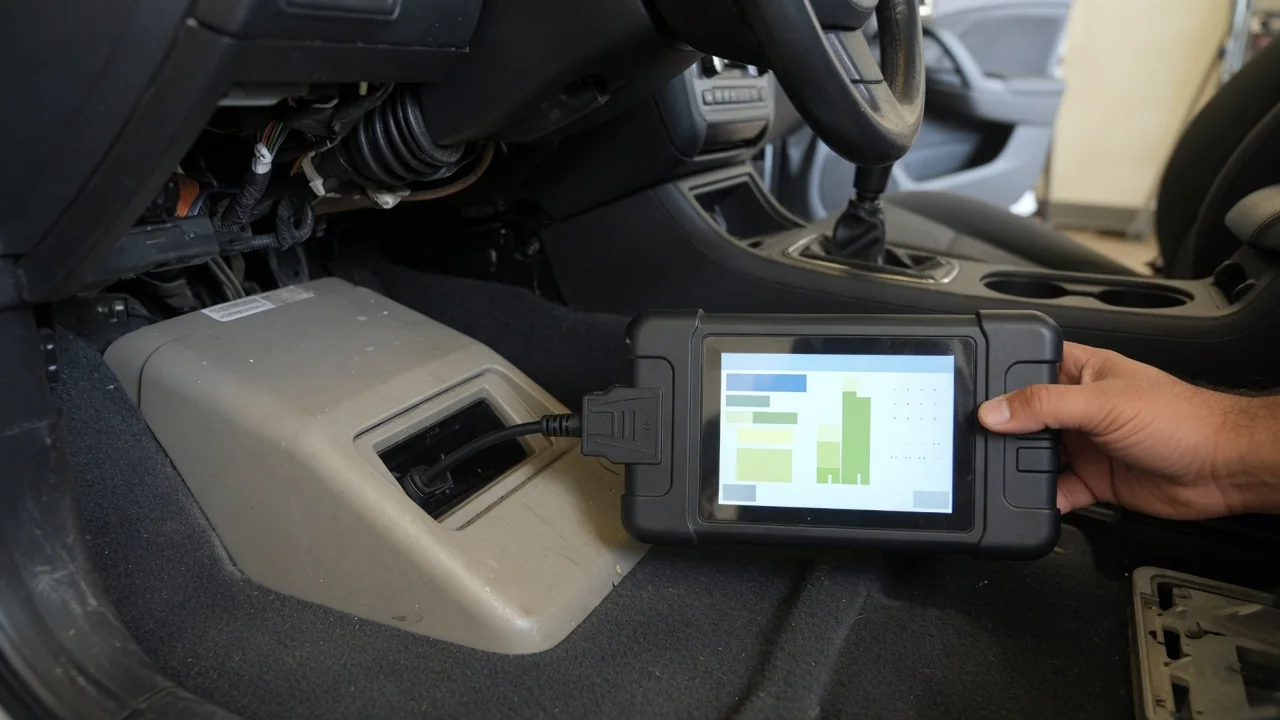
When your vehicle stores a P1686 diagnostic trouble code, the first challenge is understanding what it actually means for your make and model. Unlike standardized P0xxx codes, P1686 is a manufacturer-specific code. Its definition can change entirely between brands—even between different years or engines from the same automaker. That makes reliable interpretation vital before attempting any repair or parts replacement.
What P1686 Means and Why the Definition Depends on Your Vehicle
P1xxx codes such as P1686 fall into the manufacturer-specific range. That means no single universal definition exists across all brands. One automaker may use P1686 to flag an engine control module concern, while another may point to body control, transmission control, or a security system fault. Even within one brand, the meaning can vary by model year, engine option, or regional calibration. A lookup from a generic online database can therefore describe a completely different system than the one your vehicle is reporting.
To interpret P1686 correctly, start with a scan tool that can read enhanced or manufacturer-specific codes from your vehicle's modules. Many basic OBD-II scanners only decode generic P0xxx codes and may show a misleading or incomplete description. The most reliable step is to use the manufacturer's service information or a professional-grade tool to obtain the exact code text. Always record the full description, any freeze frame data captured at the moment the fault set, and all other stored codes—even if they seem unrelated.
Symptoms You Might Notice When P1686 Is Stored
The symptoms that accompany P1686 depend entirely on which system the code definition refers to. For some vehicles, the only sign may be an illuminated check engine light or a brief message on the instrument cluster. Others may store the code without turning on any warning light at all. Many drivers notice no change in how the car starts, idles, or accelerates, because the monitored circuit may be only intermittently active. That makes symptom observation alone an unreliable way to identify the underlying problem.
Because manufacturer-specific codes can cover anything from a minor sensing circuit to a module communication network, driveability symptoms can range from none to significant. The code may only appear under particular operating conditions—at cold startup, during wet weather, after a battery disconnect, or only above a certain speed. Writing down exactly when the warning light appears, what the vehicle is doing at that moment, and how often the code repeats gives a technician useful diagnostic context. Without those notes, an intermittent fault can be difficult to reproduce.
Common Categories of Causes Behind Manufacturer-Specific Codes
Common categories of faults behind manufacturer-specific codes include wiring or connector problems, low or unstable system voltage, module communication failures, and failed sensors or components. A chafed wire, a corroded terminal, or a loose ground can create an intermittent open or short that triggers P1686. Voltage problems often arise after a battery replacement, jump-start, or a failing alternator, because many modules monitor power quality at key-on. Communication faults may involve a single module failing to respond on a data bus.
Recent repairs or accessory installations can also affect stored codes. A pinched harness during an engine repair, a poor ground after bodywork, or an aftermarket alarm spliced into factory wiring can all create new faults. The confirmed manufacturer definition for P1686 on your exact vehicle decides which cause categories should be investigated first. Without that definition, chasing a generic list of possible causes wastes time and risks replacing parts that are not at fault.
Safe Checks You Can Do Before a Shop Visit
Before taking the vehicle to a shop, a few safe checks may save diagnostic time. First, use a scan tool capable of reading manufacturer-specific codes to confirm P1686 and save the freeze frame data. That snapshot shows engine temperature, vehicle speed, battery voltage, and other values at the moment the code set, often revealing whether the fault happened at startup or under load. Recording related codes from all modules helps too, because a communication or voltage issue may set codes in several control units at once.
With the engine off and the key removed, visually inspect the battery terminals for corrosion, looseness, or a cracked terminal clamp. A poor connection can cause exactly the sort of low-voltage condition that many manufacturer codes monitor. Look for obvious wiring damage in easy-to-reach areas near the battery, the engine compartment, and any aftermarket accessory connections. Understand that a visual check cannot verify circuit integrity, module function, or the quality of a data network signal—but it can find simple faults that would otherwise lead to an expensive diagnostic session.
Why Clearing the Code Isn't a Repair
Clearing a stored trouble code with a scan tool may make the warning light go out, but it does not repair anything. In fact, clearing P1686 erases the freeze frame data and any other stored information that a technician could use to understand the failure conditions. Without that data, an intermittent fault becomes harder to diagnose. If the underlying condition remains, the code will return as soon as the module runs its self-test again, often within a few drive cycles.
After a code has been cleared, pay attention to when and under what driving conditions it comes back. Does it set at key-on, only on cold mornings, after driving through water, or when the engine reaches full operating temperature? That pattern is useful evidence. Resist the temptation to replace a sensor, relay, or module based on a guess from an online forum. The manufacturer-specific meaning of P1686 must be confirmed first, and the root cause should be proven through testing before any part is swapped in.
When P1686 Needs Professional Diagnosis
Professional diagnosis becomes necessary when P1686 involves circuit testing, module communication checks, or component tests that require factory-level scan tools and wiring diagrams. A technician can command modules to respond, monitor data bus activity, and test a suspect circuit for continuity, resistance, and voltage drop. Those procedures often require manufacturer-specific software that goes beyond the capabilities of even a good enhanced code reader.
Seek professional help immediately if the vehicle exhibits a no-start condition, stalling, poor driveability, or several warning lights appearing together. Ask the dealer or a qualified independent shop whether any technical service bulletins or software updates apply to your specific vehicle, without assuming they exist. Bringing your recorded code text, freeze frame data, symptom log, and any recent repair history gives the technician a head start and can reduce diagnostic time.