P1684 Code: Vehicle-Specific Meaning and Diagnostic Steps
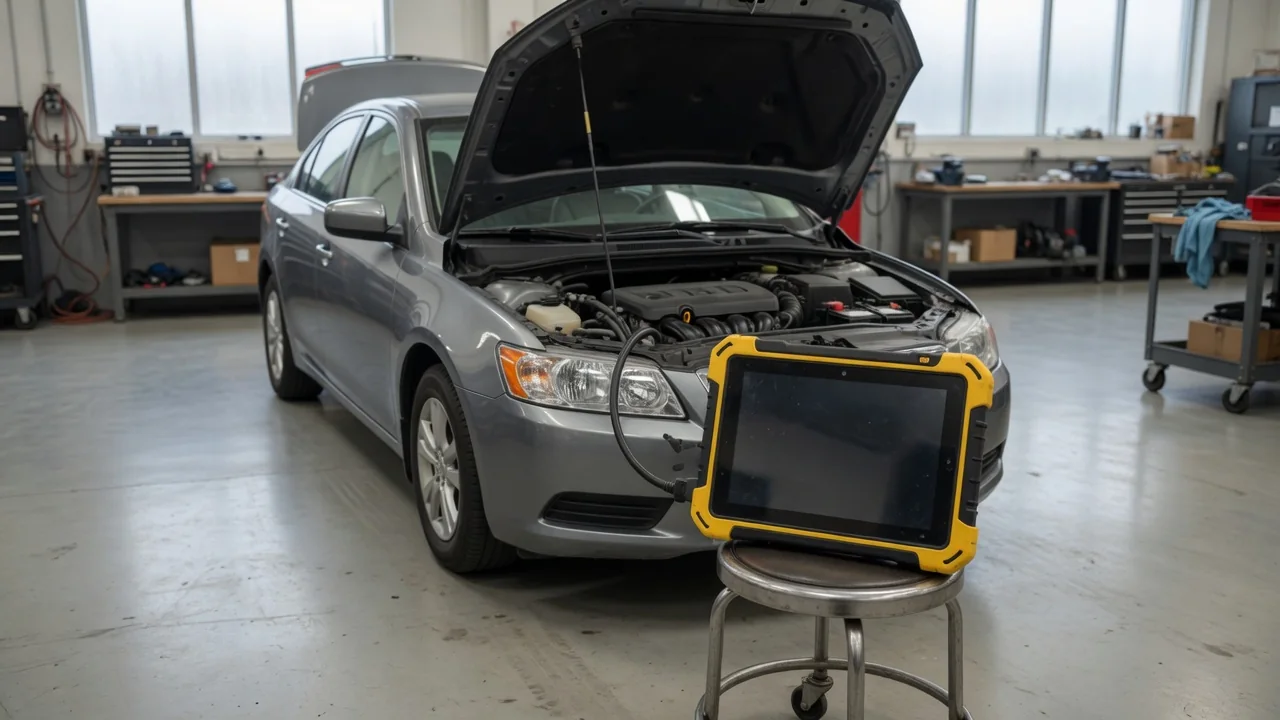
The P1684 code is a manufacturer-specific trouble code, so its meaning is not the same on every vehicle. Before treating it as a failed part or a charging problem, confirm the definition that matches the make, model, year, and powertrain. Some applications record an electrical power interruption or battery disconnect history, while others use a different diagnostic path. A scanner's short label is only a starting point for deciding what the stored condition actually represents.
Verify What P1684 Means for Your Vehicle
P1684 does not have a single industry-wide definition. The same code number can describe different conditions depending on the manufacturer and even on the specific model year or powertrain. Identify the vehicle using make, model, year, and engine or transmission family, then look up the applicable service information for that application. Only after that definition is confirmed should symptoms, likely causes, or repairs be discussed. Treating a generic scanner line as the full meaning can send diagnosis in the wrong direction.
On some Chrysler-family vehicles, P1684 has been associated with a recorded battery or control-module power disconnect rather than with a failed sensor or actuator. That association is an application-specific example, not a universal rule. Other brands may assign P1684 to an entirely different powertrain control module condition. A scan tool's abbreviated description may omit the manufacturer-dependent details that change the diagnostic procedure. Verify the vehicle-specific meaning first, then interpret stored diagnostic codes and freeze-frame data in that context.
Record Symptoms and Other Codes Before Drawing Conclusions
A stored P1684 may appear with no noticeable driving complaint, especially on applications where the code simply records a prior electrical power interruption. The vehicle can start, idle, and drive normally while the history remains in memory. Still, note any warning lights, hard starting, stalling, or unexplained electrical resets, because those observations describe the complaint without proving which part failed. Treat them as clues to be matched against the verified definition, not as a diagnosis.
Accompanying stored diagnostic codes and their status—pending, current, or history—often supply the context that P1684 by itself does not. A related charging, communication, or voltage-supply code can change whether the event looks like a one-time disconnect or an ongoing power problem. If the vehicle stalls repeatedly, loses electrical power while driving, or will not start, stop using it and have it assessed promptly. Those conditions can leave you stranded and may point to an unresolved supply issue that needs professional evaluation.
Check Recent Service and Power-Loss History
When the verified definition is a recorded power interruption, recent battery replacement, a disconnected negative cable, or other electrical service can explain why P1684 is stored. The powertrain control module may simply be reporting that it lost keep-alive power. That history is useful, but it is not automatic proof that the battery, cables, or module are defective. Interrupted module power, a weak battery, or a poor connection remain possibilities only until testing or a documented service event supports one of them.
Record when any symptoms began and whether clocks, radio presets, or other memory settings reset around the same time. A cluster of resets often lines up with a battery disconnect history or an unexpected power loss. If the vehicle's documented meaning for P1684 is not a power-loss flag, do not borrow Chrysler-family causes. Follow that application's diagnostic path instead, using its service information to decide which systems to inspect. Causes must match the definition that actually applies to the vehicle.
Make Safe Observations and Preserve Diagnostic Information
Before any codes are cleared, save the complete scan report, including P1684, companion codes, code status, and any freeze-frame data the tool captured. Freeze-frame snapshots can show engine speed, load, and voltage-related values at the moment the condition was recorded, which helps later comparison if the code returns. Clearing memory too early discards that context. Keep a copy of the report so a technician can work from the original stored diagnostic codes rather than from a blank controller.
With the ignition off, limit owner checks to what is visible without touching or disturbing electrical connections. Look for obvious cable damage, corrosion on accessible terminals, or a loose-looking clamp, then stop. Appearance does not prove battery capacity, charging performance, or reliable module power. Do not disconnect the battery, probe circuits, bypass wiring, or work around high-voltage components on hybrid or electric models. Those steps belong to trained diagnosis and can create new faults or safety hazards.
Use Targeted Testing to Decide What Needs Repair
A technician selects tests from the verified P1684 definition, the recorded symptoms, recent service history, and any accompanying codes. That combination decides whether the next step is charging system testing, a review of battery disconnect history, or a different powertrain control module path. P1684 is evidence that a condition was recorded, not proof that a battery, alternator, or control module has failed. Parts replacement without supporting test results often leaves the original cause unaddressed. Matching tests to the application avoids chasing a Chrysler-family power-loss story on a vehicle that uses P1684 for something else.
When the meaning is an electrical power interruption, battery, charging-system, connection, ground, and module power-supply tests exist to show whether keep-alive power is stable, not to prescribe a repair sequence here. A confirmed service-related disconnect may only need documentation and a follow-up scan after the work is complete. A recurring P1684 code, by contrast, requires the underlying interruption or related fault to be identified. Either way, the code alone does not justify replacing the battery, alternator, or control module.
Confirm the Outcome and Know When to Return for Diagnosis
Clearing P1684 erases stored diagnostic information and freeze-frame data; it does not prove the cause has been corrected. Any clearing or confirmation steps must follow the vehicle-specific service information for that application. There is no universal drive cycle, start count, or wait period that applies to every manufacturer. After the appropriate corrective action—whether documenting a known disconnect or completing tests that identified a real fault—note whether the code returns and whether the original symptoms come back.
If the P1684 code returns, or if starting difficulty, stalling, warning lights, or repeated electrical resets continue, further diagnosis is warranted. Recurrence after a battery service can still mean an unresolved connection, charging, or module-power problem rather than a completed repair. Bring the saved scan report, the service and power-loss notes, and a description of what changed after the last visit. That record lets the next inspection start from evidence instead of repeating a guess based on the code number alone.