P1681 Code: How to Confirm Its Meaning, Symptoms and Next Steps
A P1681 code can be confusing because the number alone does not spell out a universal fault. Unlike generic powertrain codes, P1 codes are controlled by each automaker, so the same digits may indicate a fuel-system issue on one vehicle and a controller-area-network problem on another. This article explains why the definition matters, what symptoms might appear, which broad failures to consider, safe preliminary checks, how professional diagnosis works, drivability warnings, and repair confirmation. The goal is to turn a stored P1681 into a logical next step instead of a guess.
What P1681 Means and Why It Differs by Manufacturer
Codes beginning with P1 are manufacturer-specific under OBD-II rules. While P0 codes share definitions across brands, P1 codes let each automaker assign meanings for its own systems. Therefore, a P1681 on one make may stand for an engine oil temperature circuit concern, while on another it could signal an immobilizer-to-PCM communication error. No single sentence can correctly define P1681 for all vehicles, and using the wrong definition often leads to replacing good parts or overlooking the real circuit.
To interpret the code correctly, you need the exact definition for your make, model, year, and engine calibration. Factory service information, a dealer, or a scan tool with manufacturer-enhanced code definitions can provide this data. Generic online code lists sometimes show only one popular meaning, which may not match your vehicle. Treat any internet definition as a clue rather than a diagnosis until you confirm it against a source tied to your VIN or powertrain calibration.
Symptoms Drivers May Notice With a Stored P1681
Because P1681 can point to different systems across makes, no fixed symptom list applies to every vehicle. On one model the only sign may be a steadily illuminated check engine light. On another, the code could accompany a no-start condition, rough idle, or reduced power. The vehicle may also display related warning lamps, such as a traction or battery light, depending on which module stores the code and what the manufacturer's definition covers.
To help any diagnostic effort, note exactly when symptoms occur. A fault that appears only at startup suggests a different path than one that happens over bumps or after driving in wet weather. Write down whether the engine cranks normally, whether gauges behave oddly, and whether you recently jump-started the battery or installed an accessory. Stored freeze frame data can also capture conditions at the moment the code set, which is useful for intermittent concerns.
Possible Cause Categories to Consider Once the Definition Is Confirmed
After confirming the vehicle-specific definition, broad cause categories become relevant. Wiring and connector issues commonly create open or high-resistance paths within a sensor, actuator, or module circuit, while voltage or ground faults can skew the expected signal. Module communication problems may involve a data bus, a missing message, or a corrupted signal rather than a broken component. None of these categories points automatically to a failed part; each requires testing against the manufacturer's diagnostic steps for that P1681 definition.
Low battery voltage is a frequent contributor to stored codes on many vehicles because modules depend on stable reference voltages during self-tests. Recent electrical work, a failing alternator, or aftermarket accessories tapping into vehicle wiring can also introduce faults that set P1681 without any internal part failure. For example, a poor ground connection might cause a module to report an implausible signal only under load. Always treat the code as a sign of a circuit or system to investigate, not as proof that a specific component must be replaced.
Safe First Checks Before Booking a Diagnosis
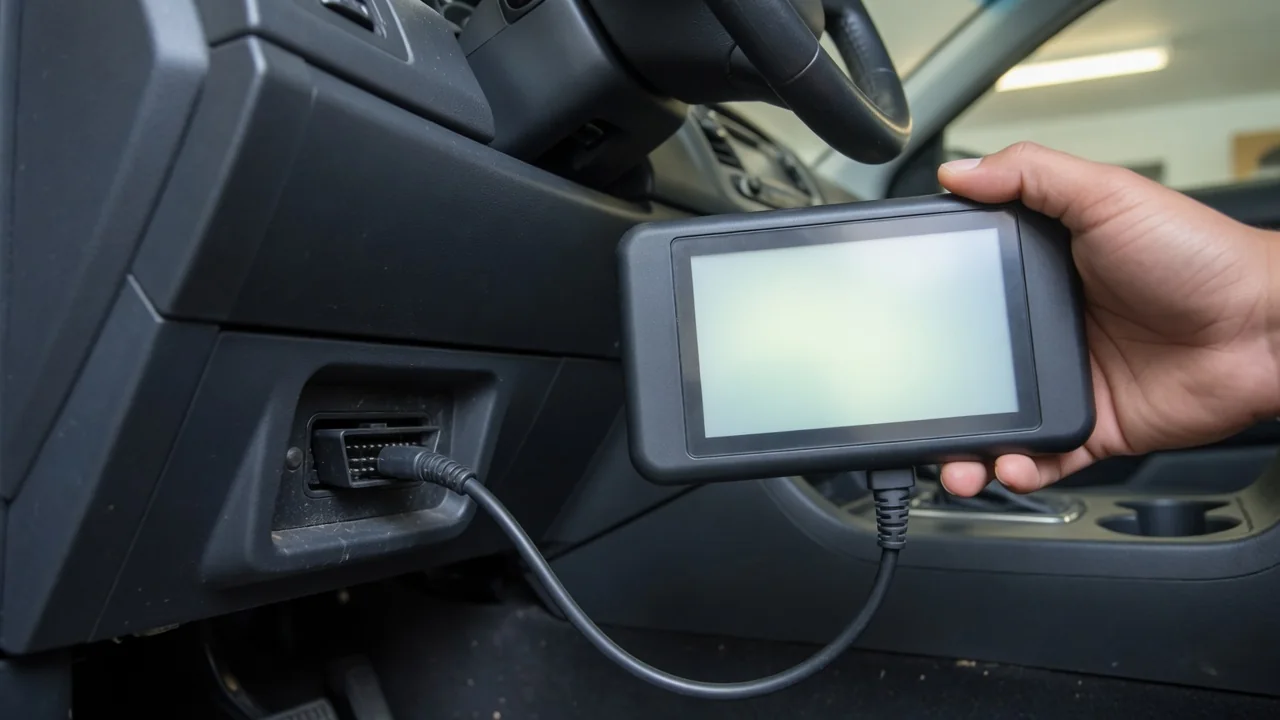
Before booking a diagnosis, read all stored and pending codes with an OBD-II scan tool. If the tool supports freeze frame data, save or photograph that information before clearing anything. Freeze frame records engine temperature, rpm, vehicle speed, and other parameters when the fault occurred, which can help a technician reproduce the conditions. Also note whether P1681 appears alone or alongside other codes, because related codes often narrow the search to one circuit or module.
Next, check the battery condition and visually inspect easily accessible connectors without removing parts. Look for corrosion, loose plugs, or damaged wiring near the battery, fuse box, and engine harness. Do not clear the code until all details are noted, because clearing erases freeze frame data and pending code history. Finally, contact a dealer with your VIN to ask whether any open recalls or technical service bulletins apply to your vehicle. This step costs nothing and may reveal a known repair procedure for the exact P1681 definition.
How Professional Diagnosis of P1681 Usually Works
Professional diagnosis for a manufacturer-specific code begins with the factory service procedure for that exact definition. A technician will confirm the code, note any related codes, and often review live data to see whether the signal in question is plausible. For example, if P1681 relates to a sensor circuit, live data might show a frozen reading or a value that does not change with engine operation. The scan tool can also perform bidirectional controls on many systems, allowing the module or actuator to be tested without guessing.
Intermittent faults can take longer to find because the circuit must be in its failed state when tested. Symptom notes and freeze frame data help the technician know whether to wiggle harnesses, load the electrical system, or drive over rough roads. A good shop will not recommend replacing a part based only on the code; instead, the diagnosis should confirm the root cause with a meter, scope, or published test procedure. Only after the faulty circuit or component is identified should a repair be approved.
Can You Keep Driving With a P1681 Code?
Whether you can keep driving with P1681 depends entirely on what the code means on your vehicle and which symptoms are present. A code defined as a minor rationality fault with no drivability change is different from one linked to the immobilizer, throttle control, or transmission. Even if the vehicle seems normal, the fault may disable a safety-related system or lead to a no-start later. Use the confirmed definition to understand which system is affected before deciding to continue driving.
Stop driving and seek professional help immediately if the check engine light is flashing, the engine stalls or loses power, or warning lamps for brakes, steering, or battery come on. Burning smells, a no-start condition, or an illuminated immobilizer warning are also reasons to avoid driving. Without obvious warning signs, schedule diagnosis soon rather than ignoring the code. A small wiring issue can become a more expensive module or catalyst failure if left unresolved for many drive cycles.
Repair Expectations and Confirming the Fix
Repair scope and cost for P1681 vary widely because the underlying cause can range from a loose connector to a failed control module. Do not expect a uniform price or repair time from the code alone. After the root cause is confirmed, the fix might involve replacing a sensor, repairing a wire, cleaning a ground, or reflashing a module with updated software. The correct repair should match the manufacturer's published procedure for that specific code definition.
After any repair, the code is typically cleared and the vehicle driven through a manufacturer-defined drive cycle or test. If the code returns, the original fault was not fully corrected, and further diagnosis is needed. Keep records of codes, freeze frame data, repair orders, and test results so future symptoms can be compared. This history helps spot repeat failures and gives the next technician a starting point that is grounded in your vehicle's actual behavior rather than a generic code definition.