P1670 Code: Verify Its Meaning, Causes, and Repair Steps
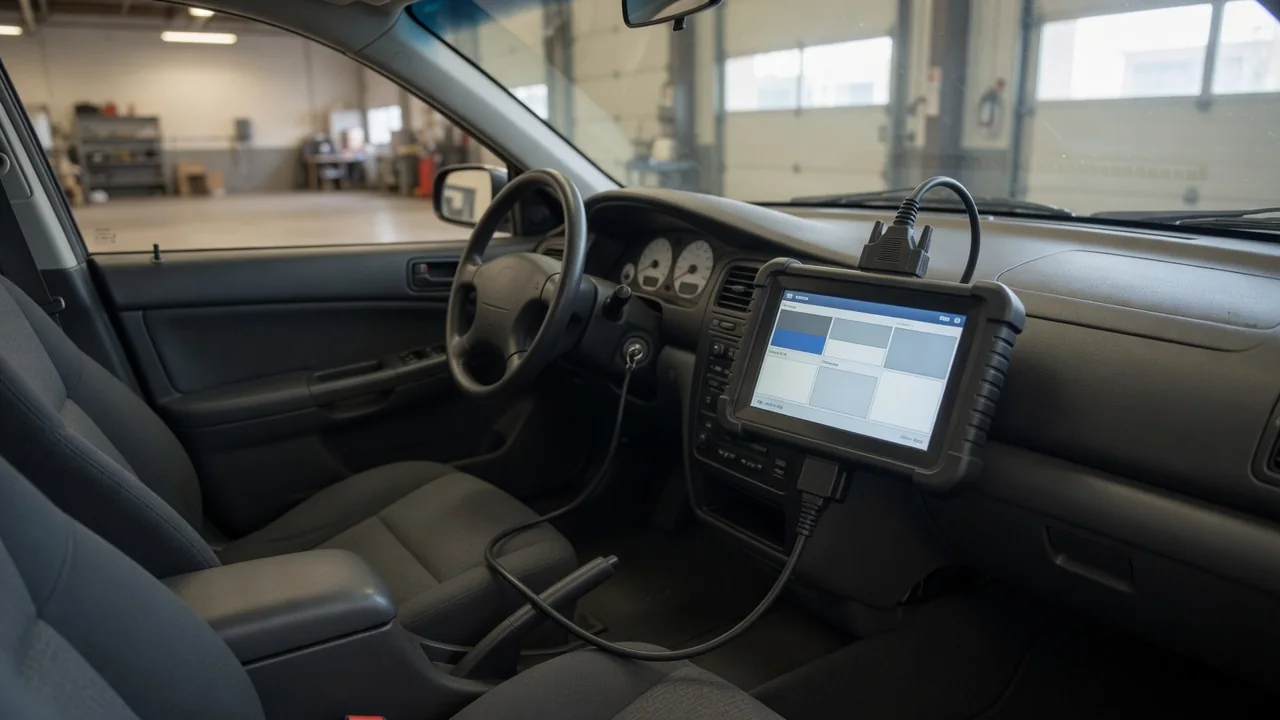
A P1670 diagnostic trouble code can appear on many vehicles, but its meaning is not universal. Because the definition depends on the manufacturer, make, model, and powertrain, the code requires a vehicle-specific approach before any repair is considered. The first step is to save the scan report and confirm the exact meaning from reliable service information. Without that verification, the code alone does not identify a failed part or safe repair.
Verify What P1670 Means for Your Vehicle
P1670 is a manufacturer-specific trouble code, meaning its interpretation changes from one automaker to another. On some vehicles it may reference an immobilizer function, on others a control module output or an electronic throttle monitor. The short description shown by a generic scan tool can be misleading because it may not include the exact subsystem or circuit name used by the vehicle’s engineering documentation. Therefore, the first diagnostic action is to record the complete code, the module that reported it, and the vehicle identification details including model year, engine, and any relevant production information.
Reliable confirmation comes from service information written for that specific vehicle. A repair manual or diagnostic database will define P1670 in the context of the engine management, body control, or other reporting module. It will also list the conditions that set the code and the step-by-step diagnostic procedure designed for that system. Without these details, a technician may chase the wrong circuit or replace a component based on a name that means something different on another platform. The code is a starting point, not a diagnosis.
Record Symptoms and Decide Whether to Keep Driving
Symptoms that accompany P1670 can help narrow the fault, but they must be documented carefully. A driver may notice an illuminated check engine light, hard starting, engine stalling, or reduced throttle response, but these are not universal P1670 symptoms. The issue may appear only during startup, after the engine reaches operating temperature, or randomly. If the vehicle recently had electrical work, such as a battery replacement or stereo installation, that history should be noted. The pattern of symptoms and their relation to driving conditions provide clues that a scan tool alone cannot capture.
The code does not indicate whether the vehicle is safe to drive. Some faults behind a manufacturer-specific P1670 may affect engine control, while others involve a convenience feature or network communication. If the engine stalls, loses power severely, or produces smoke, the driver should pull over in a safe location and arrange for professional assistance. Continuing to operate a vehicle with an unstable engine or a communication fault could create a hazard or cause additional damage. When in doubt, have the vehicle towed to a repair facility rather than risk an intermittent failure on the road.
Consider Causes Only After Confirming the Definition
Potential causes for P1670 can only be considered after the exact definition is confirmed. If the code relates to a specific circuit, the fault may involve power supply, ground, wiring, a connector, or the component itself. A weak battery or corroded ground can mimic an internal module failure and must be evaluated using the diagnostic procedure for that system. Recent electrical work or disturbed connectors are useful history, but timing alone does not prove causation. A code that appears shortly after a repair may be coincidental or stem from a pre-existing issue that became evident under new conditions.
The presence of a code naming a module or circuit does not justify replacing that module immediately. Many computer-reported faults originate in the wiring, terminals, or operating conditions outside the component. For example, a code that suggests a control module communication error could be caused by a poor connection at a shared ground, not an internal module defect. The vehicle-specific diagnostic sequence will include tests to isolate the cause before any part is condemned. Replacing an expensive module without confirming the fault often leaves the original problem unresolved and adds unnecessary cost.
Preserve Scan Data and Make Safe Observations
Before clearing any codes, the complete scan report should be saved. The exact code wording, the reporting module, and the code status—such as current, pending, or history—are all evidence that can be lost. Freeze-frame data, when available, records engine conditions at the moment the code was set and can reveal whether the fault occurred during a cold start, at high load, or under specific voltage. Companion codes may point to a shared circuit or a related system. Because data availability varies by vehicle and scan tool, everything that can be captured should be stored before any reset.
Owner observations should remain limited to what can be seen or experienced safely. Warning messages on the instrument cluster, starting behavior, recent service records, and visible damage to wiring or connectors with the vehicle parked and turned off are all useful. Clearing codes or disconnecting the battery can erase freeze-frame data and reset adaptive values, making an intermittent fault harder to diagnose later. Electrical work such as probing connectors, bypassing circuits, or testing energized components should be left to a professional using the proper service information and tools.
Understand the Professional Tests That Narrow the Fault
A technician must follow the confirmed diagnostic sequence for the specific vehicle. This sequence will prioritize relevant companion codes because a communication or network fault can set multiple modules. The procedure may call for checking power and ground at a module, testing circuit continuity and resistance, or verifying communication on a data bus. These tests must be performed according to the manufacturer’s instructions to avoid damaging sensitive electronics. The goal is to find the root cause, not to guess at a likely component based on the code’s text alone.
Symptoms and recorded operating conditions are especially valuable for intermittent faults. If the code appears only after the vehicle sits overnight, a weak battery or poor terminal connection may be relevant. If it sets during acceleration, a wiring harness that moves with engine torque could be involved. Freeze-frame data can show engine temperature, vehicle speed, and system voltage at the moment of the fault. A technician uses this information to recreate the conditions and monitor live data until the circuit or component fails. Only after test evidence confirms a defect should a replacement or software update be recommended.
Choose a Supported Repair and Verify the Result
The repair should address the confirmed fault, not a universal P1670 fix. If testing reveals a broken wire, repairing the circuit is the correct action. If a connector is corroded, terminal replacement or cleaning may resolve the issue. In some cases, a software calibration or module programming update is specified by the manufacturer to correct a known logic error. The necessary work depends entirely on the diagnostic findings and the vehicle’s service information. Applying a generic repair without evidence can damage other systems and waste time and money.
After the repair, the vehicle must be scanned again and the applicable verification procedure completed. This may involve clearing the code, performing a drive cycle, and confirming that the fault does not return while monitoring the component’s operation. An extinguished warning light immediately after clearing the code does not prove the repair succeeded, especially with an intermittent issue. The fault may take several drive cycles to set. Only when the vehicle completes the manufacturer’s verification sequence without a recurrence and the symptoms are resolved can the repair be considered complete.