P1635 Code: Vehicle-Specific Meaning and Safe Diagnostic Steps
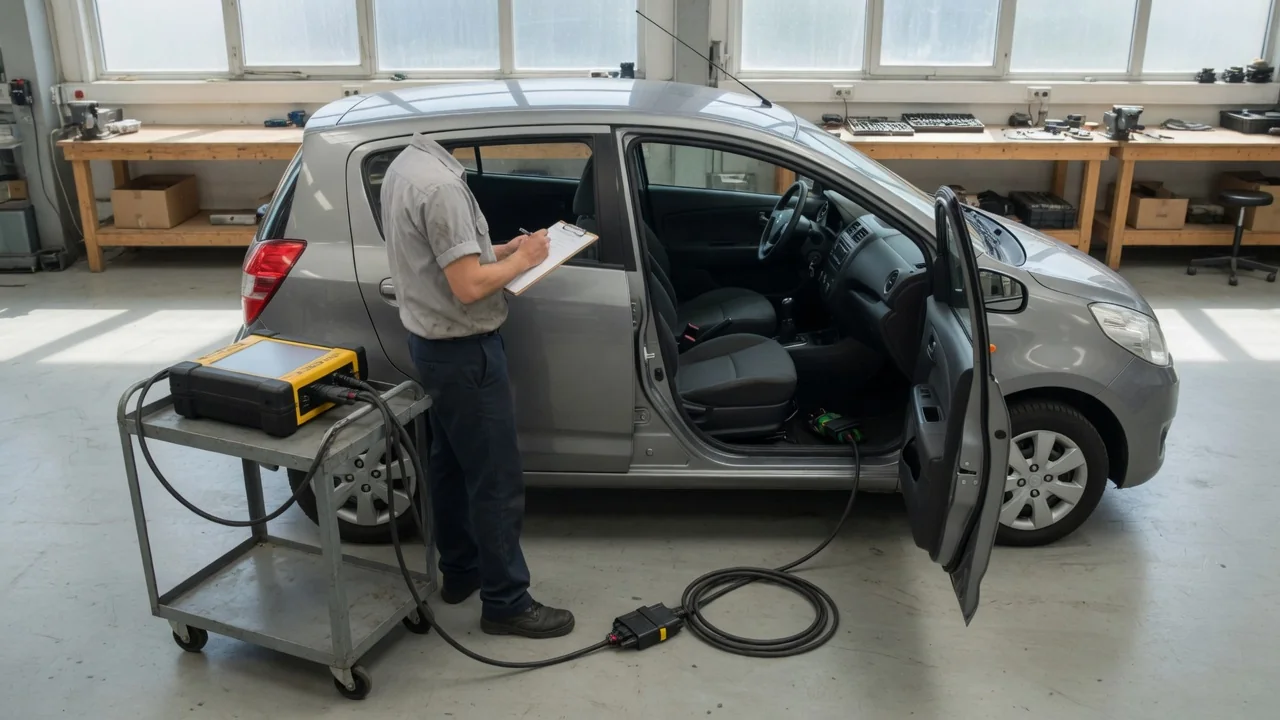
A P1635 code is a manufacturer-specific trouble code, so its meaning is not the same on every vehicle. Before treating any P1635 description as a diagnosis, confirm the definition in service information for the exact make, model, year, engine, and reporting module. Record symptoms and scan evidence next, then connect possible causes to that verified fault and complete repair verification with safe, vehicle-specific checks.
Verify the P1635 Definition for Your Vehicle
P1635 is manufacturer-dependent and must be identified using service information for the exact vehicle before anyone interprets it. A generic scan tool description can name a circuit, a sensor, a control module, or a communication function, yet those labels are not interchangeable across brands. Capture make, model, model year, engine, the vehicle identification number, and which module stored the P1635 code. Those details select the correct factory definition and keep later testing aimed at the system that actually set the fault.
A generic scanner description alone is often insufficient because manufacturer-specific trouble codes reuse the same alphanumeric label for unrelated systems. Two vehicles displaying P1635 can be reporting entirely different monitored functions, so a description copied from another make or year can send testing in the wrong direction. No universal P1635 definition or repair applies. Until service information for that VIN-matched vehicle confirms the wording, treat the code as a request for the correct procedure rather than a parts list.
Record Symptoms and Assess Whether to Keep Driving
Note warning lights, starting behavior, idle quality, power delivery, and the circumstances when the fault appeared. Write down whether the concern showed up after a cold start, under load, after an electrical event, or with no drivability change at all. Those observations are not a universal P1635 symptom list; they are the vehicle's actual behavior at the moment the code set. Matching that behavior to the verified fault definition later is more useful than assuming every P1635 code produces the same idle, stall, or power complaint.
The code alone cannot establish driving safety. Actual symptoms and the verified fault definition guide the decision to continue or stop. If the vehicle stalls, loses substantial power, or produces smoke or a burning smell, stop in a safe location and arrange assistance rather than driving farther to test the concern. An apparently normal-running vehicle still needs timely diagnosis even when no immediate drivability symptoms are present, because a stored P1635 code can still point to a monitored system that may degrade without warning.
Preserve Scan Results Before Clearing the Code
Record the full scan report, the exact code description returned by the scan tool, the reporting module, and any available diagnostic trouble code status such as current, pending, or history. Save freeze-frame data when the tool provides it, including engine speed, load, temperature, and voltage snapshots from the moment the fault set. Note companion codes in the same or related modules; they often supply context that a lone P1635 reading cannot. Status and freeze-frame together show whether the condition is active now or was captured earlier.
Also record recent repairs, battery trouble, jump-starting, or electrical accessory installation as background, without assuming those events caused the P1635 code. Clearing codes or disconnecting the battery before diagnosis can erase freeze-frame data, pending status, and related companion codes that a technician would use to reconstruct the operating conditions. Once that evidence is gone, an intermittent fault may not return immediately, leaving only a vague memory of a warning light. Preserve the scan results first so later testing can follow the recorded snapshot rather than a guessed condition.
Connect Possible Causes to the Verified Fault Definition
Organize possible causes around the specific system identified by the vehicle's service information rather than around a universal parts list. Testing belongs on the circuit or function named in that definition, not on every component mentioned in an unrelated P1635 description. Wiring, connections, power supply, grounds, or a monitored component may warrant inspection only when they are part of that definition. Borrowing a cause list from a different manufacturer wastes time and can lead to replacing parts that never participated in the P1635 fault.
A detected circuit or system fault is not proof that a named component has failed. Open circuits, high resistance, poor grounds, and supply voltage problems can set the same P1635 code as a defective sensor or actuator would, depending on how that manufacturer monitors the system. Treat the P1635 code as evidence to interpret, not as proof a part has failed. A control module fault, software intervention, or module replacement should be considered only after the factory procedure has produced evidence that the module itself is at fault, not merely because the code mentions it.
Separate Safe Observations From Professional Testing
Limit owner checks to recording symptoms and observing readily visible damage with the vehicle parked and powered off. Look for obviously loose connectors, damaged harness covering, or fluid contamination only where those items can be seen without removing covers or reaching into tight engine bays. Do not touch hot, moving, or high-voltage components. Probing circuits, bypassing connections, or disconnecting components to see what changes can introduce new damage or store additional misleading faults, including companion codes that were not part of the original P1635 event.
A technician uses the correct wiring diagrams and the manufacturer diagnostic procedure to choose relevant electrical or scan-tool tests after the P1635 definition is confirmed. Those steps may include commanded outputs, voltage checks, or continuity tests selected by the flowchart, not by guesswork. Intermittent faults often require reproducing the recorded conditions, including temperature, load, or electrical state captured in freeze-frame data, under controlled testing rather than replacing a convenient part. Guessing at a repair because the code is not currently present can hide the original fault until it returns on the road.
Confirm the Repair Resolved the P1635 Fault
Tie the repair to the demonstrated cause. Replacing parts solely because a P1635 code was stored is insufficient, because the failed test may have been a circuit condition, a power or ground path, or a related system identified by companion codes. Perform programming, coding, or setup only when the verified repair and the exact vehicle specify that step; module replacement without required initialization can leave the same warning lights active. Document what was found, what was corrected, and why that correction matches the factory definition rather than a generic parts guess.
Repair verification needs a post-repair scan, relevant functional checks, and confirmation that the original symptoms have resolved. Clear the codes only after the cause has been corrected, then operate the vehicle under conditions similar to those captured in freeze-frame data so monitors can run. An extinguished warning light immediately after clearing codes does not prove success; the lamp can stay off until the same operating conditions return. If the P1635 code or the original drivability complaint recurs, further diagnosis is required rather than repeating the same replacement.