P1631 Code: Vehicle-Specific Meaning, Causes, and Next Steps
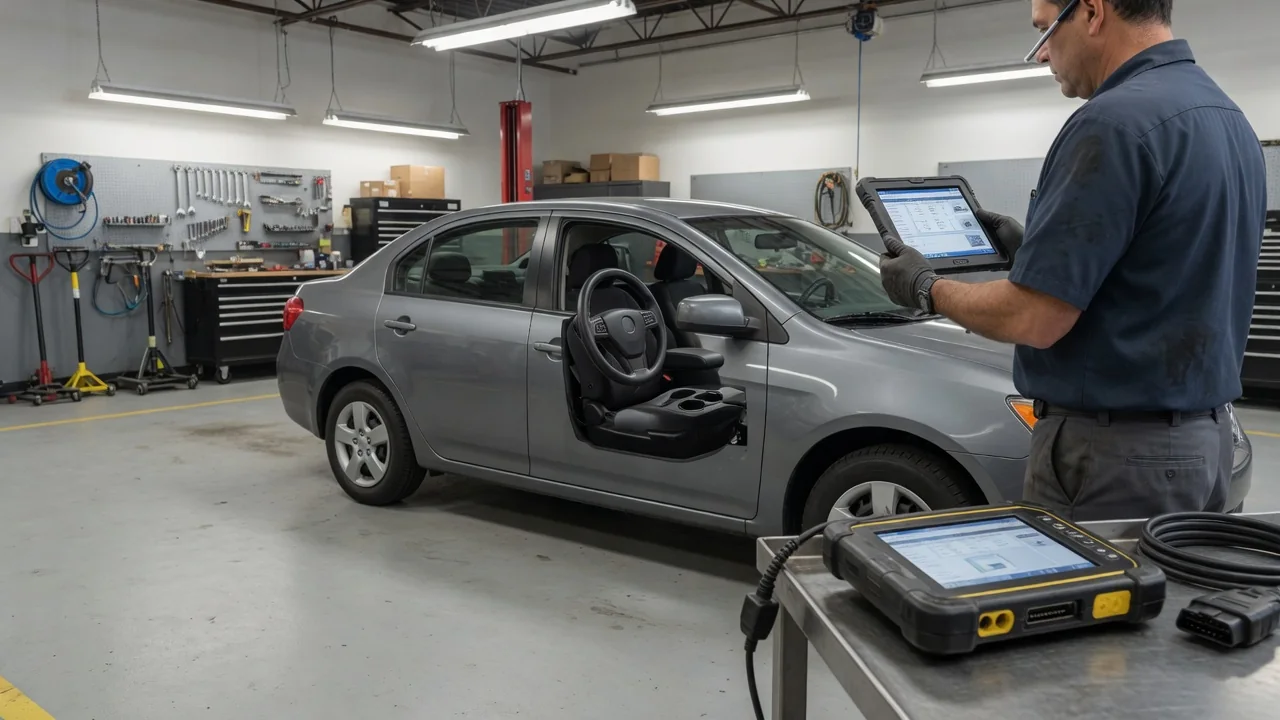
The P1631 code is a manufacturer-controlled diagnostic trouble code, so it does not carry one universal meaning across all vehicles. A diagnostic scan that reports P1631 is a starting point for vehicle-specific service information, not a parts list. Year, make, model, engine, and the reporting module all matter before any interpretation of immobilizer, security, or powertrain control module behavior can be trusted.
Verify the Vehicle-Specific Meaning of P1631
P1631 is a manufacturer-specific trouble code, which means the same five-character identifier can describe different conditions depending on the vehicle. Before assigning any definition, confirm the year, make, model, engine, and the module that stored the code against factory service information for that application. The vehicle identification number is the most reliable way to match the correct documentation. Treating P1631 as a generic powertrain or security label without that match can send diagnosis toward the wrong system entirely.
A scanner's generic text description for the P1631 code is often incomplete or borrowed from another manufacturer, so it should not be treated as the official definition. Some tools display a short phrase about an immobilizer, security indicator, or controller condition that may not apply to the vehicle in the bay. Manufacturer-specific interpretations belong only to documented applications. If service information ties P1631 to a security, controller, or other system on that exact vehicle, use that documented meaning and ignore conflicting generic wording.
Record Symptoms That Help Put the Code in Context
Note how the vehicle actually behaves while P1631 is stored: whether the engine cranks, starts, stalls, or continues to run normally. None of those outcomes is required by the code itself, so an idle-running vehicle and a no-start vehicle can both present P1631 for different documented reasons. Write down warning lights and security messages exactly as they appear on the instrument cluster, including a security indicator that stays on, flashes, or never illuminates. Exact wording on the display is more useful later than a paraphrase.
Record whether the condition is intermittent and whether it appeared after battery work, key replacement, or module service. Those events are context, not proof of a failed part. The P1631 code by itself cannot establish which component failed, and an observed symptom may share a different cause than the stored fault. Companion trouble codes, if present, may describe a related communication or power issue, or they may be unrelated. Keep the symptom log separate from any assumption about a failed immobilizer, key, or powertrain control module.
Consider Causes Only After Confirming the Definition
Possible causes should follow the verified system and the vehicle-specific diagnostic procedure, not a generic list of parts. Once the documented meaning of P1631 is confirmed, power supply, wiring, module communication, or authorization faults may be relevant if that procedure names them. A low battery, an open ground, interrupted communication with the powertrain control module, or an immobilizer authorization mismatch can each set a manufacturer-controlled code on some applications. Those possibilities remain hypotheses until the published tests for that vehicle are performed.
Recent repairs or programming belong in the history because they change what a technician should inspect first, but they should not be assumed to have caused the fault. A newly programmed key, a replaced battery, or a recently serviced module can coincide with P1631 without being the root problem. The code does not justify replacing a key, battery, sensor, or control module without supporting tests. A stored P1631 is evidence that a monitored condition was detected, not proof that any particular part has failed or that a replacement will restore operation.
Save Diagnostic Evidence Before Clearing P1631
Before clearing anything, record the full scanner description, the reporting module, and the code status if the tool provides them. Capture companion trouble codes from every module the scanner can reach, because P1631 may sit beside communication, immobilizer, or power-related faults that change the diagnostic path. Save freeze-frame data or event data when supported; those snapshots show operating conditions at the time the fault was recorded. Basic readers often cannot access every module, so a limited scan is incomplete evidence rather than a complete picture of the vehicle.
Safe observations include noting dashboard messages, a security indicator state, and any visible connector damage, corrosion, or loose terminals without disconnecting components or probing circuits. Do not clear the P1631 code or disconnect the battery in an attempt to reset the system before that evidence is saved. Clearing codes or removing battery power can erase freeze-frame data, companion trouble codes, and learned information that a later diagnostic scan needs. A blank code list after a reset also does not establish that the underlying fault has been repaired.
Understand What Professional Diagnosis and Repair Involve
A technician starts from the verified diagnostic procedure for that vehicle and evaluates companion faults before choosing any repair. Professional checks of power, grounds, module communication, and relevant system operation are appropriate only where the vehicle-specific definition of P1631 warrants them. That may include confirming supply voltage at a control module, verifying ground integrity, or checking whether the immobilizer and powertrain control module are exchanging the expected messages. Those tests interpret the stored code; they do not treat P1631 as automatic proof that a module, key, or wiring harness has failed.
Wiring repairs, component replacement, programming, or relearn procedures are outcomes of testing, not first-line substitutions. If the published path confirms a damaged circuit, a failed module, or a need to restore authorization data, those steps follow the manufacturer's process for that application. Repair verification includes checking the relevant system operation, performing another diagnostic scan, and determining whether P1631 returns under the conditions that originally set it. A code that stays gone after a complete drive cycle or the procedure's specified conditions is more meaningful than a temporary absence after a reset.
Decide Whether to Drive or Arrange Assistance
Whether the vehicle is suitable to drive depends on the symptoms and the confirmed meaning of the fault; the P1631 code alone cannot establish safety. If the engine stalls, power is lost, or urgent vehicle warnings appear, stop in a safe location and arrange assistance rather than continuing. For a no-start condition, avoid repeated starting attempts that can drain the battery or add unrelated faults, and seek diagnosis or roadside assistance. A running vehicle with only a stored code and no drivability complaint still needs the documented definition confirmed before assuming it is harmless.
Bring useful information to a repair appointment rather than only the five-character code. Include year, make, model, engine, and vehicle identification number; the full diagnostic scan results with reporting module and status; when symptoms began and whether they are intermittent; the exact warning lights and security messages displayed; and recent service history such as battery work, key replacement, or module programming. That package lets a technician match P1631 to the correct manufacturer documentation and start the published procedure instead of repeating a generic parts-guessing approach.