P1606 Code: Verify Its Meaning, Causes, and Repair Steps
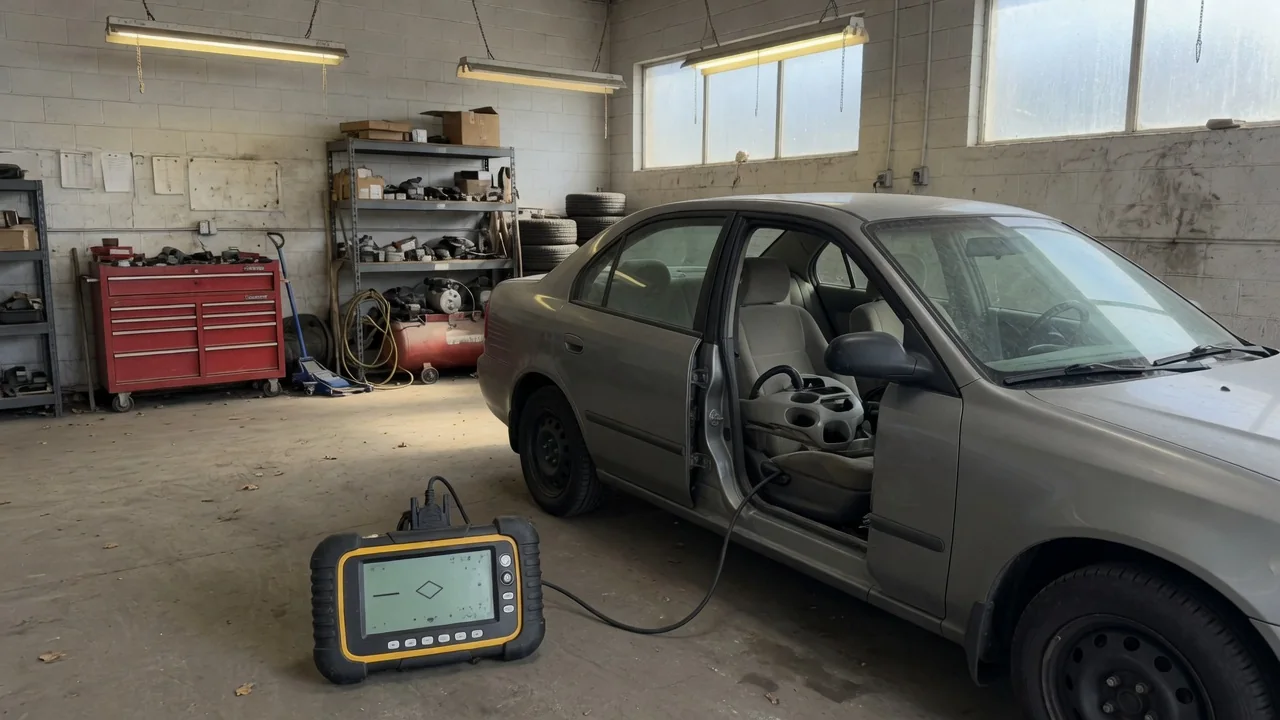
The P1606 code is a manufacturer-specific diagnostic trouble code, not a single SAE-defined powertrain failure. Its meaning depends on the vehicle that stored it, the control module that reported it, and the service information that matches that identity. A generic scanner label is a starting point, not a diagnosis. Confirm the make, model, year, engine, and configuration before treating P1606 as a failed part or a reason to keep driving unchanged.
Verify What P1606 Means for Your Vehicle
P1606 is manufacturer-dependent and must not be assigned a universal definition. Two vehicles can store the same alphanumeric identifier for unrelated monitored conditions, so a generic scan tool label is incomplete until it is matched to the reporting control module and the official description for that application. The vehicle identification number, make, model, model year, engine, and relevant configuration locate the correct service information. Without those details, treating the P1606 code as a failed sensor, wiring fault, or powertrain control module problem is guesswork.
Vehicle-specific service information, not a short scanner string, establishes the applicable definition. The diagnostic scan report should identify which module stored P1606, because a powertrain control module or another controller can report manufacturer-specific trouble codes that look identical in print. A generic description may mention a circuit, communication path, or internal function without naming a failed part. Stored and pending codes also need that module identity, since the same identifier can mean different tests depending on which controller ran them. Confirm the definition before planning any repair.
Record Symptoms and Decide Whether to Keep Driving
Record what the vehicle actually does rather than assuming a standard P1606 symptom list. Note warning lamps, starting behavior, idle quality, hesitation, power loss, unusual noises, and the conditions under which each observation occurs, such as cold start, highway load, or immediately after a stall. Those notes describe this vehicle, not every vehicle that stored the same code. A stored diagnostic trouble code can exist with no noticeable driving change, and symptoms alone cannot establish what P1606 means on this application.
Driving advice depends on actual behavior, warning indicators, and the verified fault definition, not on the code number alone. If the engine stalls, power drops sharply, the vehicle overheats, or other signs show that safe operation is at risk, stop in a safe location and arrange assistance. Mild or absent symptoms still do not prove the condition is harmless, because a manufacturer-specific trouble code can flag an intermittent monitor that has not yet affected drivability. Match the decision to keep driving to what you observe and to the confirmed meaning of P1606.
Identify Possible Causes Only After Confirming the Definition
Every proposed cause should be tied to the vehicle-specific P1606 definition and its documented diagnostic procedure, not to a generic list of powertrain parts. After the official description is confirmed, service information may point toward power supply, grounds, wiring, module communication, or a monitored component, but only where that procedure actually names those checks. Scanner wording that mentions a powertrain control module does not mean that module failed. Companion fault codes can change the order of tests, so causes should be considered in the sequence the manufacturer published for that definition.
Recent battery trouble, jump starts, charging-system work, or other electrical repairs are useful context because they can disturb voltage, grounds, or communication, yet timing is not proof of causation. A code that appeared after a battery replacement may still reflect an unrelated monitor, a stored condition that was never cleared, or a different circuit noticed in the same period. The P1606 code alone cannot justify replacing a control module, sensor, or other component. Replacement follows a confirmed definition, documented tests, and results that actually implicate that part.
Gather Useful Diagnostic Evidence Safely
Preserve the complete diagnostic scan report before clearing anything. Capture the exact P1606 description the tool displayed, the reporting module, whether the code is stored or pending, and any freeze-frame data that records engine speed, load, coolant temperature, voltage, or other operating conditions when the code set. Companion fault codes belong in the same record because they may change the diagnostic sequence or explain why a communication or power-related monitor set. That snapshot is more useful than a later memory of a single code number.
Limit owner observations to what can be seen safely with the vehicle parked and switched off. Look for obviously loose connectors, damaged harness covering, aftermarket devices, or fluid contamination in visible areas, and do not unplug modules, probe circuits, or handle high-voltage components. Clearing codes or disconnecting the battery can erase freeze-frame data, stored and pending codes, and adaptive context without proving that a fault has been repaired. If a light goes out after a reset, the monitor may simply not have run again under the conditions that originally set P1606.
Understand Professional Testing and Repair Decisions
A technician starts from the verified manufacturer definition and the procedure written for that P1606 code, not from a parts catalog. Companion fault codes are checked first when the service information says they can set the same monitor or interrupt communication with the powertrain control module. Appropriate testing may include power and ground integrity, circuit continuity or isolation, and network communication checks only when the documented path for this definition calls for those steps. Skipping to a replacement because the scanner mentioned a module or sensor ignores the evidence the procedure is designed to collect.
Component replacement or software-related work should wait for test results that actually implicate that item. Module programming, electrical measurements, and work near airbags, hybrid or electric high-voltage systems, or fuel-related hazards belong in professional testing guidance, not in improvised owner repairs. A control module that fails a specified power, ground, or communication check is not interchangeable with a module that merely stored P1606. Software updates, if listed in the applicable procedure, are likewise a documented step after the vehicle identity and current calibration are confirmed, not a default fix for every manufacturer-specific trouble code.
Confirm the Repair and Handle a Returning Code
Verification is more than watching a warning lamp go out. After work is completed, the original complaint still needs to be checked, and the vehicle should be rescanned under the operating conditions specified by the applicable service procedure. Erasing a diagnostic trouble code only removes the record; it does not prove the cause was corrected. A monitor that requires a particular drive cycle, temperature window, or communication state may not rerun immediately, so the absence of P1606 right after a clear is not the same as a confirmed repair.
If the P1606 code returns, preserve the new diagnostic scan report, freeze-frame data, stored and pending codes, and companion fault codes, and note whether the original symptoms or conditions also returned. Bring the vehicle identification number, make, model, year, engine, configuration, symptom notes, prior scan reports, and recent repair history so the next procedure starts from evidence rather than a single code label. A returning manufacturer-specific trouble code is another data point to interpret with the confirmed definition, not proof that the last part replaced was wrong or that a different part must now be swapped.