P1603 Code: Vehicle-Specific Meaning and Diagnostic Steps
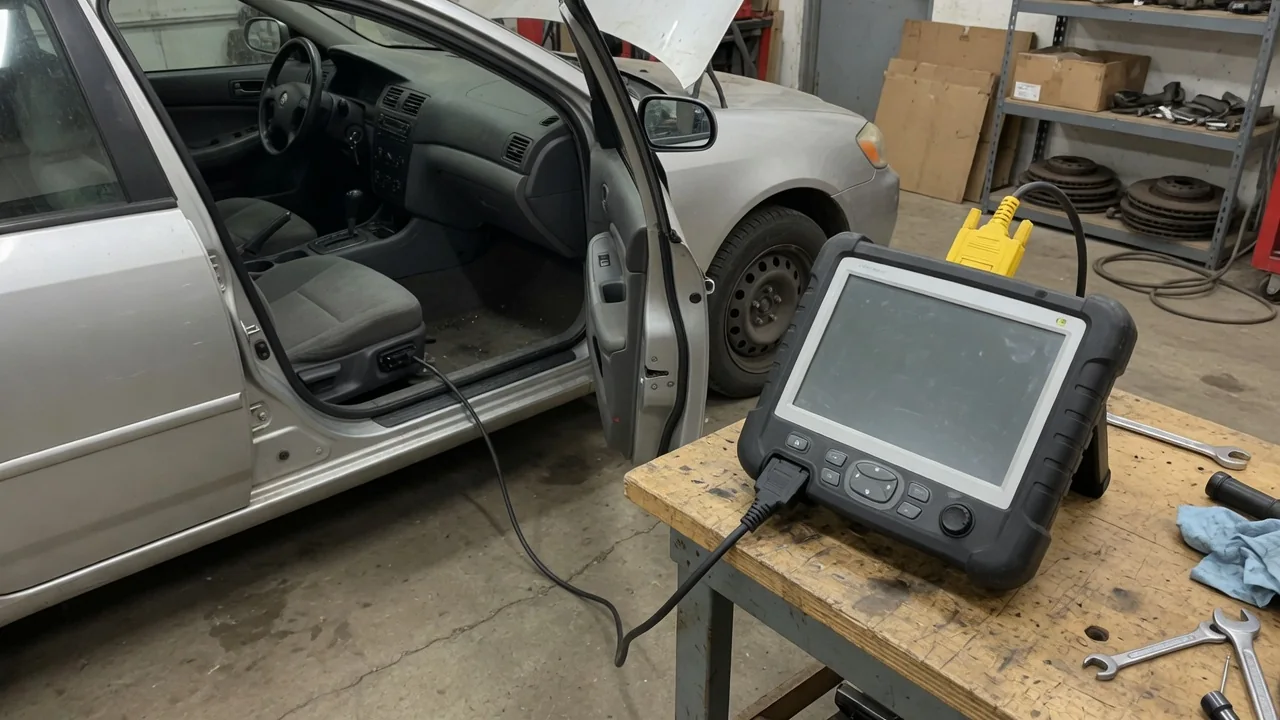
The P1603 code is a manufacturer-specific diagnostic trouble code, so it does not carry one shared meaning across every vehicle. Interpreting P1603 starts with the make, model, year, engine or powertrain, and the module that stored the result. A diagnostic scan report and the vehicle identification number help confirm the configuration before any cause is assumed. Until that definition is verified, treat the code as evidence to interpret rather than proof that a part has failed.
Confirm What P1603 Means for Your Vehicle
P1603 is a manufacturer-specific trouble code, which means two vehicles can display the same alphanumeric result and still describe different conditions. Before assigning meaning, record the make, model, year, engine or powertrain, and the reporting module that set the diagnostic trouble code. When trim, calibration, or powertrain options are unclear, the vehicle identification number identifies the built configuration so the correct service definition can be located. Without those details, a generic label attached to P1603 remains an unverified guess.
Vehicle-specific service information is the source that establishes both the official P1603 definition and the diagnostic path that matches that definition. A handheld scanner may print a short phrase, but that phrase can be incomplete, reused across platforms, or drawn from a generic database that does not match the reporting module. Confirm the wording against factory or equivalent service data for the identified vehicle, then follow only the procedure written for that confirmed meaning. Interpretation and testing diverge once the definition is wrong.
Record Symptoms and Decide Whether to Drive
Document how the vehicle behaves while P1603 is present without assuming those observations belong to every manufacturer definition of the code. Note whether it starts, idles and drives normally, stalls, loses power, or shows warning lights with little else happening. Those facts describe the current condition of this vehicle; they do not prove a cause and they do not apply automatically to another make that also stores P1603. Separate what you felt, heard, or saw from any conclusion about a failed part.
Record when the concern appears, including cold startup, after the engine is warm, during a particular drive cycle, or after recent battery, module, or other service work. Timing is diagnostic context, not a verdict. If the vehicle stalls, has severe power loss, or otherwise operates unsafely, stop in a safe location and arrange professional assistance rather than continuing to drive. The P1603 code by itself cannot establish drivability, because the same identifier can describe conditions that range from a stored history event to an active operating problem.
Preserve the Scan Data Before Clearing Anything
Save the exact P1603 description shown on the scan tool, the module that reported it, and whether the result is current, pending, or stored. Those status flags change how the finding is read: a current or pending result may still be forming, while a stored result can remain after the original condition has already changed. Capture this information in a diagnostic scan report before anyone clears codes, disconnects the battery, or performs a reset that erases memory. Once that snapshot is gone, later interpretation rests on incomplete evidence.
Record companion codes and any available freeze-frame data at the same time. Companion codes show other conditions the control system logged around the same period, which can support or redirect the verified P1603 path. Freeze-frame data captures operating conditions at the moment the code set, such as engine speed, load, temperature, or voltage if those parameters were stored. A stored P1603 may describe an earlier event rather than the present driveability complaint, and missing scan data sharply limits what can be inferred about sequence, duration, or related faults.
Evaluate Causes Using the Verified Definition
Possible causes belong only to the confirmed vehicle-specific definition and the diagnostic procedure written for that definition. A P1603 result that mentions a control module still does not prove the module has failed or that replacement is required. Power supply, wiring, operating-event history, software, or module concerns become relevant only when the applicable service information lists those checks for this vehicle. Skipping that verification turns a manufacturer-specific trouble code into an unguided parts replacement.
Treat recent battery work, jump starts, module programming, repairs, and the timing of symptoms as diagnostic context rather than proof of causation. A voltage interruption can coincide with a stored P1603 without being the root fault, and a repair completed the same week may be unrelated. Compare that history against freeze-frame data, companion codes, and the verified procedure so coincidental events are not elevated into a diagnosis. The code remains evidence to interpret until testing specified for this vehicle confirms a cause.
Use Safe Observations to Guide Professional Testing
Owner checks should stay limited to documenting symptoms, reviewing service history, and looking for obvious damage in accessible areas with the vehicle safely parked and switched off. Do not probe connectors, jump or bypass wiring, open a control module, or perform high-voltage work. Those actions can create new faults, erase useful data, or create a shock or fire hazard. Visible corrosion, a loose battery cable, or a damaged harness in plain view can still be noted and photographed for the technician without disturbing the circuit.
Professional testing of power supplies, grounds, circuits, or module communication is needed when the verified P1603 definition calls for those measurements. A technician can compare live data and circuit results with the service information for this vehicle, which an owner scan tool description cannot replace. Prepare a concise handoff that includes make, model, year, engine or powertrain, the vehicle identification number if known, the saved diagnostic scan report with companion codes and freeze-frame data, a clear symptom timeline, and notes about recent battery or repair work.
Confirm the Repair Addresses the Diagnosed Fault
Repair follows the cause confirmed by the applicable diagnostic procedure, not the mere presence of P1603. Clearing the code, disconnecting the battery, or resetting a module does not correct an underlying fault; it only removes the stored record. Parts replacement, software updates, or module work should wait until the verified procedure produces evidence that those actions address the identified condition. Substituting a controller because the P1603 code mentions one, without supporting test results, leaves the original problem unproven and may not restore normal operation.
After the confirmed repair, rescan the reporting module and related systems to see whether P1603 and any companion codes remain. Confirm that the original symptom is resolved under safe, appropriate conditions that match how the concern appeared, such as a cold start or a comparable drive, without recreating unsafe operation. If the code returns, further diagnosis is required rather than repeating the same repair. An intermittent concern may need additional documented observations, freeze-frame comparison, and another pass through the vehicle-specific procedure before the fault is considered closed.