P1602 Code: Vehicle-Specific Meaning and Safe Diagnosis
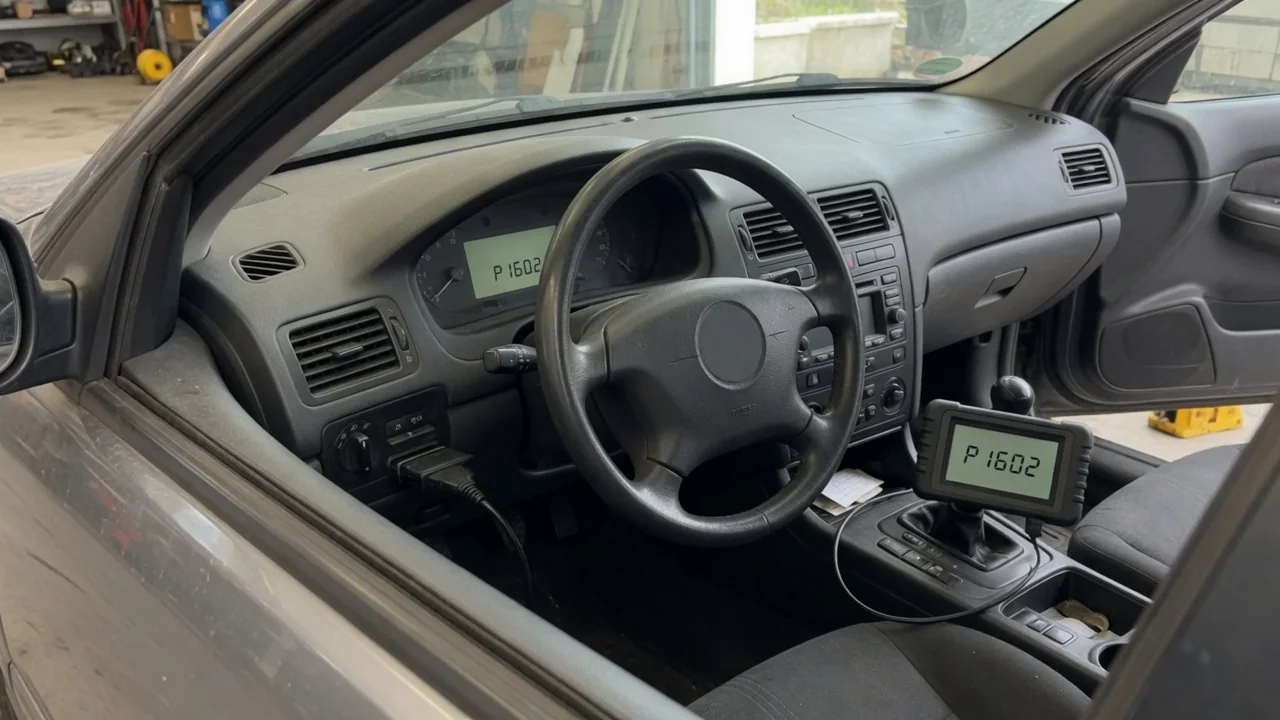
A P1602 code creates confusion because it means different things to different automakers. Unlike standardized OBD-II faults, this manufacturer-specific trouble code requires careful interpretation. You cannot safely assume it describes a powertrain control module failure or a battery voltage problem without checking your vehicle's application. The scanner label, companion codes, freeze-frame data and the symptoms you observe all shape what should be checked next. This guide explains why verification comes first, how to gather evidence without disturbing the fault, and what professional diagnosis should prove before any repair is authorized.
Verify What P1602 Means for Your Vehicle
P1602 does not carry one universal definition across all cars and trucks. It belongs to a range set aside for manufacturer-specific trouble codes, so its meaning is tied to the make, model, year, engine and the specific control module that reported it. A definition valid for one brand may be meaningless or completely different for another. Interpreting the code correctly therefore starts with the exact vehicle application and the precise scan report description, not with a generic online lookup that claims one catch-all failure.
Some vehicle families use P1602 to flag a control-module power supply interruption, often described as a voltage drop, lost keep-alive memory or interrupted feed to the powertrain control module. However, that interpretation applies only where the manufacturer's service information says so. Even then, a brief scanner label such as "PCM power interruption" is not proof that the module is defective. It indicates a recorded event or mismatch, and the cause may lie in a battery, connection, harness or another input. The code is a starting point for diagnosis, never a parts replacement verdict.
Record Symptoms and Decide Whether to Drive
Before deciding how urgent the situation is, record what the vehicle actually does. Warning lights, slow cranking, failure to start, stalling and obvious electrical oddities are all worth noting, but they are nonspecific. A P1602 may appear along with other companion fault codes that better explain the symptom, or it may be stored after an earlier event with no immediate drivability problem at all. Writing down when and under what conditions each symptom occurs makes the later diagnostic work faster and more accurate.
If the vehicle stalls, loses electrical power or behaves unpredictably in traffic, stop in a safe location and arrange assistance. A verified power-supply-related P1602 can point toward problems that may return without warning. On the other hand, many drivers see the code with no noticeable change in operation, and in those cases the vehicle may be driveable for a short, careful trip to a shop, provided local conditions allow. Drivability and urgency depend on the verified meaning and the actual symptoms, not on the code number alone.
Identify Relevant Events and Possible Causes
A key question is what happened just before the code appeared. Battery replacement, a discharged battery, jump-starting or recent electrical work can all disturb module power and leave a stored P1602 in some systems. Even a brief interruption during a battery cable removal may be recorded. If the code appeared after such an event and the vehicle has operated normally since, the fault may simply be a historical marker. That does not mean it should be ignored, but it changes the probable cause list and often reduces urgency.
For a verified power-supply-related definition, the fault may involve the battery itself, charging system performance, loose or corroded connections, wiring damage or the module's power feed. None of these can be assigned from the code alone. An earlier interruption may leave a stored code even after normal operation resumes, because some modules log the event but do not clear it until a specific test sequence runs. For other manufacturer definitions of P1602, the cause list must be tied to that definition; battery-related explanations should not be applied automatically.
Collect Useful Evidence Without Disturbing the Fault
Preserve the diagnostic evidence before clearing anything. Save the complete scan report, including the exact code description, the reporting control module and whether the code is active or stored. Note any companion fault codes, because they often point toward the real problem while P1602 is a secondary result. Freeze-frame or event data, when available, can show engine speed, temperature, voltage and other conditions at the moment the fault was recorded. Copy or photograph these details rather than relying on memory.
With the vehicle off, you can visually inspect accessible battery connections for obvious corrosion, looseness or damage. Do not touch, disconnect or bridge any terminals, and do not attempt live-circuit probing as a shortcut. A damaged cable end or heavily corroded terminal is useful information for the technician, but it still requires professional confirmation. If visible damage is present, especially at a main power or ground connection, arrange for the vehicle to be looked at rather than continuing to drive and risking a repeat interruption.
Use Professional Testing to Choose the Right Repair
A professional diagnostic approach begins with the verified vehicle-specific service procedure for P1602. That procedure tells the technician which circuits and conditions to test in what order. For applicable power-supply faults, this typically includes assessing battery condition, charging performance, power-feed integrity and relevant grounds. The goal is to find measurable evidence of a problem, such as excessive voltage drop across a connection, poor charging output under load or an intermittent open in a module feed, rather than assuming a part has failed.
Intermittent faults may require reproducing the reported conditions, such as temperature, vibration or electrical load, while monitoring voltage behavior at the module. Only when the test results point clearly to a battery that cannot hold capacity, a wiring repair or a confirmed module power-feed fault should that repair be authorized. P1602 alone never justifies replacing a control module. A module may store exactly this code when its supply is interrupted, and replacing it without correcting the supply or connection often results in the same code returning.
Confirm the Cause Is Resolved
Clearing P1602 removes the diagnostic evidence but does not repair the underlying cause. The code may stay away briefly, but the reason it was stored is still present unless testing proved otherwise. After a repair, confirmation should include an appropriate rescan and checks under the conditions associated with the original fault, such as cranking, driving, or cycling the ignition. A code that remains absent after a documented one-time event, such as a battery replacement with a known interruption, is different from a code that returns days later and needs further investigation.
For a follow-up appointment, bring the original scan report, any repair history, a written timeline of symptoms and any returning codes. That information helps the technician distinguish a new fault from an incomplete repair. If the code reappears, the earlier diagnosis should be reconsidered rather than repeated. Returning with the same P1602 does not automatically mean the first repair was wrong; it means the prior test plan did not fully capture the conditions that set the code. The goal is a confirmed cause and a confirmed absence over a realistic operating period.