P1600 Code: Vehicle-Specific Meaning and Safe Diagnostic Steps
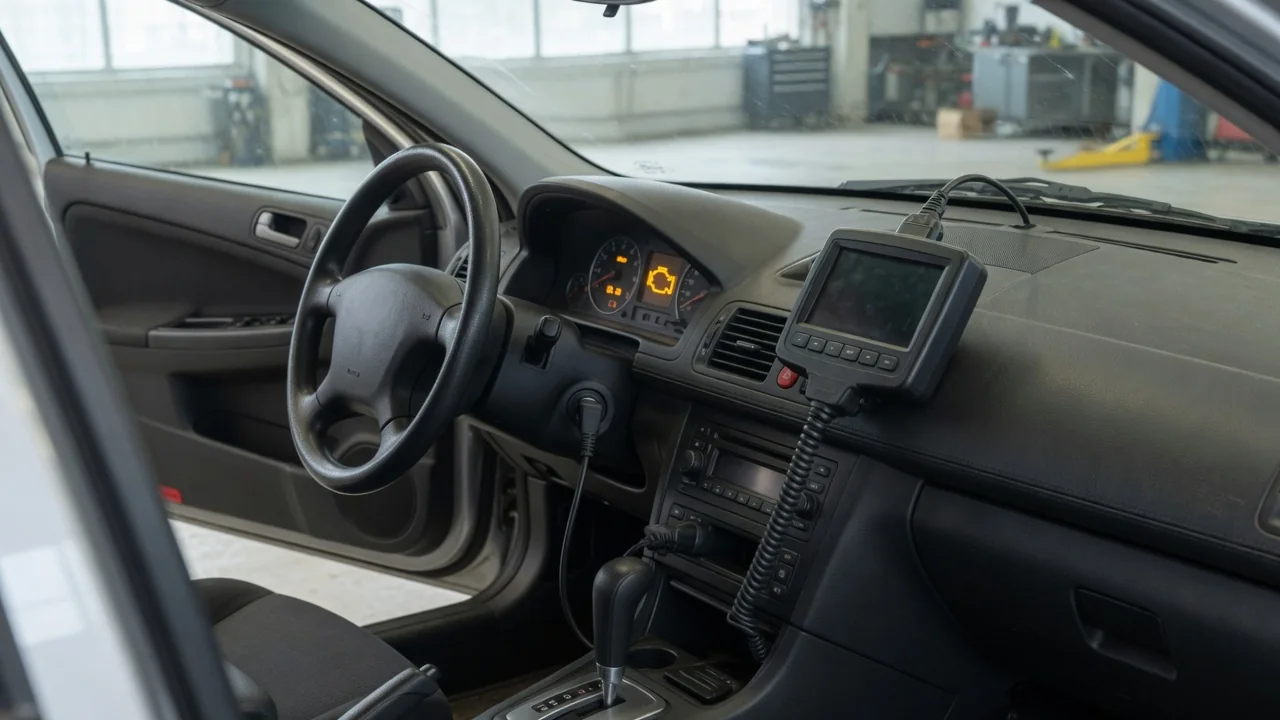
A P1600 code is a manufacturer-specific diagnostic trouble code, not a universal definition that names a failed part. Its meaning depends on the vehicle's make, model, year, and powertrain, so the same number can describe different control-module or electrical issues on different applications. Treat the stored result as evidence to interpret with vehicle-specific service information, freeze-frame data, and pending codes rather than as proof that a component has failed.
Verify What P1600 Means for Your Vehicle
Before you interpret a P1600 code, confirm what that number means for the exact vehicle in front of you. Manufacturer-dependent trouble codes are assigned by the automaker, and P1600 is not a generic powertrain definition that is identical across brands. Identification starts with make, model, model year, and powertrain, plus the vehicle identification number when the service information is VIN-specific. Until those details match the procedure you are using, any label on a scan tool is only a starting point, not a confirmed diagnosis.
Any manufacturer-specific definition must be verified against the stated application before it is used. A scanner's generic text string can summarize a family of codes, point to a control module, or reuse wording from another market, yet still miss the procedure that applies to this chassis. That is why a generic label is insufficient to identify a failed component. Without matching service information, P1600 remains a stored diagnostic trouble code that needs interpretation, not a parts list.
Symptoms to Record and Signs to Stop Driving
Observations that sometimes accompany a P1600 code include a warning light, hard starting, stalling, or a change in how the vehicle runs. Those signs are not guaranteed for every manufacturer application, so they should be recorded as they appear rather than assumed. Note whether the issue shows up at startup, after the vehicle has sat, or after recent electrical work such as a battery replacement or jump-start. Timing and recent service give a technician useful context when the verified definition is later applied.
A stored or pending P1600 result can exist without any noticeable driving complaint, and the mere presence of the code does not establish how severe the fault is. Driveability can remain normal while the control module still logs a condition that needs investigation. If the vehicle stalls, loses power in a way that makes driving unsafe, or produces smoke or a burning smell, stop in a safe location and arrange assistance rather than continuing. Those conditions are safety issues independent of how the scan tool labels P1600.
Possible Causes Depend on the Verified Definition
Possible causes for a P1600 code belong to the verified vehicle-specific definition and its diagnostic procedure, not to a generic list of failed parts. Where the applicable service information supports those paths, a technician may evaluate battery voltage, grounds, wiring, electrical connections, software, or an internal control-module fault. Those categories are only relevant when the procedure for that application names them. Jumping to a module replacement because the code mentions a controller is a common error when the definition has not been confirmed.
Recent battery discharge, jump-starting, or control-module work should be treated as diagnostic context, not as proof of what set P1600. Low supply voltage or interrupted communication can leave a stored code after the original event has passed, yet the same history can also be coincidental. P1600 alone does not justify replacing a control module or any other named component. Replacement decisions belong after the verified procedure has isolated a cause, because a manufacturer-specific trouble code is evidence of a condition, not a failed-part verdict.
Safe Checks Before Clearing the Code
Before anyone clears a P1600 code, save the complete scan report, the exact code descriptions, available status information such as pending versus stored, and freeze-frame data. Those records preserve operating conditions at the time the diagnostic trouble code set and cannot be reconstructed after a reset. Also note accompanying codes and any recent repairs so a technician can judge whether they affect the P1600 diagnosis. Companion faults and recent electrical work often change the order of tests once the vehicle-specific definition is known.
Owner checks should stay in accessible areas with the vehicle off. Look for obvious corrosion, damaged wiring, or electrical connections that appear loose, and leave those items undisturbed rather than pulling connectors or probing terminals. Clearing codes or disconnecting the battery can erase freeze-frame data and pending codes without proving that a fault is repaired. Connector probing, opening a control module, live-circuit testing, and high-voltage work are not owner tasks; they require the equipment and procedures in the vehicle's service information.
Professional Tests That Establish the Repair
A technician establishes the repair by using the verified P1600 definition, companion codes, and the manufacturer's diagnostic procedure to choose tests. That sequence, not a generic scan-tool description, determines whether power and ground integrity, wiring evaluation, or module communication testing apply. Those checks are professionally performed when the service information calls for them, because incorrect probing can create new faults. The same procedure also identifies which measurements, communication results, or inspection findings would confirm or rule out each listed cause.
Software or configuration checks may be relevant when the vehicle's service information includes them for this diagnostic trouble code, especially after a module was replaced, a battery was disconnected, or programming was interrupted. They are not automatic for every P1600 application. Component replacement, programming, or wiring repairs should wait for supporting test results rather than follow the code number by itself. Matching battery voltage, ground integrity, communication status, and procedure-specified measurements to the verified definition is what turns a stored code into a justified repair.
Confirm the Fault Is Resolved After Repair
A completed repair should address the confirmed cause of the P1600 code rather than merely turning off a warning light. Document what was found, what was corrected, and the test results that supported that work, then clear codes only when the applicable verification procedure says to do so. Rescan afterward using the same vehicle-specific process so pending codes and freeze-frame data can be compared with the original report. The goal is confirmation that the logged condition is gone, not a blank screen obtained by a reset.
After the repair, check whether the original symptoms and the P1600 code return under safe operating conditions that match how the vehicle is normally used. An immediate clean scan may not establish a lasting fix when the fault is intermittent, because some control-module conditions set only after heat, soak, or a specific drive cycle. If the code returns, continue diagnosis with the original records and the new scan data instead of repeating resets. Each reset without new evidence discards freeze-frame information that could isolate the remaining cause.