P1556 Code: Meaning by Make, Symptoms, Causes and Safe Diagnosis
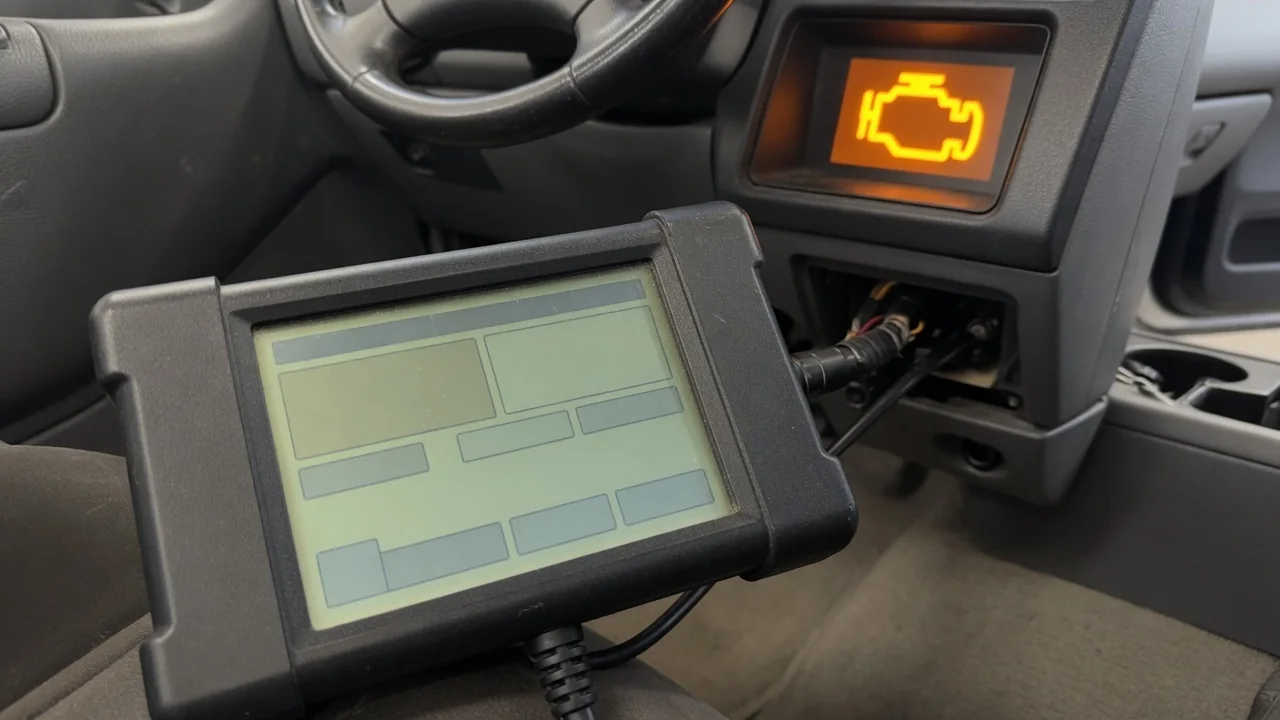
A P1556 code appears when your vehicle’s engine control module flags a fault specific to the manufacturer’s programming. Unlike generic P0xxx codes, P1xxx codes like P1556 have different meanings depending on the make, model, and engine. Understanding this code requires moving beyond universal lookup tables and confirming the exact definition for your vehicle before attempting repairs. The symptoms, underlying causes, and diagnostic approach all hinge on that vehicle-specific interpretation.
What P1556 Means and Why the Definition Depends on Your Vehicle
Because P1556 is a manufacturer-specific trouble code, its definition shifts between automakers and even between different models from the same brand. One manufacturer may use P1556 to indicate a charge air cooler temperature sensor circuit issue, while another uses it for an idle air control valve position error. Generic code readers often display a single generic label that does not account for these differences, leading to incorrect part replacement. Always verify the meaning using factory service information, a dealer, or a make-specific scan tool that knows your exact vehicle configuration.
When you retrieve a P1556 code, write down your complete vehicle identification, including year, make, model, engine size, and transmission type. This information narrows down the manufacturer’s definition and applicable technical service bulletins. Many code lookup websites and cheap apps list one broad description for P1556, which may not match your car’s control module logic. Rather than acting on that generic text, confirm the exact definition through official channels. This extra step protects you from chasing a phantom fault or replacing a perfectly good component.
How to Read a P1556 Code Correctly With a Scanner
A basic OBD-II scanner reads standardized emissions-related codes, but P1xxx codes require an enhanced scan tool or manufacturer-level diagnostic software to reveal the full definition and live data. Generic readers may display P1556 with a vague description that is not enough for accurate diagnosis. Before clearing the code, record all stored, pending, and history codes, as well as the freeze frame data that captures engine conditions at the moment the fault was set. That data often shows whether the problem occurred during cold start, acceleration, or steady cruising.
Clearing P1556 without first saving the freeze frame and companion codes removes the clues a technician needs to trace the fault efficiently. Other trouble codes stored alongside P1556 can point to a shared power supply, ground, or communication issue rather than two separate failures. For instance, if you also see a code for a reference voltage circuit, the root cause might be a wiring harness problem affecting multiple sensors. Write down every code and the order they appear, then share that full list with your repair shop.
Symptoms Drivers May Notice With P1556
Because P1556 definitions vary by make, the symptoms drivers report also differ widely. Some vehicles may exhibit a steady check engine light with no noticeable change in performance, while others may experience rough idle, hesitation, or reduced fuel economy. Pay attention to additional warning messages on the instrument cluster, such as a traction control or electronic throttle warning, because these can indicate which subsystem is affected. Note when the symptom occurs: during a cold start, at highway speed, after the engine warms up, or only under hard acceleration.
In many cases, P1556 sets without any drivability symptom, and the vehicle continues to operate normally. That does not mean the code is harmless, but it does suggest the monitored circuit may have an intermittent fault or a pending code that has not yet escalated. If the check engine light flashes while driving, or if the car stalls, misfires, or enters a reduced-power mode, stop driving as soon as it is safe and have the vehicle towed to a shop. A flashing light signals a fault that can damage the catalytic converter or create an unsafe driving condition.
Possible Cause Categories Once the Definition Is Confirmed
Once you confirm the manufacturer-specific definition of P1556, the likely causes typically fall into broad categories: damaged wiring or connectors, a faulty sensor or actuator, an open or shorted circuit, or a software issue inside a control module. However, you cannot rank these probabilities without the exact diagnostic tree for your vehicle. A P1556 that points to a turbocharger bypass valve on one car might indicate a battery current sensor on another. Buying a part based on a generic internet definition often leads to wasted money and an unresolved check engine light.
A stored code like P1556 is not proof that a specific component has failed. The engine control module sets a code when it detects a signal outside the expected range, but that signal can be corrupted by a broken wire, a loose connector, or even low system voltage. The code tells you which circuit or monitored function is misbehaving, not which physical part to replace. Always consider the entire electrical path and the environmental conditions stored in the freeze frame before condemning any component.
Safe Checks You Can Do Before Visiting a Shop
Before visiting a shop, you can perform a few safe visual checks with the engine off and the key removed. Inspect the battery terminals for corrosion or looseness, because unstable voltage can cause false trouble codes. Look for any wiring harness connectors that appear disconnected, especially around areas recently serviced or exposed to road debris. Check for visible insulation damage, melted wires, or harnesses rubbing against sharp metal edges. Do not poke or probe wires with a test light or multimeter, and never attempt to repair airbag, fuel system, or high-voltage components yourself.
Check with a dealer or the manufacturer’s official website to see if any technical service bulletins or software updates cover P1556 for your vehicle. Some manufacturers release updates that address false codes or improve sensor monitoring strategies. Also note any recent electrical work, battery replacement, or aftermarket accessory installation, because these events can trigger stored codes if a connector was left loose or a ground wire was disturbed. Providing this history to your technician helps them focus their diagnosis and avoid unnecessary testing.
When Professional Testing Is Needed for P1556
Accurately diagnosing P1556 typically requires the manufacturer’s test procedures, wiring diagrams, and sometimes a scan tool that can command actuators or read live data. A professional technician will follow the diagnostic trouble tree for your exact vehicle, testing the circuit under the conditions that set the code. When you take the car in, provide the code, freeze frame data, other stored codes, and a description of when the symptom appears. The more complete your information, the faster the technician can isolate the root cause without guesswork.
If you clear P1556 and the code returns after a short drive, that indicates the fault is still present and needs proper diagnosis. Do not assume the problem is urgent or expensive based on the code alone, because some P1556 definitions relate to minor circuit faults that are inexpensive to repair, while others can involve complex module replacement. Likewise, do not ignore the code indefinitely, since some underlying faults can worsen over time and affect other systems. A professional evaluation will give you an accurate repair plan and cost estimate based on evidence, not a generic code description.