P1524 Code: Vehicle-Specific Meaning, Causes and Next Steps
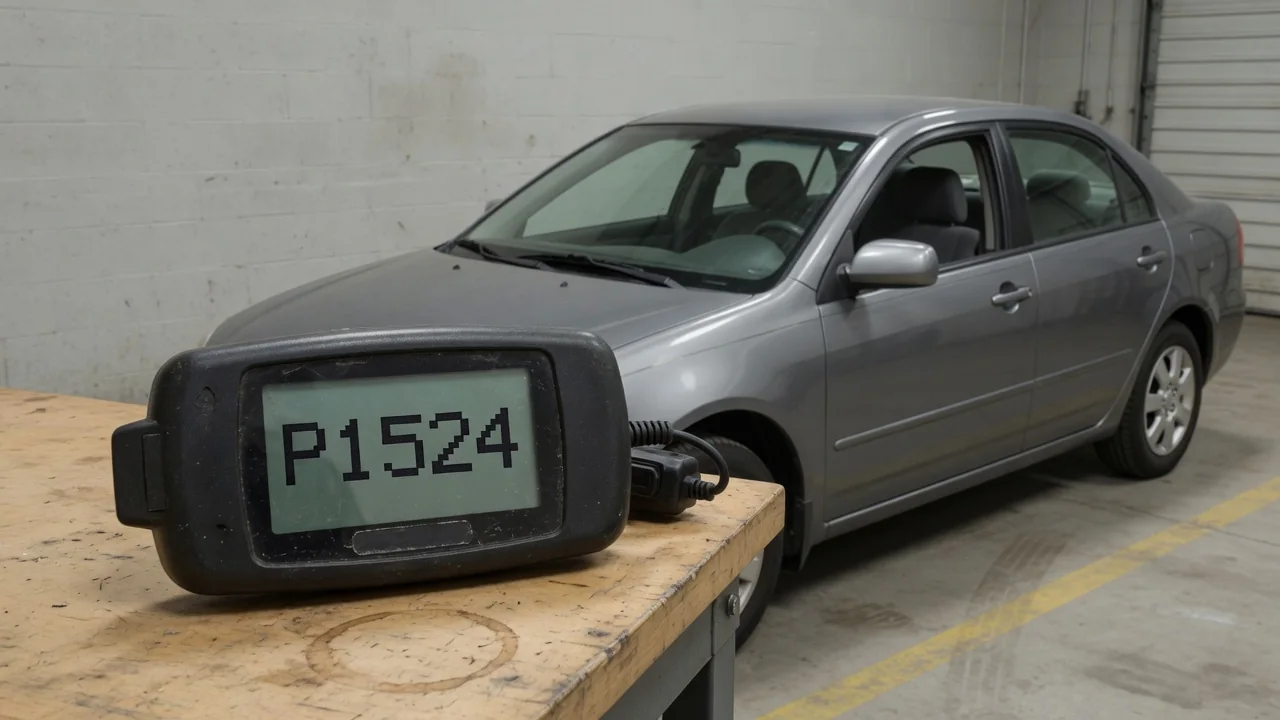
P1524 is a manufacturer-specific trouble code, so its meaning is not the same on every vehicle. A scan tool may report a P1524 code, but that reading still needs the make, model, year, engine, and reporting module before it can be interpreted. Use this as a guide to confirm the definition, record symptoms, consider likely causes only after that confirmation, and take safe next steps without treating the code as proof that a particular part has failed.
Verify What P1524 Means for Your Vehicle
Unlike many standardized powertrain codes, P1524 does not have a single industry-wide component or fault definition. The same numeric label can describe different monitored conditions depending on the automaker and the control software in that application. Before assigning a meaning, confirm the vehicle identification number details: make, model, model year, engine, and which module stored the result. The powertrain control module is a common reporter, but another controller can set a manufacturer-specific trouble code, so the reporting module is part of the identification, not an optional extra.
Vehicle-specific service information is the source for the exact definition and the conditions that allow P1524 to set. A scanner's generic description may be incomplete, shortened, or drawn from a different brand's library, which can send testing in the wrong direction. Present a manufacturer-specific meaning only when it is verified for that stated vehicle application; leave unverified applications undefined rather than guessing a sensor, actuator, or circuit. Until the factory wording and enable criteria are confirmed, treat the P1524 code as a labeled event that still needs context, not as a named failed part.
Symptoms and Warning Signs to Record
Symptoms associated with a P1524 code depend on the confirmed application, and a stored code can appear without an obvious driving complaint. A pending code may also exist before a warning light is commanded on, so the absence of a lamp does not mean the monitor never detected a condition. Record any dashboard warning messages exactly as displayed, along with changes in starting, idle quality, power delivery, or engine sound. Treat those notes as observations for that vehicle, not as a universal symptom list that applies to every P1524 case.
Document when the concern appeared: at startup, after warmup, or during ordinary driving. Note ambient conditions, recent service, and whether the issue was brief or ongoing, but do not try to recreate unsafe behavior such as overheating, loss of braking assist, or a stall in traffic. An oil-pressure warning, overheating, stalling, or severe abnormal noise is a reason to stop safely and arrange assistance, regardless of how a scan tool labels P1524. Those alerts describe an immediate operating risk; the code remains supporting evidence until a technician confirms what the vehicle actually detected.
Possible Causes After the Definition Is Confirmed
Once the factory definition and code-setting conditions are confirmed, possible causes should be framed around that monitored system rather than around a generic parts list. A P1524 code records that a control module detected a condition that met its criteria; it does not, by itself, prove that a named component has failed. Wiring, connectors, sensors, mechanical binding, fluid condition or level, and control strategy can all produce a similar stored result when the procedure for that vehicle allows those paths. Include electrical, mechanical, fluid-related, or control-related possibilities only where the vehicle-specific diagnostic procedure supports them.
Accompanying codes, recent repairs, and the timing of symptoms help decide what to test first without establishing the cause. A related circuit or communication code can shift attention toward wiring or the powertrain control module inputs, while a mechanical complaint that appeared right after fluid service may point toward a different check. Freeze-frame data captured when the event set can show engine speed, load, temperature, and other operating points that match or contradict a suspected path. Use those clues to order diagnostic testing; do not treat them as a substitute for the manufacturer's confirmation steps.
Safe Checks Before a Diagnostic Appointment
Before clearing anything, record the full scan report, the reporting module, whether P1524 is pending or stored, and any available freeze-frame data. Save the scanner's exact wording rather than paraphrasing, and write down the vehicle identification number, mileage, and engine description so a technician can verify the interpretation against service information. A warning light history and companion codes belong in the same notes, because a later erase can remove the snapshot that shows when the condition occurred. That documentation is often more useful than an empty memory after the lamp has been reset.
Limit owner observations to what can be seen with the vehicle parked safely and the engine off: visible leaks, dashboard messages, loose caps, and recent work or fluid changes. Consult the owner's manual for any permitted routine checks, such as indicated fluid levels when the procedure is described as owner-accessible. Do not probe circuits, bypass controls, or disassemble components. Disconnecting the battery or erasing codes prematurely can drop freeze-frame data, adaptive values, and the distinction between a pending code and a stored code, leaving the shop with less evidence for diagnostic testing.
Professional Testing and Repair Decisions
A technician should confirm the P1524 definition for the exact vehicle configuration and follow the diagnostic procedure written for that calibration, not a generic flowchart from another brand. Testing may involve relevant live data, circuit checks, or mechanical measurements, depending on the verified meaning and the enable conditions in service information. Manufacturer-dependent codes require that vehicle-specific confirmation because similar numbering can monitor unrelated systems. Skipping the identification step can produce a parts-cannon repair that never addresses the condition the powertrain control module actually reported.
Repair recommendations should wait for test results that support them. Replacing a sensor, actuator, or harness because the code name sounds like that part is not diagnostic testing; the code is evidence of a detected condition, not proof of a failed component. Software-related work, such as a control-module update or relearn, belongs in the same category: consider it only when the verified procedure and measured results point there. Until the underlying fault is identified, the appropriate fix and the repair scope remain uncertain, including whether one repair will resolve related codes.
Confirming the Repair and Handling a Returning Code
Confirming a repair means more than watching a warning light go out. Recheck the original complaint and reevaluate P1524 status under the manufacturer's specified conditions, which may include a drive cycle, temperature window, or repeated operation of the monitored system. An extinguished lamp or an erased code alone does not establish a successful repair, because a pending code can return once the monitor runs again. Compare post-repair freeze-frame and live data with the earlier snapshot to see whether the previously detected condition is still present.
If the P1524 code returns, save the new scan report, note whether it is pending or stored, and record when it reappeared relative to driving, temperature, and any recent work. That follow-up information is what allows another round of diagnostic testing instead of repeating an unverified parts replacement. Do not assume continued driving is safe simply because the vehicle still moves; base next steps on current symptoms, warning messages, and the confirmed vehicle-specific fault. Severe noise, stalling, overheating, or an oil-pressure warning still calls for stopping safely and arranging assistance.