P1515 Code: Verify Its Meaning, Symptoms, and Repair Steps
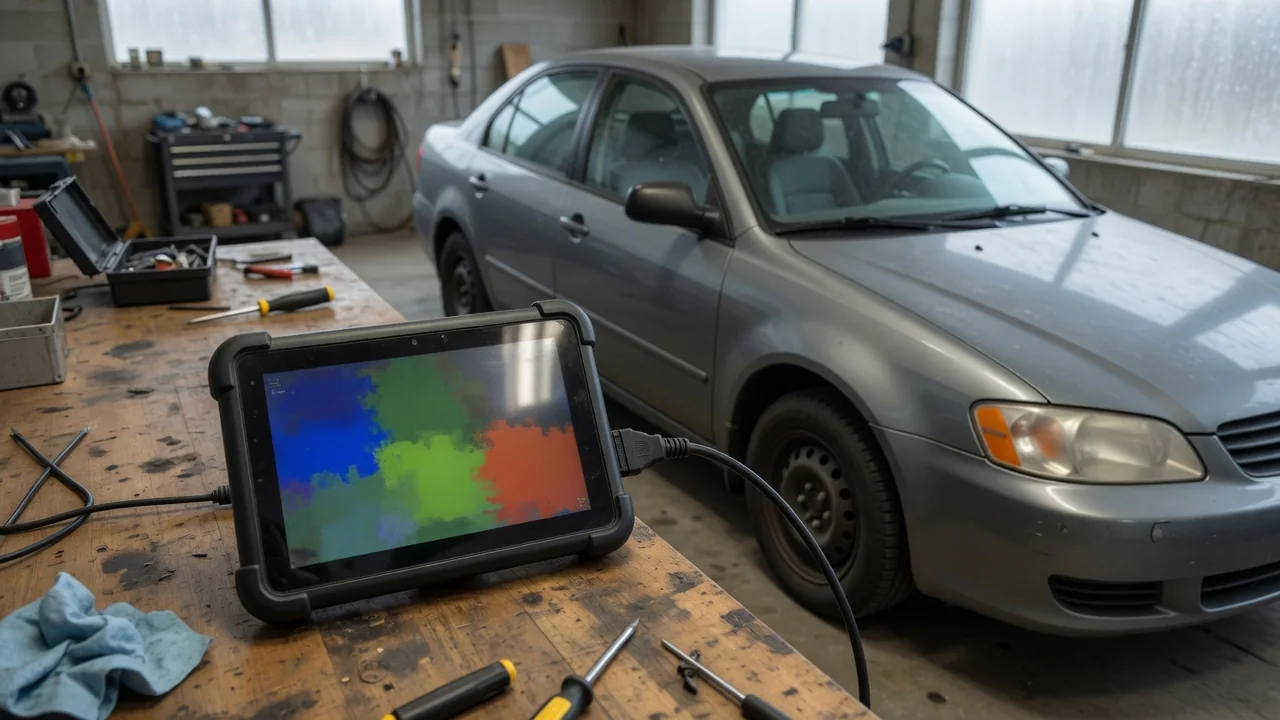
A stored P1515 code is a manufacturer-specific trouble code, not a single industry-wide definition. What it means depends on the make, model, year, engine, and vehicle identification number, so the same five-character identifier can describe different monitored conditions on different vehicles. Use factory service information to confirm the exact meaning, then match symptoms and diagnostic scan tool data to that definition before any repair decision.
Verify What P1515 Means for Your Make and Model
P1515 cannot be assigned one universal definition because it is a manufacturer-specific trouble code. Control modules on different brands use the same alphanumeric label for different tests, so treating a generic internet summary as the meaning for every vehicle is incorrect. Before interpreting the stored result, confirm the make, model, year, engine family, and relevant vehicle identification number details. Those identifiers tell a technician which control module set the code and which factory service information applies to that application.
Vehicle-specific service information establishes the exact definition, the conditions that must be present for the test to run, and the approved diagnostic procedure. Make-specific meanings should be used only when they have been verified for the stated vehicle application. If the year, engine, or calibration is unknown, additional vehicle details are required before any claim about throttle, idle, intake, or related circuit monitoring can be treated as accurate. A scan tool description is a starting point, not a substitute for the factory definition.
Symptoms to Record and When to Stop Driving
Once the verified definition is known, warning lights and drivability clues can be interpreted in that context. A check engine light is common with a stored P1515 code, and some applications may also show reduced engine power, uneven idle, stalling, or abnormal accelerator response when those behaviors match the monitored system. Symptoms alone cannot identify the failed component. A stored code may also appear without an obvious drivability change, especially if the test ran during a brief window and the condition later became intermittent.
Note whether any change occurs at startup, during warm-up, or while accelerating, and record what the engine and transmission were doing when the light first appeared. Do not deliberately recreate unsafe conditions such as stalling in traffic or forcing a loss of throttle response. If the vehicle stalls, responds unpredictably to accelerator input, or cannot maintain safe progress, stop in a safe location and arrange professional assistance. Continuing to drive with unstable power delivery can leave you without reliable acceleration when you need it.
Potential Causes Depend on the Verified Definition
Potential causes must be tied to the specific system and setting criteria identified in vehicle-specific service information. After the factory definition is confirmed, the monitored circuit, sensor, actuator, or control strategy becomes the only legitimate starting list. Wiring damage, connector problems, or supply and ground faults may affect that monitored system where the procedure lists them. Those electrical issues can produce the same stored result as a failed part, which is why electrical circuit testing is part of a complete evaluation rather than an optional extra.
Component malfunction is only a possibility supported by the relevant diagnostic procedure. The P1515 code identifies a detected condition; it does not, by itself, prove that a named part needs replacement. A fault code is evidence to interpret, not proof a part has failed. Manufacturer-dependent codes require vehicle-specific confirmation of both the meaning and the pass-fail criteria. Replacing a throttle body, idle control device, or related sensor without that confirmation can leave the original circuit fault untouched and the check engine light unchanged.
Safe Checks Before Clearing P1515
Before clearing anything, record the exact scanner description, code status, and available freeze-frame data. Freeze-frame data captures engine speed, load, temperature, and related operating values at the moment the test failed, which later helps a technician decide whether the stored P1515 matches the conditions described in factory service information. Also document recent repairs, battery interruptions, and the first occurrence of symptoms without assuming a causal connection. A disconnected battery or a recent jump start can coincide with a stored result without being the root cause.
Limit owner checks to visible damage or loose connections that can be inspected with the engine off and cool. Do not unplug parts or probe circuits; those steps belong in electrical circuit testing performed with the correct diagrams and a diagnostic scan tool. Clearing the code or disconnecting the battery is not a diagnosis. Either action may erase freeze-frame data and pending status that show when the test failed, leaving the shop without the evidence needed to confirm whether P1515 is current, intermittent, or already inactive.
Professional Tests That Can Identify the Fault
A technician follows the vehicle-specific diagnostic procedure and checks whether the recorded conditions support the code interpretation. That comparison uses freeze-frame data, the scanner description, and the factory setting criteria rather than a generic flowchart. Live data from the relevant sensors and commanded outputs can show whether the monitored system is operating inside the expected range while the test is enabled. Circuit integrity and power and ground supplies are then evaluated against the diagrams for that vehicle identification number, because an open, short, or poor ground can set P1515 without a failed component.
Actuator tests, powered circuit testing, and any required calibration belong with appropriately equipped professionals. Those steps can involve commanding a throttle, idle, or related device while measuring circuit behavior, which is not a safe owner task. Ask for the test findings that justify a repair, including any uncertainty caused by an intermittent fault. If the condition cannot be duplicated, the report should still document what was measured, what remains unconfirmed, and why a part replacement is or is not supported by the diagnostic scan tool results.
Repair the Confirmed Cause and Verify the Result
Repairs are conditional on testing. A confirmed connection fault may be corrected at the connector or harness, while a component is replaced only after the procedure shows it is defective. That distinction matters because P1515 reports a detected condition, not an automatic parts list. After the confirmed cause is addressed, complete any vehicle-specific setup or relearn procedure required by factory service information. There is no universal reset that applies to every make; some applications need a commanded calibration, while others only require a complete drive cycle under the original setting conditions.
Repair verification includes checking system operation, warning status, and whether P1515 returns under safe operating conditions. Confirm that the check engine light remains off and that reduced engine power or unstable accelerator response, if previously present, no longer appears during normal driving. If the code returns, reassess using the saved diagnostic evidence instead of repeated clearing or speculative parts replacement. Comparing new freeze-frame data with the original record often shows whether the same setting conditions failed again or whether a different fault is now being detected.