P1500 Code: Vehicle-Specific Meaning, Diagnosis, and Repair
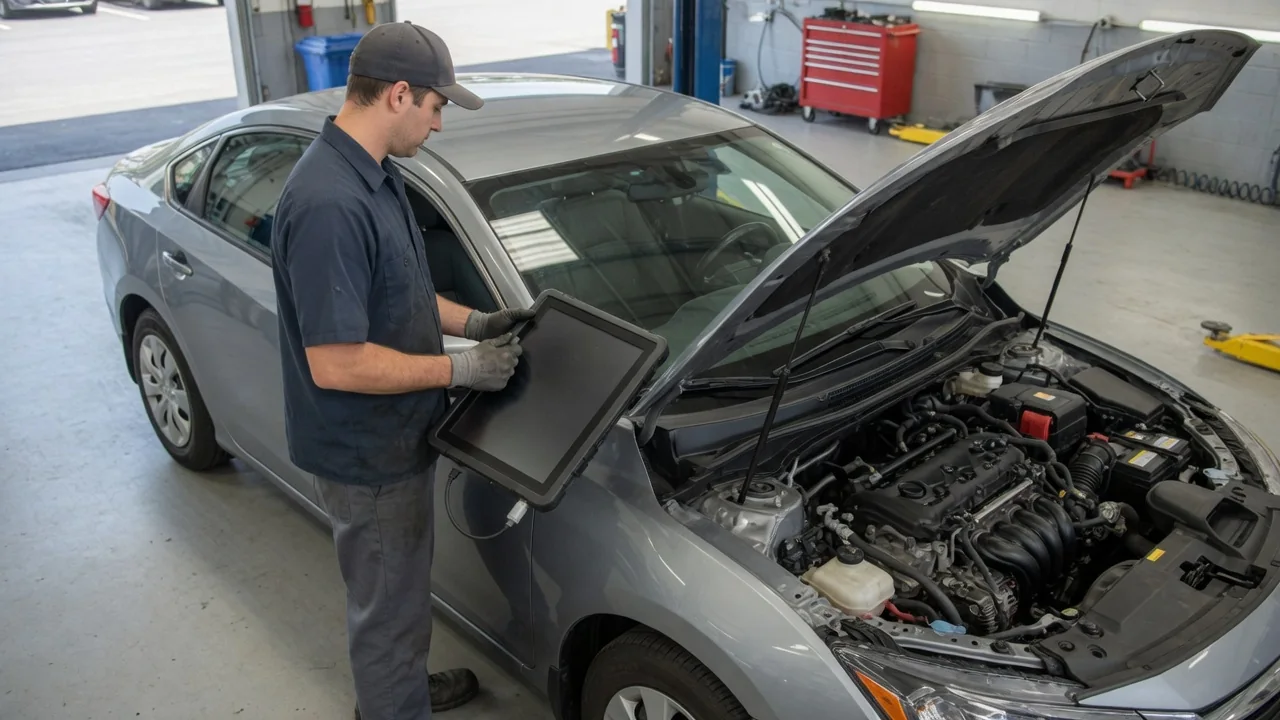
A P1500 code is a manufacturer-specific trouble code, not a generic powertrain definition that means the same thing on every vehicle. The diagnostic trouble code must be read against the make, model, model year, engine, and service information for that application. A scan tool label can be incomplete, so confirm the exact meaning before treating P1500 as a failed part.
What P1500 Means for Your Vehicle
P1500 is a manufacturer-specific powertrain trouble code. Unlike many standardized P0xxx codes, it does not carry one universal definition that applies to every vehicle. The powertrain control module, or another reporting module, stores this diagnostic trouble code when a monitored condition falls outside the calibrated range for that application. Interpreting P1500 without confirming the exact definition for the vehicle can send diagnosis toward the wrong circuit or function. Treat the stored code as evidence that a monitor ran and set a fault, not as proof that any particular part has failed.
Verify the definition using the make, model, model year, engine, and applicable manufacturer service information before acting on the code. The vehicle identification number is the most reliable way to identify the exact application. A generic scanner description of a P1500 code may omit vehicle-specific context or paraphrase the monitor in a way that does not match factory wording. Include make-specific meanings only when they are verified for a clearly identified vehicle. Each confirmed definition should be explained independently, because mixing applications can distort what P1500 means.
Symptoms and Details to Record Before Clearing P1500
Before clearing P1500, record what the vehicle is actually doing. Note whether a malfunction indicator or other dashboard warning is on, how the engine starts, idle quality, and any drivability changes such as hesitation, reduced power, or unusual operating conditions. These are observations to document, not symptoms that P1500 is guaranteed to produce. A vehicle can store this manufacturer-specific trouble code with no obvious driving complaint if the monitor detected an out-of-range condition that did not yet affect how the vehicle feels from the driver's seat.
Preserve the complete scan report, including code status, pending codes, companion diagnostic trouble codes, and freeze-frame data, before erasing anything. Freeze-frame data captures operating conditions when the fault was set and can be lost if memory is cleared too soon. Note recent repairs, battery events, and when the warning first appeared. Timing helps reconstruct the sequence, but it is not proof of causation. A battery event or recent repair may be coincidental until the confirmed definition and test results connect those details to P1500.
Possible Causes Depend on the Confirmed Definition
Once the vehicle-specific definition is confirmed, every proposed cause should be tied to the circuit, component, or function that definition names. If service information points to a sensor, actuator, control circuit, or related monitor, diagnosis should stay inside that path. Wiring integrity, connectors, power supply, grounds, and component operation may need testing when the manufacturer procedure supports those checks. A P1500 code that names a component is still only a monitor result. It does not establish that the named part has failed or that replacement is required.
Avoid ranking causes as common or likely unless evidence exists for the exact vehicle application. What fails frequently on one make or engine family may be irrelevant on another that uses P1500 for a different monitor. Open circuits, high resistance, poor grounds, and internal component faults are possible only when they belong to the confirmed circuit. Substituting parts because a scanner label mentions them can leave the original fault in place. Follow the verified diagnostic path so each test supports or rules out a specific cause.
Safe Owner Observations and When to Stop Driving
Owner checks should stay limited and safe. With the vehicle parked and the engine off, record dashboard messages and look for readily visible damage such as a disconnected connector, obvious wiring abrasion, or a damaged component that can be seen without disassembly. Those visual observations cannot establish electrical integrity, prove wiring continuity, or confirm an internal component failure. Do not probe terminals, jump circuits, or attempt repairs that require specialized equipment. The useful owner contribution is a clear record of warnings, recent events, and anything visibly out of place, not a roadside electrical diagnosis.
P1500 alone cannot establish whether continued driving is appropriate. Symptoms, warning messages, and any vehicle guidance determine the next step. If the engine stalls, power drops severely, the vehicle overheats, or control feels impaired, stop in a safe location and arrange assistance. A stored manufacturer-specific trouble code without those conditions still deserves prompt attention, because the monitor may relate to starting, idle, or another powertrain function that can change with operating conditions. Do not assume the absence of a strong driving complaint means the fault is harmless.
How a Technician Diagnoses the Underlying Fault
A technician starts by confirming vehicle identity, usually with the vehicle identification number, then identifying the reporting module, the exact P1500 definition, and the manufacturer diagnostic procedure for that application. That sequence prevents treating a generic scanner caption as factory service information. Companion codes, pending codes, and freeze-frame data help establish the conditions present when P1500 was stored, including speed, load, temperature, and other captured parameters when available. Relevant live data can then be compared with those conditions to see whether the monitor still sees the same out-of-range behavior.
Professional circuit and component testing stays at the level the service procedure specifies, checking power, ground, signal, and mechanical operation of the identified function without bypassing controls or working around moving parts. The goal is to separate a wiring or connection fault from a component that actually failed its test. Intermittent faults may require additional observation, including a return of the same freeze-frame conditions, before a repair can be justified. Replacing parts to see if P1500 returns is not a substitute for that documented testing.
Repair Decisions and Confirmation That P1500 Is Resolved
Repair decisions should follow documented findings, such as a confirmed connection fault, a wiring integrity problem, or a component that failed the specified test, rather than a universal P1500 fix. Programming, initialization, or relearning should be considered only when the verified repair procedure for that vehicle requires it after the hardware work. A powertrain control module update or adaptive reset is not automatically part of clearing this diagnostic trouble code. Matching the repair to the confirmed definition keeps work focused on the circuit that actually set the monitor.
After the repair, check relevant live data and code status under the conditions that originally set the fault, with professional verification when the monitor needs a complete drive cycle. Clearing the P1500 code or briefly extinguishing a warning light does not prove the fault is repaired, because a monitor may not run until those conditions return. Pending codes should be watched, since a returning condition can store as pending before it matures. Outcomes vary by vehicle and diagnosis quality; there is no fixed price or guaranteed result attached to P1500.