P1464 Code: Verify Its Meaning, Diagnose Causes, and Plan Repairs
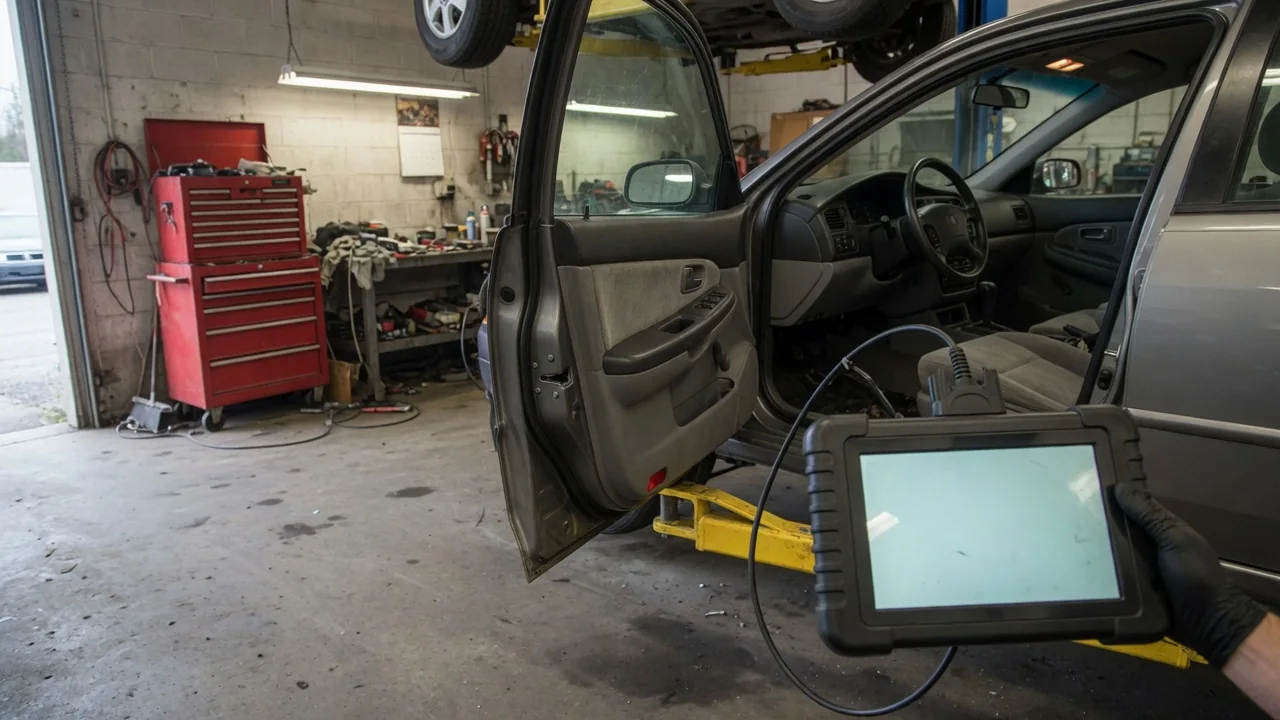
P1464 is a manufacturer-specific trouble code, so its meaning is not the same on every vehicle. A scan tool may show a short description, but that text is not confirmed until you match it to the vehicle identification number, engine, and the maker’s service information. Verify the P1464 code, record conditions, follow the applicable diagnostic path, and plan repair verification without treating the code as proof a part has failed.
Verify What P1464 Means for Your Vehicle
The P1464 code cannot be assigned a universal component or system definition. Manufacturers reuse the same alphanumeric identifier for different monitors, so a make name by itself does not prove which circuit, actuator, or self-test applies. Before interpreting the code, confirm the vehicle’s make, model, year, and engine, then open the manufacturer service information written for that application. The vehicle identification number is the most reliable way to select the correct definition, diagnostic enable conditions, and test path.
A scan tool’s displayed description is a convenience label, not a confirmed vehicle-specific definition. If the tool text does not match the service information for that VIN and engine, follow the manufacturer document rather than the generic string. Include a make-specific meaning only when it is verified for the stated application; otherwise treat internet summaries as unverified. When the descriptions disagree, record both, note the reporting module, and use the service information to decide what the code actually monitors on that vehicle.
Symptoms and Conditions to Record
Any warning light, operating change, or affected function should be tied to the verified P1464 definition, not to a generic code list. A stored code may be present with no noticeable symptom, and that storage does not establish which part failed. Code status matters: a pending, confirmed, or history result can appear after a scan-tool self-test or during ordinary driving. Record when the code appeared, the operating state, recent work, and whether a commanded test preceded it, because those details help a technician recreate diagnostic enable conditions.
Severe drivability problems, overheating, or other urgent warnings are reasons to stop safely and seek assistance, even though those conditions cannot be attributed to P1464 alone. The manufacturer-specific trouble code is evidence to interpret, not proof of a failed component. Note whether the malfunction indicator stayed on, flashed, or returned after a key cycle. If the vehicle overheats, loses power in traffic, or shows additional warnings, treat those as separate safety issues and have the vehicle inspected rather than continuing to drive while guessing at the code’s system.
Possible Causes Depend on the Verified Definition
Possible causes should follow the applicable manufacturer’s diagnostic procedure, not a mixed list of systems copied from unrelated internet descriptions of P1464. Once the definition is verified, the procedure may point to input states, unmet self-test conditions, or a specific monitor rather than a failed part. If diagnostic enable conditions were not met, the code can set because the test ran under the wrong circumstances. Organize the investigation around those documented steps so wiring, connectors, and components are considered only when the path actually supports them.
Wiring, connectors, electrical supply, sensors, or actuators belong in the discussion only where the verified diagnostic path names those possibilities. A component mentioned in a scan-tool description is not a confirmed replacement need. Avoid calling any cause common without vehicle-specific evidence, because another make can use P1464 for an entirely different monitor. Parts selection, if testing later requires it, must be confirmed for that vehicle. Until the procedure isolates a fault or a documented test-condition issue, treat every candidate as unproven.
Diagnose P1464 Without Losing Useful Evidence
Preserve the exact code description, reporting module, available code status, accompanying codes, and any freeze-frame data before clearing anything. Freeze-frame data captures operating conditions at the time the monitor failed and can be lost if the memory is erased. Note related codes even when they seem unrelated, because the service information may use them to choose the next step. A scan tool readout is a starting record, not a completed diagnosis, and it should be saved with the VIN so later tests stay aligned with the same application.
Safe observations include noting which functions are affected and looking for visible damage without touching hot, moving, or energized components. A technician then uses the applicable test conditions and supporting codes to choose the next diagnostic step, which may include waiting for enable conditions rather than replacing a named part. Circuit measurements, commanded component tests, and any procedure involving pressurized or energized systems belong with appropriately equipped professionals. Guessing from a description, or probing circuits without the procedure, can destroy the remaining evidence and create new faults.
Choose a Repair and Confirm the Result
A repair must address a verified fault or a documented test-condition issue; the P1464 code alone does not justify replacing a part. Repair categories are conditional outcomes of testing: a connector repair, a wiring correction, a software update, or a component replacement may be appropriate only after the procedure isolates that need. Any part must be confirmed for the specific vehicle, using the identification number and service information rather than a generic catalog match. If testing shows the monitor ran without required enable conditions, the correction may be procedural rather than a hardware change.
Post-repair checks should run under the manufacturer’s applicable operating or self-test conditions, then confirm that affected functions operate correctly. Clearing the code is not repair verification; the monitor must be allowed to complete and the code status must remain clear. If P1464 returns, bring the original freeze-frame data, the saved description, accompanying codes, records of recent work, and notes about when the code set. Those records let a technician resume the diagnostic path instead of starting from a blank scan after the evidence was erased.