P1441 Code: Vehicle-Specific Meaning, Causes and Repairs
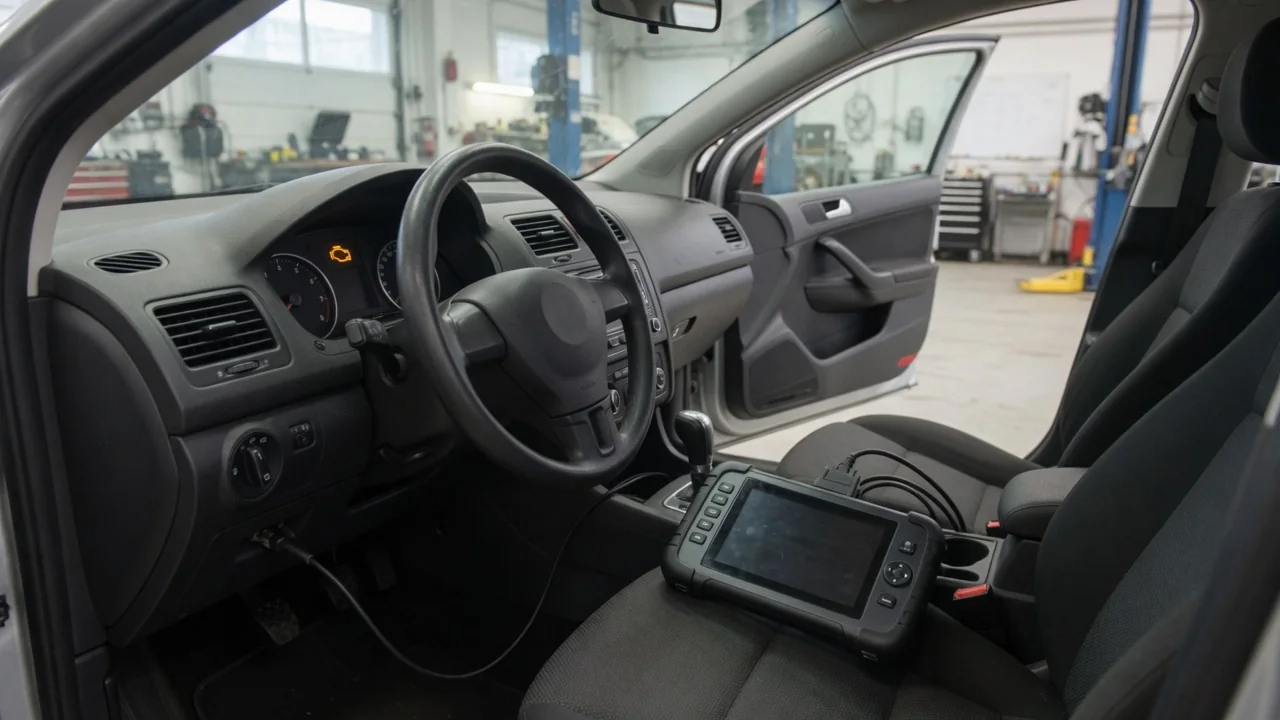
The P1441 code is a manufacturer-specific powertrain diagnostic trouble code, so its meaning is not the same on every vehicle. Before treating it as a purge control or evaporative emissions system problem, confirm the definition for the make, model, year, and engine. A stored P1441 records a detected condition; it does not by itself prove that any particular part has failed.
Verify What P1441 Means for Your Vehicle
P1441 is a manufacturer-specific trouble code, which means the control module's definition and the diagnostic testing sequence belong to the vehicle's make, model, year, and engine family. Generic powertrain code lists can assign a different label than the one your service information uses, so the first step is to look up that exact application rather than assume a shared meaning. Until that definition is confirmed, idle quality, fuel odor, or a lit check engine light should not be mapped to a particular subsystem.
Vehicle-specific service information establishes the correct wording before symptoms or causes are interpreted. Some applications associate P1441 with evaporative emissions purge flow or a related purge control condition, but that association must not be applied universally. A stored P1441 code records that the monitor detected a condition outside the calibrated window; it does not identify a failed purge valve, wiring circuit, or other component by itself. The next steps depend on that verified definition, not on a generic label.
Symptoms and Details Worth Recording
An illuminated check engine light may be the only noticeable sign when P1441 is stored, and even that presentation depends on the verified definition for the vehicle. On applications where the code is confirmed as evaporative emissions related, drivers sometimes notice a rough idle, difficult starting after refueling, or a fuel odor. Those observations are clues about operating conditions, not proof of a particular fault. Record when the light appeared, recent fuel fills or service, and any change in starting or idle quality so the technician can compare them with stored data.
Accompanying codes and freeze-frame data supply context that the P1441 label cannot. Freeze-frame snapshots capture engine speed, load, temperature, and related status at the moment the condition was detected, which helps show whether the monitor ran during a cold start, after a fill-up, or under a specific purge command. Pending codes that have not yet matured into a confirmed P1441 code can also show whether the same condition is still being evaluated. Together those details keep diagnosis aligned with the actual enable conditions rather than with a single alphanumeric tag.
Possible Causes After the Definition Is Confirmed
Once the vehicle-specific definition is confirmed, every proposed cause must match the condition required to set P1441. If that definition concerns purge flow in the evaporative emissions system, a purge valve that does not seal, damaged or disconnected plumbing, or a control fault that commands purge at the wrong time can warrant investigation. Those items are candidates only because they can produce the monitored condition; they are not a default parts list. Causes that belong to a different manufacturer's definition of P1441 should be set aside until the service information supports them.
Wiring, connectors, and related sensor signals belong in the work only where the applicable diagnostic procedure calls for checking them. A poor connection at a purge solenoid, an open or shorted control circuit, or a sensor reading that the module uses to judge purge flow can set the same code as a mechanical leak if that is how the monitor is written. Replacing a gas cap or purge valve solely because P1441 appears is not a supported diagnosis. Parts should be changed after testing shows they do not meet the specification for that vehicle.
Safe Observations and When to Stop Driving
Record stored and pending codes, freeze-frame data, and any related evaporative emissions or purge control codes before clearing anything. Clearing removes the evidence that shows when the monitor ran and whether P1441 was confirmed or still pending. Owner observations should stay limited to what is visible with the vehicle parked and the engine off: damaged hoses, loose connectors, or a component that has come apart. Do not open fuel lines, apply power to valves, or improvise pressure tests; those steps can create leaks, fire risk, or misleading results.
Driving advice depends on the verified fault and on the symptoms present, so P1441 alone cannot establish whether continued driving is appropriate. A manufacturer-specific trouble code with no drivability complaint is not automatically a reason to park the vehicle, nor is it automatically safe to ignore. Stop safely and seek assistance for visible fuel leakage, a strong persistent fuel odor, stalling, or a flashing check engine light. Those conditions point to a fuel or misfire risk that goes beyond a stored P1441 code and should not be driven through.
Professional Tests That Can Identify the Fault
A technician starts by confirming the P1441 definition in the vehicle's service information, reviewing related and pending codes, and then following the manufacturer diagnostic sequence rather than a generic evaporative emissions checklist. That sequence usually compares enable conditions in freeze-frame data with the current operating state so the same monitor conditions can be reproduced. Skipping to a favorite part because the code number is familiar is how the wrong circuit gets replaced. The documented path keeps testing tied to how that control module actually sets P1441.
When the verified definition is purge-related, diagnostic testing evaluates commanded purge operation and whether the system actually responds, without improvised power application or homemade leak rigs. Controlled leak testing, electrical checks, or sensor evaluation may follow depending on those findings. Ask the shop for the failed test, the affected component or circuit, and how the proposed repair addresses that failure. That evidence is the difference between a confirmed repair path and replacing parts because P1441 was on the scan tool.
Repair Options and Confirmation That P1441 Is Resolved
Repairs are conditional outcomes of testing, not a standard kit attached to the P1441 code. A confirmed open in a control circuit may need a wiring repair; damaged evaporative plumbing may need a hose or connector restored; a purge valve is replaced only after it fails the vehicle-specific check. Scope and cost then follow the identified fault, access, parts, and diagnostic labor rather than a single posted price for the code. Two vehicles with the same P1441 can need entirely different work once the definition and test results are known.
Repair verification is not complete when the check engine light goes out immediately after codes are cleared. The applicable evaporative or purge monitor must run under manufacturer-specified conditions and pass without P1441 returning as a pending or confirmed code. Readiness status matters for emissions inspections, because an extinguished lamp with incomplete monitors can still fail an inspection or hide a fault that has not yet matured. Confirmation means the same enable conditions that originally set P1441 have been met again and the condition is gone.