P1434 Code: Vehicle-Specific Meaning and Diagnosis
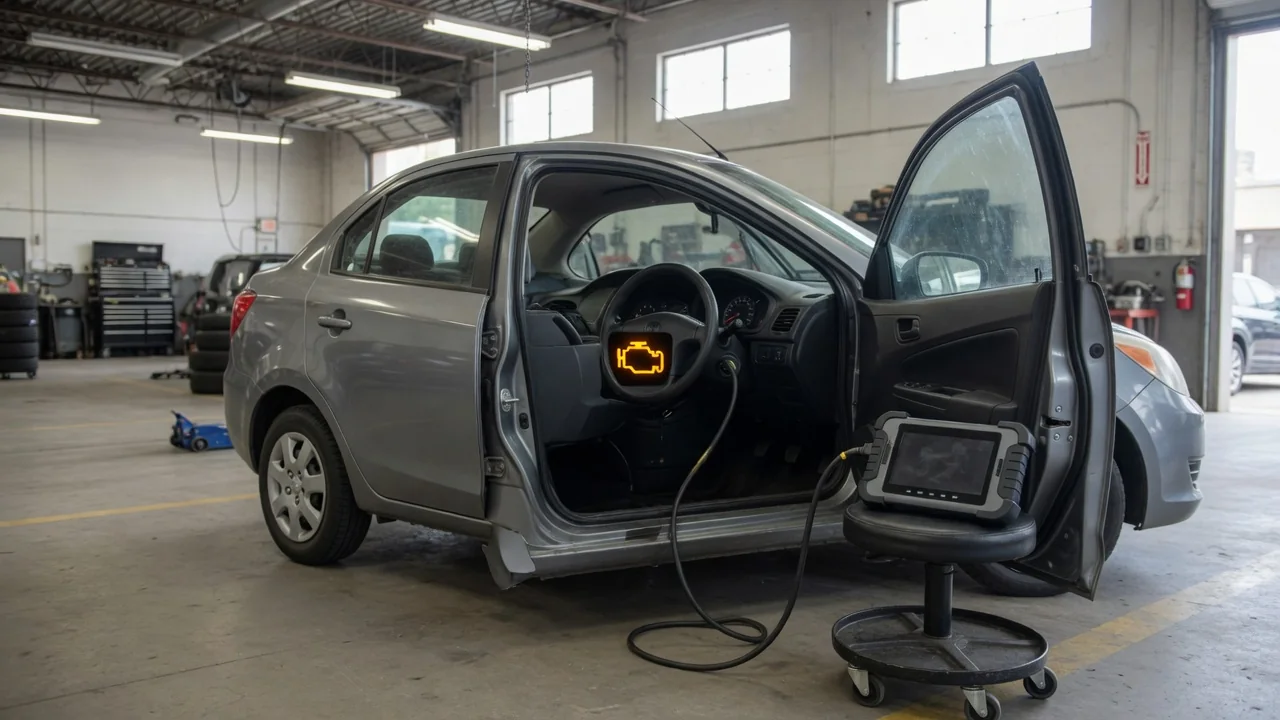
A P1434 fault code can be alarming, but its meaning is not universal. This manufacturer-specific trouble code points to different systems depending on the vehicle. Before replacing any part, the exact definition and setting conditions must be confirmed for the specific make, model, year, and engine. The check engine light or another warning lamp may be the only symptom, so proper diagnosis begins with accurate vehicle identification and a complete scan. Without that, a generic code reader may lead to incorrect conclusions and unnecessary repairs.
Verify What P1434 Means for Your Vehicle
The P1434 code is not standardized across manufacturers, so the first diagnostic step is to identify exactly how the vehicle defines it. Service information for the specific make, model, model year, and engine calibration is essential because the same code can refer to different monitored circuits or system behaviors. Even within one brand, different markets or emissions packages may assign P1434 to unrelated components. The vehicle identification number (VIN) lets a technician select the correct diagnostic procedure, wiring diagrams, and fault-setting criteria. Relying only on a generic scanner's text can be misleading because the display may show an incomplete or mismatched definition.
If the exact application cannot be confirmed, the code should be left undefined rather than guessed. A definition that applies to one vehicle may have no relevance to another. For instance, on some applications P1434 relates to a secondary air injection system, while on others it may involve a fuel system sensor or an evaporative emissions monitor. Each manufacturer writes its own conditions for when the fault is set, including threshold values, time requirements, and enable criteria. Checking the vehicle-specific service information is therefore a mandatory first step. Only after the definition is verified can the symptoms and scan tool data be interpreted correctly.
Symptoms and Scan Details to Record
Often the illuminated check engine light or another warning lamp is the only outward sign of a stored P1434. The code itself does not automatically mean the engine will run poorly, misfire, or lose power. The driver may notice no change in normal operation, and that is still a valid observation. Sudden changes in starting behavior, rough running, or reduced power should be noted, as should any unusual smells or sounds, but these should not be attributed to P1434 without supporting scan data. Their timing and conditions—cold start, hot idle, highway speed—help a technician link them to the fault or identify an unrelated problem.
Before clearing any codes, the complete scan report should be saved. The code's current or pending status matters, as do companion fault codes that may point to a shared circuit or a common cause. Freeze-frame data captures the operating conditions at the moment the fault was set: engine speed, coolant temperature, fuel trims, and vehicle speed. This information can reveal whether the fault occurs only under specific conditions. The absence of a companion code or obvious symptom does not prove the underlying fault is minor or nonexistent. Some failures set a code long before drivability worsens, making the stored data the most important evidence for a correct diagnosis.
Possible Causes After the Definition Is Confirmed
Once the manufacturer's definition is confirmed, possible causes can be evaluated logically. Every proposed cause must match the fault-setting conditions stated in the service information. For a circuit-related definition, wiring and connectors along the monitored path become primary suspects. Corrosion, chafing, loose terminals, or moisture intrusion can create high resistance or intermittent opens. The monitored component itself—sensor, actuator, pump, or valve—can fail, but a code naming a component does not prove that component has failed. The fault indicates the system's self-test saw an implausible value or missing response, which can be caused by the component, its wiring, its power supply, or even an incorrect operating condition.
Recent repairs or disturbed connections deserve attention because they can provide useful context. If a connector was unplugged during other work, a pin may have been bent or not fully seated. A replaced part may be incorrect for the application, or a wiring harness may have been routed against a hot or moving surface. However, such observations establish only a possibility, not causation, and fault prevalence cannot be assumed. For example, if the verified definition involves a fuel tank pressure sensor, causes could range from a poor ground to a blocked reference port. The goal is to generate testable hypotheses rooted in the specific system, not to jump to the most commonly replaced part.
Safe Observations Before a Service Appointment
From the driver's seat, a few safe observations can aid the diagnosis. Dashboard messages or warning lights should be recorded exactly as they appear, including whether they are steady or flashing. After parking and turning the engine off, the owner may look for visible leaks, stains, or damaged wiring in readily accessible areas—but only from a safe position. Reaching near hot or moving parts, disconnecting components, or opening fuel or pressurized systems is unsafe and unnecessary before a professional inspection. Even a photo of the area can help the technician understand what the owner saw.
Clearing codes or disconnecting the battery before diagnosis removes useful evidence without fixing the cause. The stored freeze-frame data, readiness monitor status, and pending code history can be erased, making intermittent faults nearly impossible to trace. A modern vehicle may also need several drive cycles to run all monitors, so clearing P1434 could delay an accurate diagnosis by hundreds of miles. If the vehicle exhibits severe power loss, overheating, smoke, a strong fuel smell, or a flashing engine warning light, the safest action is to stop driving and arrange assistance. Otherwise, the vehicle can usually be driven to a service appointment, but the code and related data should be left intact.
Professional Tests That Establish the Cause
Professional diagnosis begins with confirming the vehicle application and then following the manufacturer's diagnostic sequence. The technician will retrieve the full scan report, noting companion codes and freeze-frame data before attempting to reproduce the fault conditions safely. Live data can show whether the monitored value is out of range, stuck, or intermittent. For a circuit code, a wiring diagram guides voltage drop, continuity, and insulation checks. For a system-performance code, commanded component checks—using a scan tool to activate a pump, valve, or heater—may reveal whether the response is correct. Every test must correspond to the verified definition and its setting conditions.
Not all P1434 definitions require deep electrical testing; some point to plausibility between two sensors, a stuck mechanism, or a calibration issue. A basic code reader may not display the necessary live data or allow bidirectional control, so specialized equipment may be needed. The technician may need a scope to catch a brief signal dropout or a factory scan tool to perform an initialization. If the code is set only under rare conditions, the diagnostic process includes driving the vehicle while monitoring relevant parameters. The goal is to isolate the fault through measurement, not by swapping parts until the code goes away.
Repair Options and Confirmation That the Fault Is Resolved
Repair options depend entirely on the confirmed finding. If a damaged wire or corroded connector is the root cause, the repair may be as simple as a terminal replacement or a proper splice. A failed component requires selection of the exact correct part for the vehicle, and some replacements require programming, adaptation, or initialization with a scan tool. Following the manufacturer's procedure is essential because an uninitialized part can set a new code or fail to operate. The service information will state whether the repair is mechanical, electrical, or software-based.
After the repair, codes are cleared at the appropriate stage, and the vehicle is driven under the conditions specified for the monitor to run. The warning light going out immediately does not by itself prove the repair was successful. Some monitors require a specific drive cycle before they will run and either pass or fail. A return of the code indicates the root cause was not fully addressed, and further diagnosis is required. Documenting the repair, the test results, and the confirmation drive helps verify that the fault is resolved rather than merely hidden.