P1415 Code: Vehicle-Specific Meaning, Causes, and Diagnosis
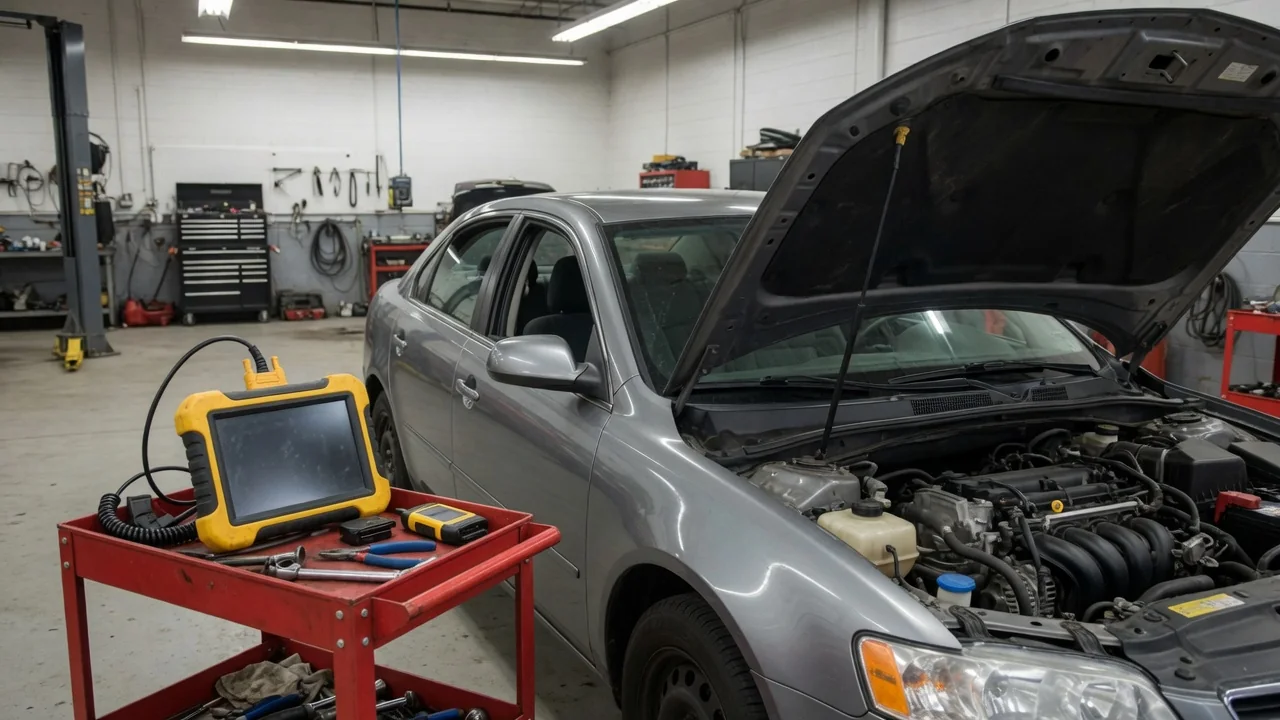
The P1415 code is a manufacturer-specific diagnostic trouble code, not a universal definition that applies the same way to every vehicle. A check engine light and a stored P1415 reading tell you the control module detected a condition it was programmed to report, but they do not identify which part has failed. Confirm the exact meaning in vehicle service information for your make, model, year, engine, and market before you interpret the fault or plan diagnostic testing.
Verify What P1415 Means for Your Vehicle
P1415 does not have one industry-wide meaning. It is a manufacturer-specific trouble code, so the same numeric identifier can describe different monitored conditions depending on the brand and calibration. Before you treat a scanner label as the diagnosis, identify the vehicle make, model, year, engine family, and the market the vehicle was built for. Those details determine which service information, pinouts, and test steps apply. A generic code lookup can be a starting clue, but it is not definitive for your vehicle.
Compare the scan tool description with the official definition in vehicle service information for that exact application. If the two do not match, follow the service information, not the generic database. The P1415 code identifies a detected condition the module was programmed to flag. It does not, by itself, establish which component needs replacement. Pending codes, confirmed codes, and freeze-frame data help show when the condition was observed, but they still describe a monitored event rather than a parts list. Interpretation starts after the vehicle-specific meaning is confirmed.
Symptoms and Details to Record
A check engine light may be the only obvious sign when P1415 is stored. Additional drivability complaints, if any, depend on the verified code meaning for that vehicle and on whether other faults are present. Record what you notice without assuming the P1415 reading caused every symptom. Note rough running, hesitation, unusual noise, or loss of power if they occur, along with whether the warning appeared during startup, warm-up, or normal driving and whether it returns only at times. Those observations become context for later diagnostic testing.
Write down other warning lights, pending codes, and confirmed codes that appear with P1415, plus any recent repairs, battery work, or service that preceded the light. Timing is useful context, not proof of a cause. A repair that happened the same week can be unrelated, and a long-standing condition can surface later when a monitor runs. Freeze-frame data captured at the moment the fault set can show engine speed, load, temperature, and related operating conditions. Keep that snapshot intact so a technician can compare it with the vehicle-specific definition.
Possible Causes After the Definition Is Confirmed
Once the vehicle-specific definition is confirmed, possible causes should be organized around the system named in that definition, not around a generic parts catalog. Wiring, connectors, sensors, actuators, flow restrictions, or leaks belong in the discussion only when that system and its diagnostic procedure support those checks. The monitored circuit or function can fail at a pin, a harness splice, a ground, or a related control path even when the scanner names a familiar component. A detected condition is still a starting point for testing, not a replacement order.
A monitored fault can originate outside the component named in a scanner description. Shared power supplies, related sensors, mechanical restrictions, and control-module logic can all produce the same diagnostic trouble code when the module sees values outside its expected range. Do not rank likely causes by how often they appear on other vehicles, and do not name a failed part without supporting test results for this one. Manufacturer-dependent codes require vehicle-specific confirmation of both the meaning and the test path. Until those results exist, P1415 remains evidence to interpret, not proof of a failed part.
How P1415 Diagnosis Should Proceed
Preserve the exact code description, code status, companion codes, and any available freeze-frame data before clearing anything. Pending codes and confirmed codes show different stages of the same monitor, and erasing them too early removes the operating snapshot that later diagnostic testing needs. Owner checks should stay limited to safely accessible visual observations with the vehicle parked, the engine off, and components cool. Look for obvious connector damage, disconnected hoses, or damaged wiring that can be seen without touching hot or moving parts. Do not probe live circuits or command actuators as an untrained owner task.
A technician then follows the manufacturer's diagnostic sequence for that vehicle, using relevant scan data to see whether the reported condition is still present and under what operating conditions it appears. Circuit testing, component-command checks, or system-flow evaluation may be needed when the service procedure calls for them, because the stored P1415 code can reflect an electrical, mechanical, or control issue. Clearing P1415 or noticing that the vehicle currently runs without obvious symptoms does not confirm that the underlying condition is gone. The applicable monitor must run again and pass under the conditions that originally set the fault.
Repair Decisions and Confirmation
Each repair recommendation should be tied to the confirmed vehicle-specific fault and to documented test findings, not to the numeric code alone. Testing may show that a connection, a wiring fault, an affected component, or a system restriction needs attention, but only those results establish the need. Replacement without that confirmation can leave the original condition in place if the named part was not the source. Identify the correct part from vehicle service information for that make, model, year, and engine before any replacement, and do not assume compatibility from a similar-looking component on another vehicle.
Repair confirmation is more than turning the key and seeing whether the check engine light stays off for a short drive. Repeat the relevant checks from the diagnostic procedure and confirm that P1415 does not return under the applicable monitoring conditions. Some monitors need specific temperature, load, or drive-cycle conditions before they run, so an immediate recheck can miss a still-present fault. If companion codes remain, address those findings with the same vehicle-specific process. A completed repair is confirmed when the documented tests pass and the stored condition does not reset during the required monitoring.
When to Stop Driving and Seek Help
Driving advice depends on vehicle guidance, warning-light behavior, and symptoms. The P1415 code by itself cannot establish whether continued driving is safe. Stop as soon as it is safe and seek assistance if the check engine light is flashing, if the engine runs severely rough, if there is major power loss, if the temperature warning indicates overheating, or if you see or smell smoke. Those signs point to conditions that can worsen quickly and are not something a stored manufacturer-specific trouble code can rule out from the driver's seat.
A steady check engine light still deserves prompt diagnosis even when the vehicle appears to run normally, because the stored P1415 reading means a monitor already detected a condition outside expected limits. Arrange diagnostic testing rather than waiting for drivability to decline. Bring the vehicle details, the scan report with code status and freeze-frame data, a description of symptoms and when they occur, and recent repair history. That package lets a technician start from the verified definition instead of repeating basic questions and helps keep the process aligned with vehicle service information for that exact application.