P1409 Code: Vehicle-Specific Meaning, Symptoms and Repairs
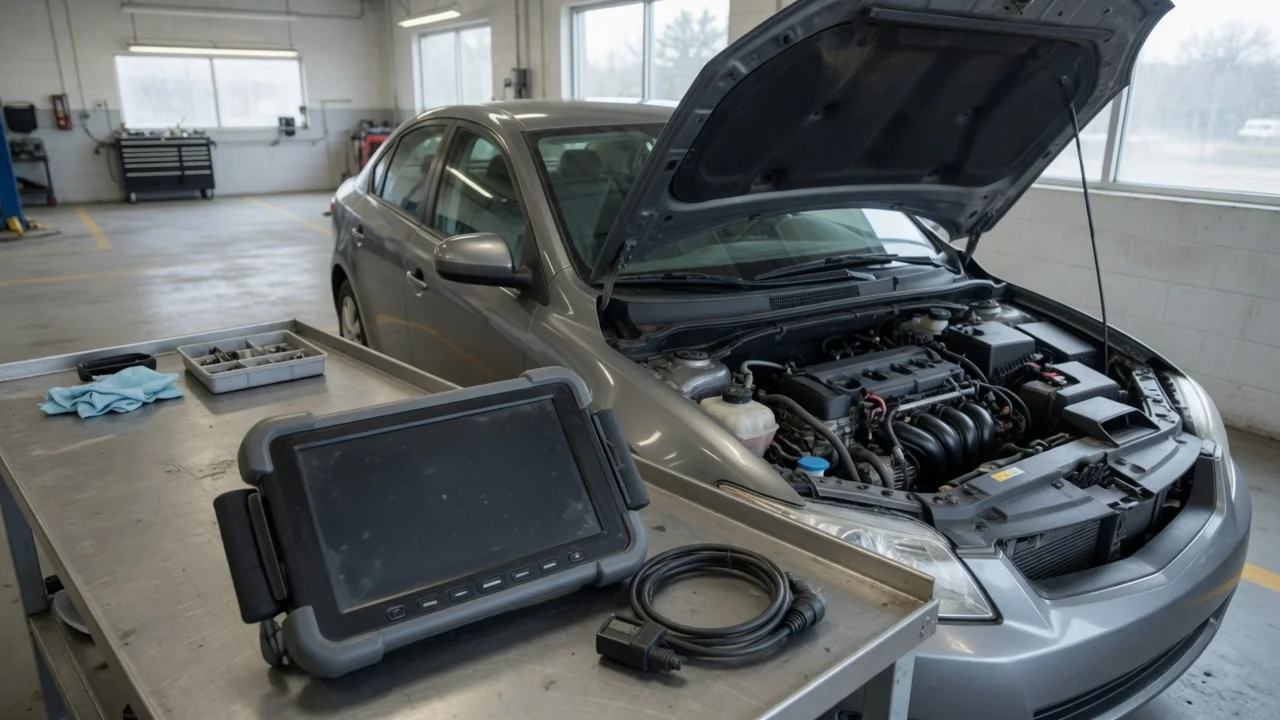
P1409 is a manufacturer-specific trouble code, so its meaning depends on the vehicle you are diagnosing. A stored P1409 entry flags a monitored condition the control module detected, not a parts list for replacement. Confirm the description with vehicle identification—make, model, year, and engine—and the applicable service information before choosing tests. A check engine light may be the first alert, and freeze-frame data can show the operating conditions when the code set.
Verify What P1409 Means for Your Vehicle
P1409 does not have one universal definition across every automaker. Treat it as a manufacturer-specific trouble code until the vehicle's make, model, year, engine, and the matching service information confirm what the module was monitoring. Some Ford applications use P1409 for an EGR vacuum regulator solenoid circuit fault, but that description is only an application-specific example. Applying it to another brand, year, or engine family without confirmation can send diagnostic testing down the wrong path.
A code description names the monitored fault condition, such as an EGR control circuit concern on a confirmed application. It does not identify which component has failed or prove that a solenoid, valve, or module needs replacement. A generic scanner string can be incomplete or worded differently from factory service information, so it may not point to the correct diagnostic procedure. Use vehicle identification and the official definition together before interpreting P1409 or selecting the next test.
Symptoms You May Notice With P1409
A check engine light is a possible indication that P1409 has stored, yet noticeable drivability symptoms may be absent. The module can flag a monitored circuit or control condition while the engine still starts, idles, and drives in a way that feels normal. P1409 symptoms, when they appear, depend on the verified meaning for that vehicle rather than on the code number alone. Do not assume an illuminated lamp proves an EGR problem or that a quiet drive cycle means the code is unimportant.
Rough idle, hesitation, or stalling can accompany P1409 only when those behaviors are consistent with the confirmed vehicle-specific fault. Symptoms by themselves cannot confirm an EGR fault or identify a failed solenoid. Record when any concern occurs, including whether the engine is cold or warm and whether the vehicle is idling or accelerating. Those notes, together with freeze-frame data, help a technician reproduce the condition and separate a lighting-only complaint from a drivability issue tied to the same stored code.
Potential Faults Behind the Verified Code
Potential causes should follow the confirmed code definition and the vehicle-specific diagnostic procedure, not a universal list or a ranked failure chart. If the official description is an EGR regulator circuit fault, wiring damage, a poor electrical connector, a solenoid that does not meet circuit expectations, or a power supply issue could all produce the monitored condition. Those possibilities remain hypotheses until testing isolates the actual path. The stored P1409 result is evidence of a detected condition, not a conclusion that any one part has failed.
An electrical circuit fault and restricted EGR flow are different kinds of evidence. Carbon deposits or a mechanically stuck valve may explain a flow-related code on some systems, but they do not automatically explain a circuit monitor. Do not assume deposits caused P1409 when the definition points to wiring, connectors, or solenoid control. A control module fault is also possible, yet it requires professional confirmation after other circuit checks. Treating the module as failed from the code number alone skips the diagnostic path the manufacturer published.
Safe Observations to Make Before Service
Before any clearing or parts work, save the exact P1409 listing, whether it is stored or pending, any accompanying codes, and available freeze-frame data. That record preserves the operating conditions the module captured and prevents a later scan from looking empty. Note recent repairs, intermittent behavior, and any check engine light changes so a technician can try to reproduce the issue under similar conditions. Clearing first can erase clues that diagnostic testing would have used to confirm the manufacturer-specific trouble code.
Limit underhood observations to what you can see with the vehicle parked and the engine off and cool. Look for obvious wiring damage or a disconnected electrical connector without touching hot components, disconnecting vacuum or coolant lines, or probing circuits. Severe rough running, repeated stalling, overheating, or a flashing check engine light is a reason to stop safely and arrange assistance. P1409 by itself cannot determine whether the vehicle is safe to drive, because the code does not describe severity or the current operating state.
Professional Testing That Identifies the Repair
A technician should follow the confirmed vehicle-specific diagnostic procedure and review related codes before choosing tests. Manufacturer-dependent definitions change which circuits, solenoids, or sensors are even in play, so skipping that confirmation wastes time. When the applicable definition is an EGR control circuit or regulator solenoid circuit fault, professional checks typically include circuit integrity, power availability, connector condition, and whether the commanded component operates as the procedure expects. Those checks belong in a shop setting; they are not a do-it-yourself wiring how-to.
Airflow, vacuum, or mechanical tests are appropriate only when the system design and the diagnostic findings support them. A circuit-oriented P1409 result does not automatically justify disassembling an EGR valve or chasing carbon until electrical evidence has been evaluated. Reproducing the fault under the recorded freeze-frame conditions—load, temperature, idle versus acceleration—helps resolve intermittent problems that do not appear on a cold bay test. Matching the original operating window is often what turns an occasional check engine light into a confirmed, repeatable fault.
Repair Options and Confirmation After Service
Repair options should follow test results rather than the code number. Confirmed damaged wiring or a poor electrical connector may need repair, while a component that failed its specified checks may need replacement. Replacing an EGR valve or vacuum regulator solely because P1409 appears can leave an open circuit, a power issue, or a connector fault unresolved. The monitored condition can return as soon as the same circuit is evaluated again. Parts substitution without diagnostic testing is a guess, not a verified repair.
Repair verification requires a post-repair scan and the manufacturer-prescribed operating checks for that vehicle, not merely clearing P1409 from memory. Clearing the code erases the lamp for a time; it does not prove the fault path was corrected. Scope depends on the diagnosed fault, access to the affected circuit or component, and the testing time already used. Ask for an estimate after diagnosis rather than assuming a set price, because labor and parts vary with what testing actually found.