P1406 Code: Vehicle-Specific Meaning, Symptoms, and Repairs
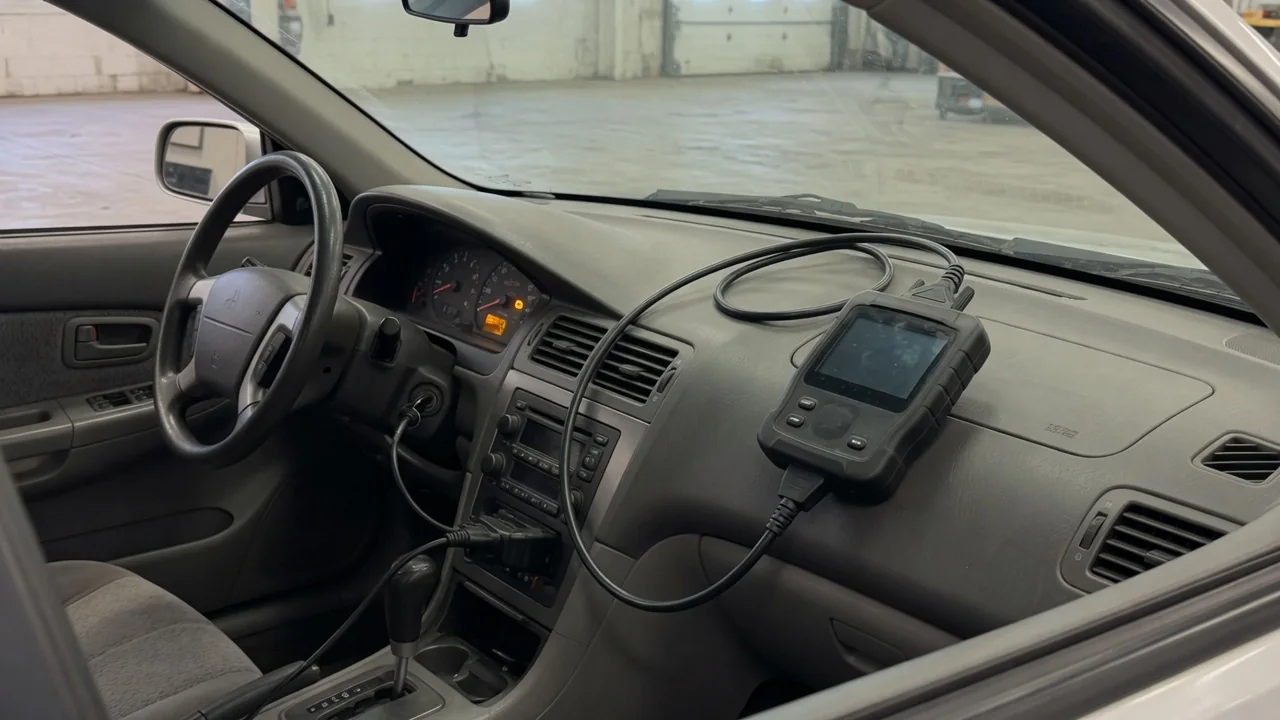
A P1406 code is a manufacturer-specific diagnostic trouble code, not a universal parts list. The check engine light stores it when a monitored circuit or emission-related function falls outside the control module's expected range for that calibration. Before interpreting P1406, confirm the year, make, model, and engine, then read the factory definition. A generic scan-tool line can point in the wrong direction if the vehicle uses a different monitor.
Verify What P1406 Means for Your Vehicle
P1406 does not have one industry-wide meaning. Different manufacturers assign this number to different monitors, so the same stored code on two vehicles can describe unrelated circuits. Interpretation starts with the exact vehicle, including engine family and emissions calibration, then the applicable manufacturer diagnostic information. Without that factory description labeled for that vehicle scope, any guess about sensors, valves, or exhaust gas recirculation remains unsupported. A pending code or a confirmed P1406 still only reports that a monitor failed its criteria.
A scan tool's short description is a convenience label, not a diagnostic path. Two tools may abbreviate the same P1406 code differently, and a truncated phrase can omit whether the monitor watches position, flow, temperature, or circuit voltage. Technicians still open the vehicle-specific flowchart because that document names the module, the pins, and the pass-fail limits for that calibration. If the factory text never mentions exhaust gas recirculation for that year and engine, treating the fault as an exhaust gas recirculation repair would skip the actual test sequence.
Symptoms That May Accompany P1406
P1406 symptoms often begin with a steady check engine light and little else. Many emission monitors can fail while idle quality, acceleration, and cruise still feel normal, so the absence of a drivability complaint does not mean the stored P1406 is unimportant. When the verified definition involves a system that affects mixture or recirculated exhaust, drivers may notice rough idle, hesitation, stalling, or reduced performance. Those changes still have to be interpreted against that vehicle's monitor, not assumed from the code number alone.
A drivability change cannot confirm that a particular part has failed. Misfires, vacuum leaks, fuel delivery problems, and unrelated emission faults can produce similar idle or load complaints while P1406 sits in memory as a separate monitor result. Record whether anything happens during startup, at idle, after warmup, or under load, and note whether the light came on at the same time. That timing helps a technician compare freeze-frame data with the complaint, and it keeps later testing from chasing a symptom that belongs to another code.
What Can Trigger the Verified P1406 Fault
What can set a verified P1406 fault depends on that factory definition, not on a generic cause list. If the procedure monitors a circuit, the next questions are opens, shorts, high resistance, and poor grounds. If it watches feedback, the concern may be a signal that disagrees with a commanded position or flow. Mechanical or flow faults enter the picture only when the diagnostic information names a valve, passage, or sensor that can stick or restrict. The stored diagnostic trouble code is evidence that a monitor failed, not an instruction to replace a part.
Damaged wiring and connector problems can corrupt a monitored circuit while the associated component still works. Pin tension, corrosion, chafed insulation, and repairs that left a splice in a harsh area can all change voltage or signal integrity. Sticking hardware or restricted passages are relevant only if that vehicle's diagnostic procedure identifies them for P1406. Ranking likely parts by how often shops replace them, without evidence for this vehicle, turns a manufacturer-specific trouble code into guesswork replacement and can leave the original circuit fault untouched.
Safe Observations Before a Diagnostic Appointment
Before any clearing, record all stored and pending codes, the available freeze-frame data, and the scan tool's exact wording for P1406. Freeze-frame captures operating conditions when the monitor failed, such as engine speed, load, and coolant temperature, which later testing can compare with the complaint. Pending codes show monitors that have not yet matured, and companion codes can change which branch of the factory flowchart applies. Write the information down or photograph the screen so nothing is lost if a battery disconnect or a later scan session erases memory.
Note recent repairs, battery interruptions, and when the warning first appeared, without assuming those events caused the fault. A jump start or module reflash can set unrelated pending codes, and a recent underhood repair may have disturbed a connector that the P1406 monitor uses. Owner observations should stay limited to dashboard warnings, drivability changes, and readily visible damage with the vehicle off and cool. Do not unplug components, probe circuits, reach near hot or moving parts, or try to reproduce P1406 symptoms with unsafe driving.
How Testing Guides the Repair
A technician chooses the next test from the vehicle-specific diagnostic procedure and from any related codes stored with P1406. Companion circuit, sensor, or catalyst codes can move the flowchart away from a single-component swap and toward shared power, ground, or wiring. Circuit testing checks integrity of the monitored path so a voltage drop or open is not mistaken for a failed actuator. Live-data review shows whether the reported value tracks expected conditions, and commanded operation tests, when the procedure allows them, confirm whether the module can move or energize the device it is watching.
Each repair should follow a confirmed finding. Wiring damage is repaired when circuit testing proves an open, short, or poor connection. A component is replaced only after the procedure shows it cannot meet the commanded or feedback criteria with a sound circuit. An applicable passage restriction is addressed only if that vehicle's tests isolate a flow or mechanical obstruction tied to the verified P1406 definition. Clearing the code does not repair the fault. After work, verification should confirm the system operates as the factory procedure requires and that P1406 does not return on a complete drive cycle.
When to Stop Driving and Seek Help
P1406 alone cannot establish whether continued driving is appropriate. The code reports a failed monitor; it does not grade how the engine will behave on the next trip. Actual symptoms and any vehicle messages matter more than the number on the scan tool. Stop safely and seek assistance for a flashing check engine light, repeated stalling, severe power loss, overheating, or other urgent warnings. A flashing light in particular can indicate a misfire severe enough to risk catalytic converter damage, which is a different emergency than a steady emission-related lamp.
A steady check engine light still deserves a diagnostic appointment even when the vehicle appears to run normally. An unresolved P1406 code can keep readiness monitors incomplete and can hide a developing circuit or emission problem until drivability finally changes. Bring vehicle identification, the recorded codes with the tool's exact wording, freeze-frame data, notes on symptom timing, and recent repair history. That package lets the shop start from the verified definition instead of repeating a scan and guessing. Ask that testing follow the manufacturer procedure rather than a parts list keyed only to the number.