P1404 Code: Vehicle-Specific Meaning, Causes and Diagnosis
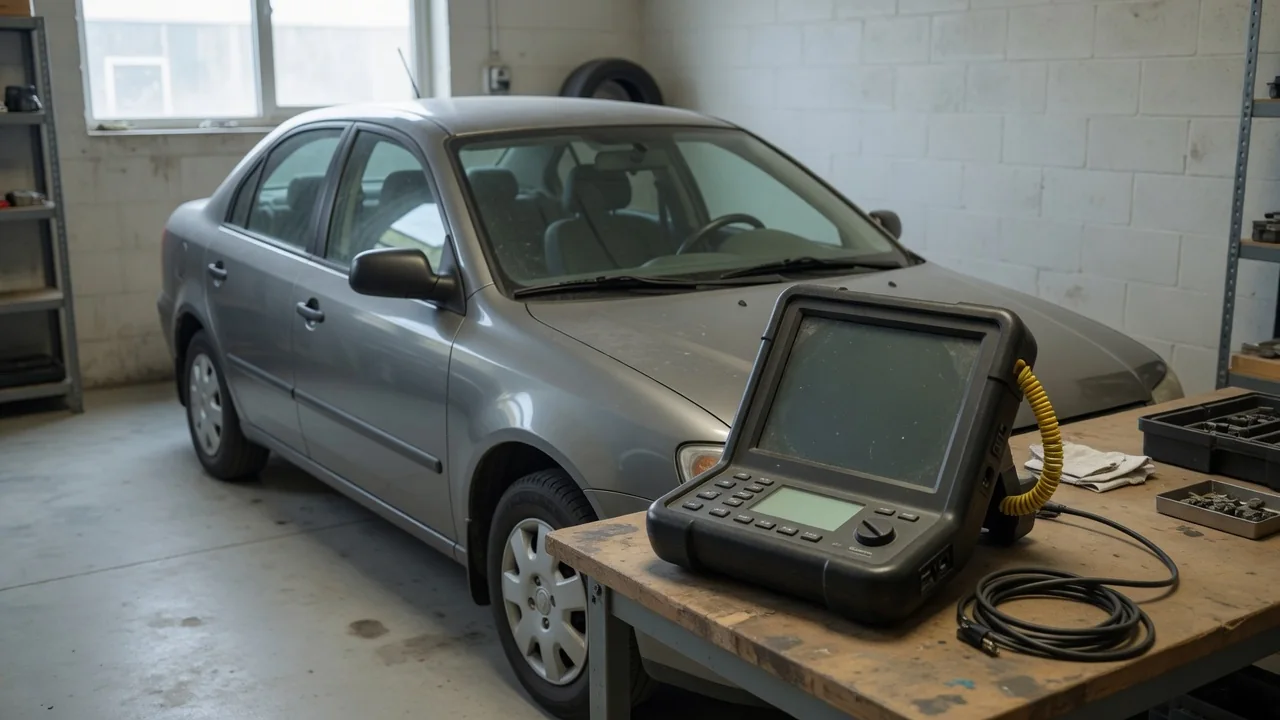
P1404 is a manufacturer-specific diagnostic trouble code, so its meaning is not the same on every vehicle. Confirm the definition with the exact make, model year, engine, and service information before you interpret it. On some applications the P1404 code is tied to exhaust gas recirculation closed-position performance, but that reading applies only after it is verified. The stored condition is evidence to investigate, not proof that a particular part has failed.
Verify the P1404 Definition for Your Vehicle
A P1404 code cannot be given one universal definition because it is a manufacturer-specific trouble code. Scan tools often print a generic label, yet that wording may not match the calibration for your vehicle. Before treating the result as an exhaust gas recirculation issue or anything else, confirm the published description using the make, model year, engine, and the applicable service information. Skipping that check can send diagnosis toward the wrong system and waste time on unrelated parts.
Certain manufacturer applications associate P1404 with EGR valve position feedback that does not match the expected closed position. Use that interpretation only when the vehicle-specific diagnostic procedure confirms it. Even then, the diagnostic trouble code records a detected condition, not a verdict that the valve, a sensor, wiring, or a control module must be replaced. Freeze-frame data and any pending codes help show when the condition occurred, but they still do not identify the failed part without further testing.
Symptoms and Driving Decisions After P1404 Appears
When P1404 sets, the check engine light is often the first and sometimes the only change a driver notices. Some vehicles show no obvious drivability complaint while the code is stored. If the confirmed definition involves exhaust gas recirculation, rough idle, hesitation, or stalling may appear at the same time. Those symptoms can accompany the fault without proving its cause, because idle quality and airflow can also be affected by unrelated intake, ignition, or fuel-control issues.
Code interpretation and driving urgency are separate decisions. A flashing warning light, severe shaking, repeated stalling, or a significant loss of power means stop safely and seek assistance rather than continue to a later appointment. A steady check engine light with P1404 as the only displayed code does not by itself prove the vehicle is safe to keep driving. Manufacturer-specific calibrations vary, so treat drivability and warning behavior as the practical guide while the stored condition is investigated.
Potential Causes Under a Confirmed EGR Definition
If the verified definition concerns EGR closed-position performance, carbon deposits or mechanical sticking can keep the valve from reaching the expected closed seat. Position-feedback faults can report a similar mismatch even when the valve itself moves, so a connector or wiring problem remains a possibility that requires testing rather than assumption. None of these paths is established by the code number alone. The diagnostic trouble code only indicates that reported position did not match the expected closed condition under the monitor's rules.
Actuation and control checks depend on the vehicle's actual EGR design, which may use a vacuum actuator, an electric motor, or another arrangement described in service information. A technician should not rank a valve, sensor, wiring fault, or control-module issue by assumed frequency, because that ranking is not supported here. Evidence from the prescribed tests is required before attributing P1404 to any one of those items. Related codes stored at the same time can change the order of those tests and should not be ignored.
Record Diagnostic Evidence Before Clearing the Code
Before any reset, save the exact code description printed by the scan tool, every accompanying code, and whether each is stored or pending. Freeze-frame data captures operating conditions at the moment the monitor failed and can show engine temperature, load, and similar context a technician will use. Notes about idle behavior and when the check engine light appeared add timeline detail that the module may not store. Pending codes matter because they can show a condition that has not yet matured into a confirmed fault.
Visual checks should stay limited to accessible areas with the engine off and cool. Look only for obviously damaged wiring, a loose connector, or similar surface clues; do not probe terminals or dismantle the EGR valve, its feedback sensor, or exhaust-mounted hardware. Clearing codes or disconnecting the battery can erase freeze-frame data and pending codes, then reset readiness monitors without correcting the cause. That lost evidence makes later diagnosis slower and can hide whether the original P1404 condition still exists.
Professional Tests That Can Identify the Fault
A technician should follow the verified vehicle-specific diagnostic sequence and account for every related code rather than treating P1404 in isolation. On applicable EGR systems, comparing commanded position with reported position can show whether the valve appears to follow the request. One snapshot is not conclusive, because a feedback circuit, mechanical binding, or a control issue can each produce a mismatch. The published procedure decides which comparison is valid for that engine and how long the monitor needs to evaluate closed-position performance.
Professional circuit, feedback-signal, and mechanical-operation tests isolate the fault after those comparisons, using the tools and steps listed for that vehicle. A basic code reader can retrieve P1404, display a description, and show freeze-frame data, but it usually cannot complete those tests or confirm EGR valve position feedback integrity. Live electrical probing, forced actuation, and work around hot exhaust components belong in a shop procedure, not in a general DIY walkthrough. Skipping the documented sequence and swapping parts based on the code number alone leaves the actual condition unproven.
Choose an Evidence-Based Repair and Confirm the Result
Repair should follow confirmed findings rather than the code label. A damaged connection that fails inspection and circuit tests is repaired as a wiring fault; a component is replaced only after it fails the prescribed tests for that vehicle. Cleaning is appropriate only when the vehicle-specific procedure permits it and inspection supports deposits as the cause of closed-position error. Any replacement part must be verified for the exact vehicle configuration; the P1404 code by itself does not establish compatibility.
A successful repair is confirmed only after the applicable monitor runs without the fault returning. Turning the check engine light off by clearing memory is not the same as a completed repair, because readiness monitors may not have evaluated EGR closed-position performance yet. If P1404 returns, reassess the saved descriptions, freeze-frame data, pending codes, and test results before replacing additional parts. Repeating the vehicle-specific diagnostic procedure with that evidence is more reliable than expanding the parts list on the same unproven assumption.