P1401 Code: Vehicle-Specific Meaning, Symptoms and Repairs
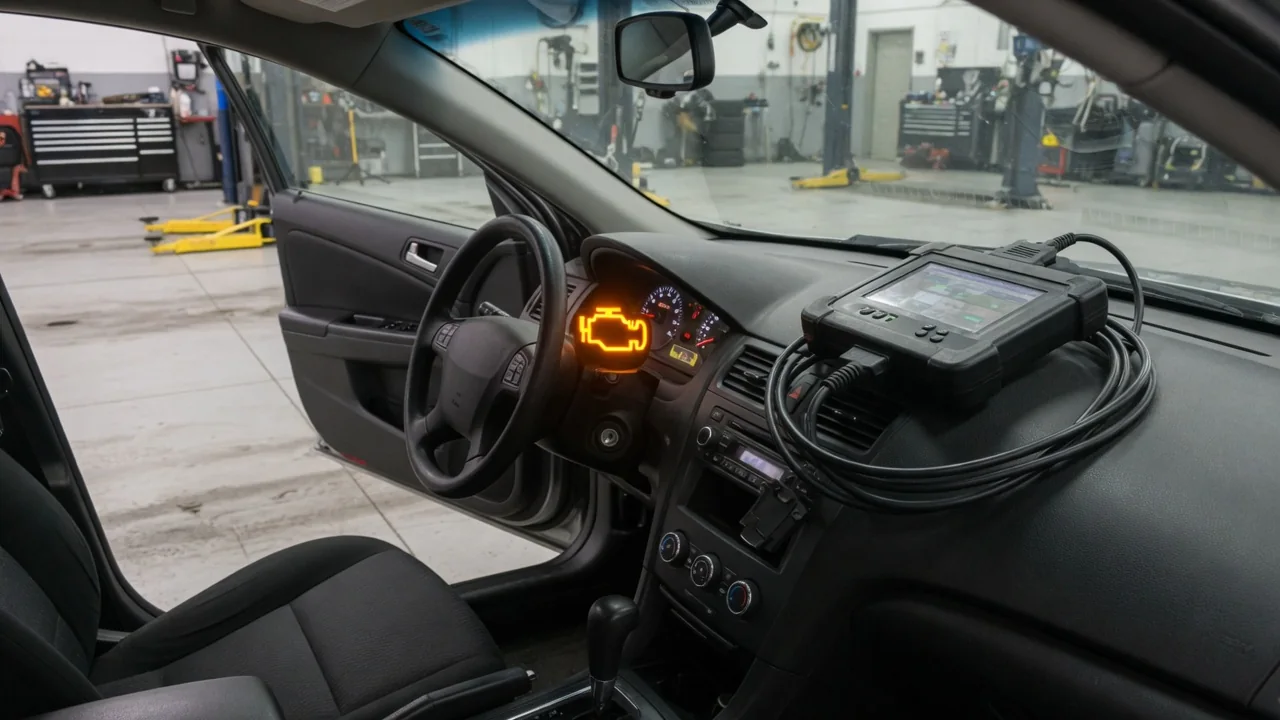
A P1401 code is a manufacturer-specific trouble code, so its meaning is not the same on every vehicle. The stored definition, any P1401 symptoms, and the correct diagnostic path all depend on make, model, year, and engine. A scan tool description is only a starting point. Confirm the exact P1401 definition in service information before linking the check engine light to a particular sensor, circuit, or EGR system repair.
Verify What P1401 Means for Your Vehicle
P1401 is a manufacturer-specific trouble code, which means it cannot be assigned one universal component, fault condition, or repair. On one vehicle it may describe a sensor signal problem; on another it may point to a different monitored circuit entirely. Treating every P1401 the same way often leads to replacing parts that were never confirmed as failed. The make, model, year, engine, and the matching service information are required before the stored code can be interpreted. Without those details, a generic explanation of P1401 remains incomplete and can send diagnostic testing in the wrong direction.
Some applications associate P1401 with EGR system monitoring, but that association applies only when the verified definition supports it. Other applications use P1401 for an unrelated sensor or circuit condition, so an EGR discussion is not automatically relevant. A scanner's short description of the P1401 code identifies a diagnostic starting point; it does not prove that a valve, sensor, or module has failed. Freeze-frame data and pending codes add context about when the monitor ran, yet they still require the vehicle-specific definition before any part is treated as the cause.
Symptoms to Record When P1401 Appears
A check engine light is a common reason a P1401 code is discovered, yet the vehicle may still drive without any obvious change in idle, acceleration, or power. That absence of drivability complaints does not make the stored code unimportant; it simply means the monitor flagged a condition that may not yet be felt from the driver's seat. P1401 symptoms, when they exist, are not a universal package. Their relevance depends on the confirmed fault definition for that application, so a quiet running vehicle can still need the same careful identification of what P1401 actually monitors.
When something is noticeable, rough idle, hesitation, or reduced power may appear, but those observations only matter if they fit the verified definition rather than a generic list of complaints. Record whether any change happens during cold starts, warm idle, or acceleration, and note whether the check engine light is steady. Do not try to recreate unsafe conditions to force a symptom. A flashing check engine light, severe shaking, stalling, or major power loss is different: stop safely and seek assistance rather than continuing to drive while trying to interpret P1401 on the road.
Possible Causes Depend on the Confirmed Fault Definition
Candidate causes for a P1401 code belong to the monitored circuit or system named in that vehicle's service information, not to a shared parts list used for every manufacturer. If the confirmed definition concerns a sensor signal, wiring damage, a poor connector, a sensor fault, or a supply and ground problem can all disturb the reading the control module expects. Those possibilities remain candidates until diagnostic testing confirms or rules them out. A wiring fault is evidence of a circuit condition, not automatic proof that the sensor itself has failed and must be replaced.
Hoses, passages, or other mechanical faults enter the discussion only when the vehicle's system design and the published diagnostic procedure make them relevant. That is why an EGR system path is considered on some applications and ignored on others. Frequency rankings that claim one part fails most often are not a substitute for the confirmed definition. An EGR valve, a sensor, or a control module should not be treated as an automatic replacement for P1401. The code is a monitor result to interpret; it is not proof that any single component has already failed.
Safe Observations Before a Service Visit
Before anything is cleared, record stored and pending codes, the scanner's exact wording for P1401, and any freeze-frame data the tool displays. Freeze-frame snapshots show engine conditions when the monitor set the code and help a technician later decide which test sequence applies. Pending codes show a condition that has not yet matured into a stored fault, so they belong in the same notes. Clearing the P1401 code or disconnecting the battery to turn off the check engine light removes that context and can make the first shop visit longer than it needed to be.
Recent repairs, battery events, and the timing of any P1401 symptoms are useful context, but they do not prove what caused the code. A battery disconnect after an unrelated job can affect monitors without explaining the original fault. Limit visual observations to accessible areas with the engine off and cool, and note only obvious damage such as a loose connector or a visibly damaged harness. Do not disconnect components, jump circuits, probe live electrical connections, force a component to operate, or work around hot exhaust or moving parts while gathering those notes.
Professional Tests That Identify the Fault
A technician should follow the diagnostic procedure written for the confirmed, vehicle-specific P1401 definition rather than a generic flowchart borrowed from another brand. Related codes and freeze-frame conditions help establish the order of tests, because they show what else the control module saw when P1401 set. That does not mean every companion code shares one cause. A pending code stored at the same time may describe a separate circuit, so each result still needs its own comparison to service information before the testing sequence is shortened or combined.
Diagnostic testing typically checks the sensor signal, power, ground, and circuit integrity against manufacturer specifications for that vehicle, not against universal voltage or resistance thresholds. A reading that looks reasonable on one application can be out of range on another. Live data and any functional tests called out in the procedure must support a component diagnosis before replacement is recommended. If the signal is stable and the wiring checks out, the stored P1401 code still has not identified a failed part; it has only shown that the monitor reported a condition that still needs confirmation.
Repairs and Verification After Diagnosis
Repairs should follow confirmed findings, such as damaged wiring, a faulty connection, or a sensor or system component that failed the vehicle-specific tests. Cleaning a passage or performing a mechanical repair is appropriate only when the verified system design and the approved service procedure support that step. On applications where P1401 involves the EGR system, that may include restoring a restricted path if the procedure identifies it; on other applications, cleaning is irrelevant. Replacing an untested part because the P1401 code appeared does not complete diagnosis and can leave the original wiring fault in place.
Erasing P1401 or disconnecting the battery can turn off the check engine light for a time, but it does not establish that the underlying fault has been repaired. The monitor may simply have been reset before it could run again. After the confirmed repair, check for returning codes, relevant monitor results, and resolution of any recorded P1401 symptoms under the safe operating conditions specified in service information. A completed verification means the same monitor that set P1401 has run without resetting the fault and that any earlier drivability notes no longer appear during those specified conditions.