P1399 Code: Meaning, Symptoms, Diagnosis and Repairs
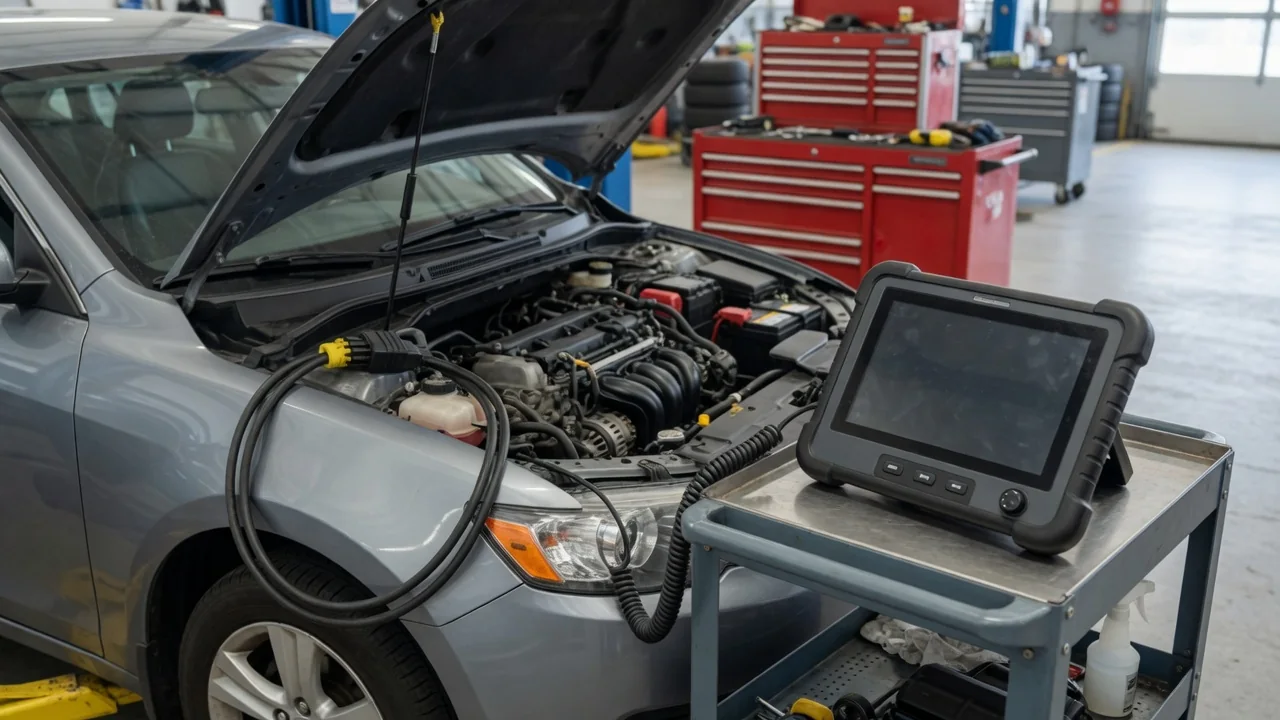
The P1399 code is a manufacturer-specific trouble code, so its meaning depends on the vehicle that stored it. On many Honda and Acura models it flags a random cylinder misfire, but that definition does not apply to every make. This guide explains how to confirm what P1399 means for your vehicle, which symptoms deserve attention, which causes are possible, and how diagnosis and repairs should follow verified findings rather than the code number alone.
Verify What P1399 Means for Your Vehicle
P1399 is not a universal powertrain code with one factory meaning. It is a manufacturer-specific trouble code, so the first step is to match it to the vehicle's make, model, year, engine, and the service information that applies to that combination. Scanner text can be generic or incomplete, and a label copied from another brand can send testing in the wrong direction. Confirm the definition in the information written for that vehicle before treating P1399 as a misfire or as any other named condition.
On applicable Honda and Acura vehicles, P1399 is used to indicate a random cylinder misfire. That Honda and Acura usage should not be extended to every vehicle that stores the same number. When the misfire designation is confirmed for that vehicle, it means the control system detected an operating problem in combustion across cylinders rather than naming a failed spark plug, injector, or other part. The P1399 code is evidence to interpret with vehicle-specific confirmation, not proof that a particular component has already failed.
Symptoms and Signs That Require Stopping
When P1399 is confirmed as a misfire code, the engine may show a rough idle, shaking, hesitation, or reduced power, and the check engine light may stay illuminated. Those signs can be constant or come and go. An intermittent fault may still leave a stored P1399 even when the engine currently feels normal, so a quiet drive does not erase the recorded event. Note whether the warning is steady, because that pattern still matters when freeze-frame data is reviewed later.
A flashing check engine light or severe shaking is a reason to pull over safely, shut the engine down, and arrange assistance. Continued misfiring can send unburned fuel into the exhaust and damage the catalytic converter. Stalling, major power loss, or a strong fuel odor are also reasons to stop driving and seek professional help rather than trying to limp home. Do not keep operating the engine to see if it clears, because that choice can turn a combustion problem into a more severe exhaust failure.
Possible Causes of a Confirmed Misfire
Once a misfire meaning is confirmed, several systems can interrupt combustion. Worn spark plugs, weak coils, failing wires, or damaged electrical connections in the ignition system can skip a spark without any one of those being certain. Fuel delivery problems, such as a restricted injector path or inconsistent pressure, can leave a cylinder short of mixture. Unintended intake air from a leak can also lean the charge. Each of those possibilities requires testing; the stored code does not rank them.
Mechanical problems can produce the same misfire evidence. Cylinder compression can drop if a ring, valve, or gasket no longer seals. Valve sealing problems and mechanical timing faults can also leave a cylinder unable to complete a normal combustion event. Those conditions need professional assessment because they are not visible from the code number. P1399 alone cannot establish how often the misfire occurred, which cylinder was involved, or which part needs replacement, so parts should not be swapped on the code by itself.
Useful Observations Before a Shop Visit
Before a shop visit, record when symptoms appear: at startup, during rough idle, on acceleration, or after the engine warms up. Do not deliberately reproduce severe shaking or a flashing warning just to gather notes. Save the exact P1399 code, the scanner description, and any freeze-frame data before clearing anything. Note whether the check engine light is steady or flashing. That snapshot of load, temperature, and engine speed at the moment the fault set often guides the first tests.
Gather recent maintenance and repair history, including whether the concern began after service or after refueling. A new plug set, a battery disconnect, or a fuel fill can all be relevant context without proving cause. Limit owner inspection to visible issues with the engine off and cool, such as obviously loose connectors or damaged insulation you can see without probing live circuits. Leave ignition, fuel delivery, and running-engine tests to a qualified technician, because those checks can create hazards or mask the original condition.
How Professional Testing Identifies the Cause
A technician starts by confirming the vehicle-specific definition of P1399 and reviewing the recorded operating conditions before choosing tests. Freeze-frame data shows the speed, load, and temperature when the fault was stored, which helps separate a cold idle event from a problem that appears under acceleration. Available misfire data, when the scan tool can display it, and ignition testing can then show whether combustion failures cluster on particular cylinders or remain random. That pattern narrows whether spark, mixture, or a shared mechanical issue is more likely.
If the initial evidence points toward mixture problems, targeted intake leak checks, fuel delivery measurements, and injector tests follow that path instead of a random parts list. When spark and fuel look sound, cylinder compression, leak-down, valve clearance, or mechanical timing checks may be appropriate, using the procedures written for that engine. Those mechanical tests belong in a shop because they require the correct sequence and interpretation. The goal is to match the random cylinder misfire evidence to a verified cause, not to treat P1399 as a parts order.
Repairs and Checks That Confirm Resolution
Repairs should follow what testing actually found. That may mean correcting an ignition fault, sealing an intake leak, restoring proper fuel delivery, or addressing a confirmed mechanical defect. Replacing plugs, coils, or injectors solely because P1399 appears can leave the underlying problem unresolved if the real issue was a leak, a wiring fault, or a compression loss. Each repair is a response to a verified finding, not a guess attached to the code number. Ask what evidence selected that work before parts go on the vehicle.
After the repair, confirmation comes from stable engine operation, relevant diagnostic data, and a technician-controlled operating check when it is safe to run the engine. Clearing the code or watching the warning light turn off does not by itself prove the fault is fixed, because a monitor may not have run yet or an intermittent misfire may not have returned. If rough idle, hesitation, or the P1399 code comes back, the condition needs reassessment rather than another round of parts based on the same unread number.