P1391 Code: Verify Its Meaning, Symptoms, and Repair Steps
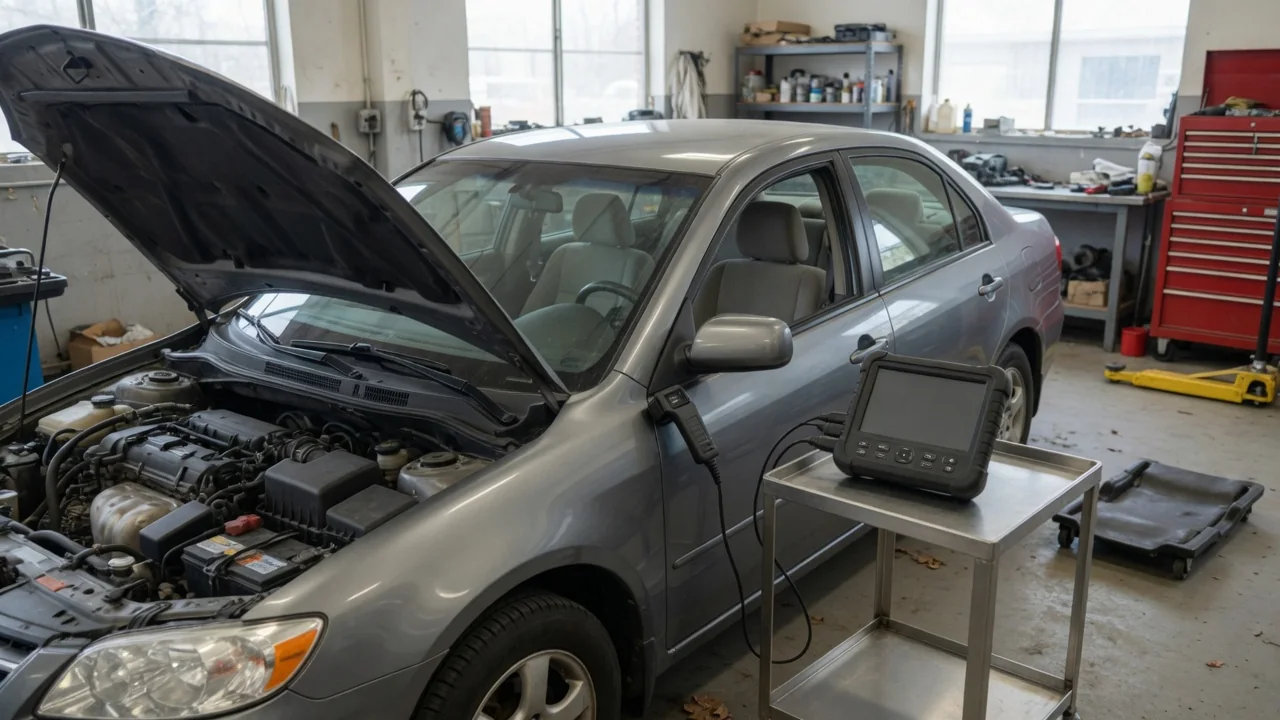
P1391 is a manufacturer-specific trouble code, so its meaning depends on the vehicle rather than on a single industry-wide definition. A generic scanner label for the p1391 code is only a starting point. Confirm the reporting control module, the exact description, and the make, model, year, and engine before treating the stored result as a diagnosis. Freeze-frame data and diagnostic trouble code status help show when the condition occurred, not which part has failed.
Verify What P1391 Means for Your Vehicle
P1391 does not have one universal definition, so interpretation starts with the vehicle in front of you. Use the make, model, year, engine, and applicable service information to verify the vehicle-specific code definition before assuming what the control module detected. The reporting module matters as well, because another controller on the same vehicle may not even set this manufacturer-specific trouble code. A handheld scanner's short label can be incomplete or generic, so confirm the exact description in the service information that matches that vehicle.
On some Chrysler applications, P1391 is associated with intermittent loss of camshaft or crankshaft position signals. That association is application-specific and cannot be copied to every brand, engine, or model year that happens to store the same alphanumeric result. Intermittent signal loss of a crankshaft position signal or camshaft position signal is a different condition from a constant missing signal, and only the verified definition tells you which one the module is reporting. Until that confirmation is complete, treat P1391 as evidence that needs decoding, not as proof of a failed sensor.
Recognize Symptoms and Decide When to Stop Driving
When the verified definition involves an engine-position signal, drivers may notice difficult starting, intermittent stalling, rough running, or an illuminated malfunction indicator. Those symptoms can appear together or separately, and they can fade even while the p1391 code remains stored. A stored diagnostic trouble code status after an intermittent event does not identify the failed component, and similar drivability complaints can come from unrelated faults. Symptom observation is useful context, but it cannot replace the vehicle-specific meaning of P1391 or the test results that follow.
If the engine stalls repeatedly, power drops severely, or the malfunction indicator flashes, stop in a safe location and arrange assistance rather than continuing to drive. A flashing warning can indicate a condition that risks catalytic converter damage on some vehicles, and repeated stalling can leave you without propulsion in traffic. Do not assume an illuminated lamp with stored P1391 means continued driving is safe, because the same result can represent different faults on different vehicles. When in doubt, treat loss of reliable engine running as a reason to park.
Understand Which Faults Could Trigger the Confirmed Definition
Any list of possible faults is valid only after the vehicle-specific meaning of P1391 is confirmed. For a verified position-signal definition, the control module may have seen a problem in a camshaft or crankshaft position sensor, a connector, wiring integrity, a power-supply circuit, or a ground path. None of those possibilities automatically requires sensor replacement, because a loose terminal or damaged harness can produce the same stored result. The code is evidence of a detected condition, not proof that a particular part has failed.
Signal-target damage or a mechanical timing concern may also deserve investigation when the applicable diagnostic procedure and test results point in that direction. Reluctor wheels, tone rings, and related timing components can affect a crankshaft position signal or camshaft position signal without the sensor itself being defective. Do not rank these causes by how common they seem, and do not attribute P1391 to a control module unless testing supports that conclusion. Manufacturer-dependent codes require vehicle-specific confirmation before parts are condemned.
Save Diagnostic Clues Before Clearing P1391
Before clearing anything, record the exact scanner description, the reporting control module, diagnostic trouble code status, available freeze-frame data, and vehicle identification details. Freeze-frame snapshots can show engine speed, temperature, and load at the moment the condition was logged, which later testing can compare against the verified definition. Note whether symptoms appear during starting, after warm-up, in wet weather, or after recent service, without recreating unsafe driving conditions. Those notes help a technician decide whether the event looks intermittent rather than constant.
Owner inspection should stay in accessible areas with the engine off and cool. Look for obviously loose connectors or visible wiring damage, and stop there. Do not probe circuits, disconnect components, or reach near belts, fans, or other moving parts. Clearing the p1391 code erases useful evidence, including freeze-frame data and status that showed whether the fault was current, pending, or stored. A cleared result that does not return immediately does not establish that the fault has been repaired, especially when intermittent signal loss is part of the verified definition.
What Professional Testing Should Establish
A technician should follow the vehicle-specific diagnostic procedure and compare live data, freeze-frame data, and code status with the verified P1391 definition. That process starts by confirming which module reported the code and what that module actually monitors. For a confirmed position-signal application, testing is meant to evaluate circuit integrity, power and grounds, and the quality of the camshaft or crankshaft position signal. The goal is to show whether the detected condition matches wiring, supply, sensor output, or another monitored path, not to swap parts from a generic list.
Intermittent faults can disappear while the vehicle sits in a bay, so a stationary scan may miss a brief dropout. Waveform capture or controlled testing under the conditions noted earlier can show an intermittent signal loss that a snapshot of current values does not reveal. Before any part is recommended, the evidence should distinguish an electrical signal fault from a damaged signal target or a mechanical timing problem. Without that distinction, a new sensor can leave a tone-ring, connector, or timing issue untouched and allow P1391 to return.
Match the Repair to the Findings and Verify the Result
Repairs should follow the evidence, not a parts catalog. Findings may support connector or wiring repair, correction of a supply or ground fault, or replacement of a component that testing has shown to be defective. A sensor is replaced only after the circuit and related mechanical targets have been evaluated according to the applicable vehicle procedure. Timing work and other specialized tasks belong in professional service, because incorrect mechanical correction can create a new running problem even if the original P1391 goes away.
After the repair, complete the prescribed post-repair checks, review diagnostic trouble code status, and confirm that the original symptoms have resolved under safe operating conditions. Successful verification means the verified definition of P1391 is no longer being met and the earlier drivability complaint does not return. If the code comes back, return to the original test evidence and the intermittent conditions already recorded instead of continuing speculative parts replacement. Repeating untested substitutions wastes time and can hide the wiring integrity or signal-quality issue that set the code in the first place.