P1362 Code: Vehicle-Specific Meaning and Safe Next Steps
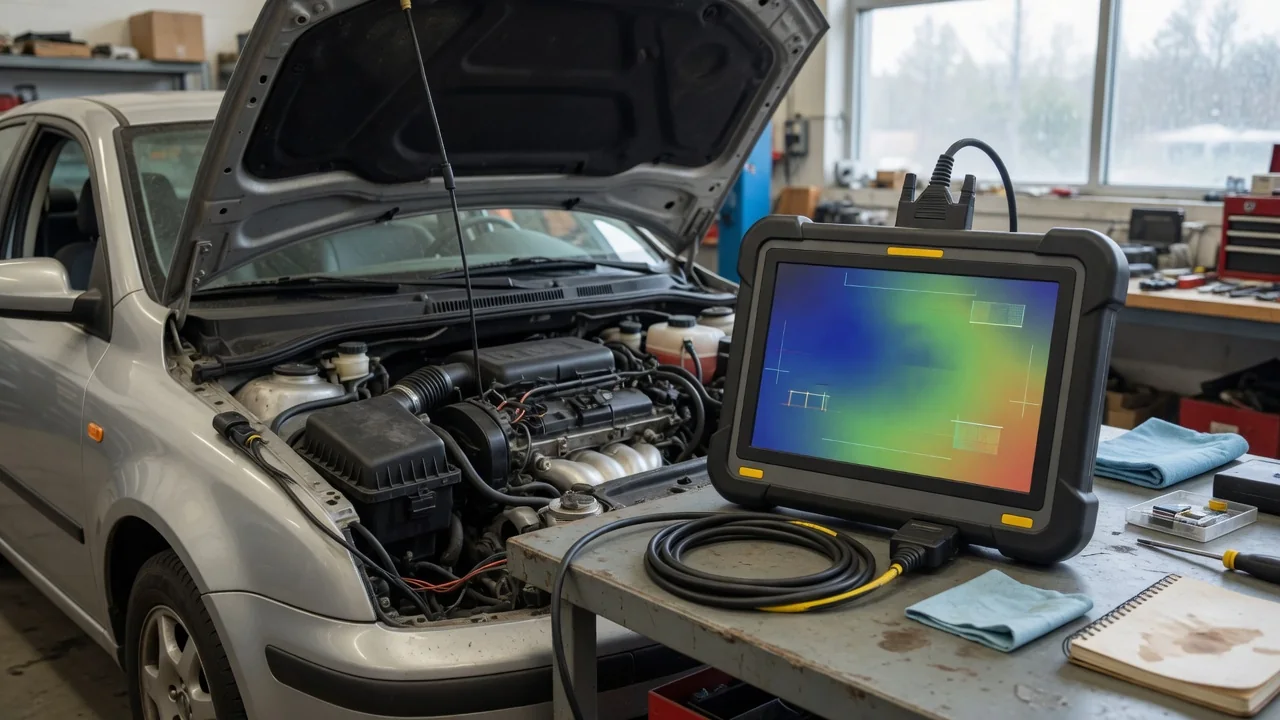
P1362 is a manufacturer-specific trouble code, so the same number can point to different circuits depending on the vehicle. Confirm make, model, year, and engine before treating any scan-tool label as the definition. The stored code is evidence of a detected condition, not proof that a part has failed. Record freeze-frame data, pending codes, and how the engine warning light behaves so later diagnostic testing starts from facts rather than guesses.
Verify What P1362 Means for Your Vehicle
P1362 cannot be interpreted from the code number alone because manufacturers assign that identifier to different systems. One application may monitor an ignition-related circuit while another uses the same number for a completely different function. Vehicle identification must include make, model, model year, and engine family, then the matching manufacturer diagnostic information. Without those details, naming a sensor, coil, or control module is speculation. Confirm that any scan tool text description is written for that exact vehicle, not a generic catalog entry that happens to share the code.
Establishing the manufacturer-specific definition is a lookup against official diagnostic data for that vehicle, not a search for the shortest explanation of P1362. After the definition is confirmed, treat the code as a report that a control module detected a fault condition in the named circuit or system. That report does not, by itself, prove a particular part needs replacement. Connectors, wiring, power, grounds, and related control logic can all set the same identifier. Replacement should wait until testing shows which of those possibilities actually matches the stored condition.
Symptoms to Record and When to Stop Driving
An illuminated engine warning light is often the first notice that P1362 has stored, yet drivability can vary widely by application. Some vehicles start hard, run roughly, or stall; others continue with little change in how the engine feels. Those observations are possible, not guaranteed, and they do not identify the failed part. Note whether the light is steady or flashing and whether starting, warm-up, or later driving is when the problem appears. Do not try to reproduce unsafe conditions just to watch the fault return.
The absence of noticeable symptoms does not establish that the fault is harmless. A pending code or an intermittent fault can still point to a condition the control module already judged out of range, even if the engine currently idles smoothly. Stop driving as soon as it is safe and arrange assistance if the engine stalls repeatedly, shakes severely, loses substantial power, or the engine warning light flashes. Record when the issue appears rather than forcing a stall or a high-load test on the road.
Possible Causes Depend on the Confirmed Definition
Once the vehicle-specific meaning of P1362 is confirmed, possible causes should be organized around that circuit or system, not around a generic parts list. If the definition names a control circuit, diagnostic testing may include wiring damage, loose or corroded connections, missing power or ground, and a fault in the component that circuit serves. Mechanical or signal-timing issues belong in the discussion only when the manufacturer procedure for that vehicle makes them relevant. Mixing ignition, cam, or other timing stories from unrelated applications can send the search in the wrong direction.
Symptoms, online anecdotes, and a matching code number cannot establish how often any one cause occurs, and they do not justify replacing a part. Two vehicles can store P1362 for different reasons even when the engine warning light looks the same. A wiring inspection may find a damaged harness on one car while another needs a component test after power and ground check out. Until the confirmed definition and its diagnostic procedure support a conclusion, treat each possibility as unproven. Parts swapped on guesswork can leave the original condition in place.
Safe Checks Before a Service Appointment
Before clearing anything or disconnecting the battery, record every retrieved code, whether it is pending or confirmed, and any freeze-frame data the scan tool can display. Freeze-frame snapshots capture operating conditions at the moment the fault set and are easy to lose if memory is reset. Also document recent repairs, battery problems, jump-starts, and the circumstances around the engine warning light, including weather, load, and whether the issue was intermittent. That history helps a technician decide which branch of diagnostic testing to run first.
Limit visual observations to safely accessible areas with the engine off and cool. Look for obvious harness damage, unplugged connectors, or loose grounds you can see without removing covers or probing circuits. Do not disassemble components or take electrical measurements if you lack the procedure and equipment for that vehicle. A basic scan tool may show an incomplete description of P1362 or omit manufacturer-specific data needed to diagnose this fault. Incomplete text is a reason to wait for professional information, not a reason to guess at a part.
Professional Tests That Can Establish the Cause
A technician starts from the confirmed definition of P1362 and the applicable diagnostic procedure, then reviews related codes before choosing tests. Companion codes can show whether the same event affected more than one circuit or whether a power or ground issue is shared. When the procedure calls for it, circuit integrity, supply voltage, grounds, and signal behavior are measured with equipment suited to that system. Those measurements belong in a shop setting because incorrect probing can damage control modules or create new faults.
Live data and specialized signal testing help compare what the control module is seeing with what the circuit should be doing under the conditions captured in freeze-frame data. The goal is to watch the relevant parameter while the engine is in a state that matches the stored event, not to run every available graph. An intermittent fault may appear only after heat, vibration, or a particular start cycle, so a normal reading during one test does not rule it out. Additional observation is often needed when the code sets sporadically.
Choose the Repair and Confirm the Result
Each repair should follow a demonstrated fault, such as a verified connection problem, damaged circuit, or failed component identified by the vehicle-specific procedure. Ordering a replacement part without confirming fitment for that make, model, year, and engine risks installing hardware that cannot correct P1362 even if the original diagnosis was sound. Clearing the code is not a repair. If the underlying condition remains, the control module can store the same manufacturer-specific trouble code again as soon as the enabling conditions return.
After the indicated work, verification should follow the applicable diagnostic procedure rather than a single key cycle with the engine warning light off. Check whether P1362 or related pending codes return and whether the earlier symptoms reappear under the same starting, warm-up, or intermittent conditions you recorded. If the fault comes back, use the preserved freeze-frame data, vehicle identification, and prior test results to continue diagnosis instead of repeating a parts swap. Confirmation is complete only when the stored condition stays gone and the engine behaves as it should.