P1361 Code: Vehicle-Specific Meaning, Symptoms and Repairs
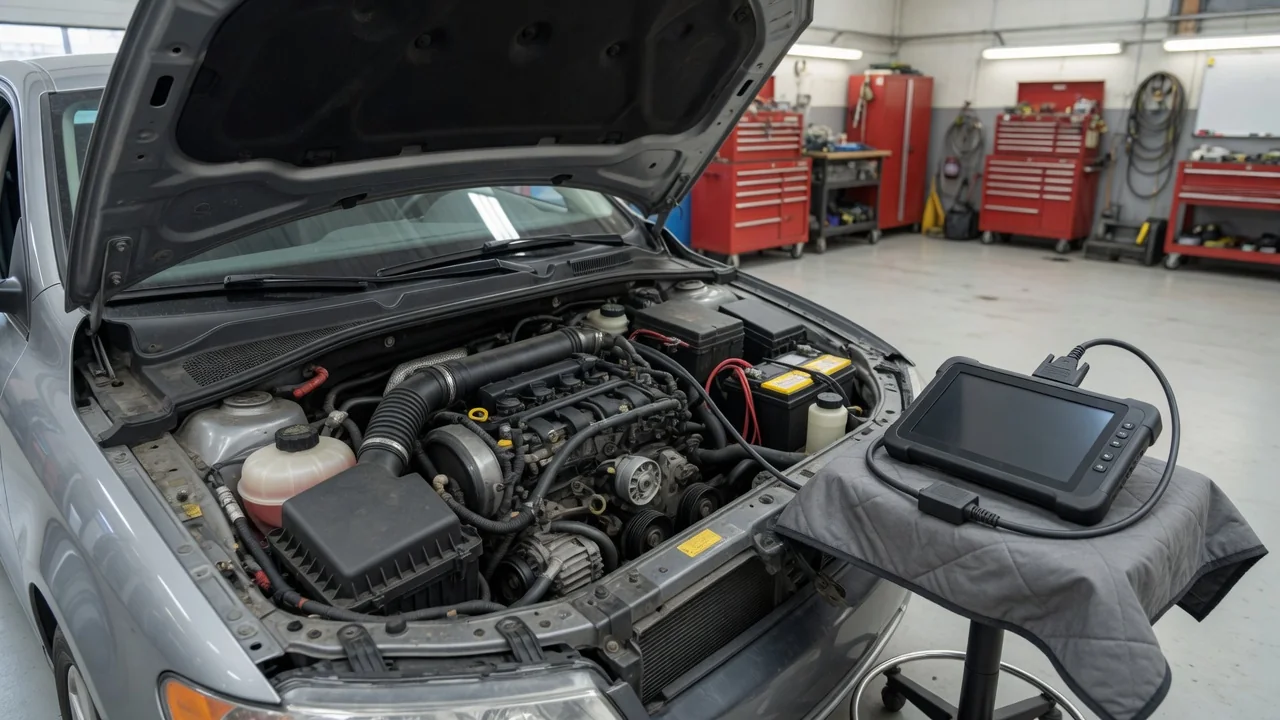
P1361 is a manufacturer-specific trouble code, so its meaning is not the same on every vehicle. Before treating it as an ignition control circuit problem or a top dead center sensor fault, confirm the description against the make, model, year, engine, and service information. The stored P1361 code flags a monitored condition; it does not, by itself, prove that any one part has failed.
Verify What P1361 Means for Your Vehicle
P1361 belongs to the family of manufacturer-specific diagnostic trouble codes. The same five-character label can describe different monitored conditions depending on the brand and control strategy. Use the vehicle identification details and the applicable service information to pull the official definition rather than relying on a generic scanner phrase. Until that description is confirmed, treat ignition control and top dead center sensor interpretations as possible families only, not as defaults.
Record the exact wording the scan tool reports, along with whether the P1361 code is current, pending, or stored in history. An abbreviated label can omit circuit, signal, or sensor language that changes the diagnostic path. The code identifies that a monitored ignition-related or timing-related condition was outside expected limits; it is evidence to interpret, not proof that a coil, module, or sensor has failed. Vehicle-specific confirmation is required before any part is condemned.
Symptoms to Record and When to Stop Driving
Once the definition is verified, symptoms can include rough running, hard starting, reduced power, or a check-engine warning. Engine stalling is possible when the monitored ignition control circuit or top dead center sensor signal is disrupted, but the pattern depends on how that vehicle uses the information. Some drivers notice hesitation only under load; others see a warning light with little change in how the engine feels. Match observed drivability to the verified definition, because an ignition control circuit fault and a top dead center sensor fault do not produce identical starting or running complaints.
An intermittent sensor signal or a brief circuit fault may leave the vehicle running normally by the time it is inspected. Note whether problems appear during starting, after warm-up, or under particular driving conditions, without trying to force a stall. If stalling repeats, running is severely rough, or the check-engine light flashes, stop in a safe place and arrange assistance rather than continuing to drive. Those signs can indicate a misfire or loss of ignition control that is unsafe to ignore.
Potential Causes Behind the Verified Fault
When the confirmed description points to an ignition control circuit, possible leads include damaged wiring and connectors, poor power supply, a weak ground, or a control component that is not switching as commanded. None of those findings is proven by the code alone. A loose connector after recent engine work, corrosion at a harness joint, or a pinched wire near an ignition component can interrupt the circuit just as readily as a failed module. Testing must separate an open, short, or high-resistance path from a genuine control-side fault.
If the vehicle-specific text names a top dead center sensor, consider signal interruptions, harness damage, and related mechanical or timing conditions that still require measurement. A TDC sensor that loses its reference even briefly can set P1361 without the engine being obviously out of time. Accompanying diagnostic trouble codes for related sensors, grounds, or ignition circuits can point to a shared electrical problem, but they do not prove that P1361 caused every symptom. Treat recent work near the sensor or its connector as a diagnostic lead, not as confirmation of the cause.
Safe Checks Before Booking Diagnosis
Before any clearing, save all stored and pending codes, available freeze-frame data, and a written note of when symptoms occur. Freeze-frame snapshots capture engine speed, load, and temperature at the moment P1361 set and help a technician recreate the operating window without guesswork. Mention recent battery issues, charging problems, or engine repairs, because those events often disturb ignition wiring and connectors. Sharing that history early can keep diagnosis from starting at the wrong component.
With the engine off and cool, limit yourself to what you can see: frayed insulation, a connector that looks unseated, or contamination around a sensor or ignition harness. Do not disassemble parts, probe terminals, or handle ignition components with the engine running. Do not bypass circuits or attempt live electrical tests. Those steps belong to a qualified technician using the procedure for the confirmed P1361 definition. Your observations are useful notes, not a substitute for circuit testing.
Professional Tests That Can Establish the Cause
A technician should follow the diagnostic procedure written for the confirmed, vehicle-specific P1361 meaning rather than a generic ignition flowchart. That procedure typically starts by checking circuit integrity, supply voltage, and grounds before any sensor or ignition component is condemned. Many apparent sensor failures are actually open circuits, high resistance, or missing reference voltage. Establishing those basics first prevents replacing a top dead center sensor or ignition control part that is still electrically sound.
Professional signal testing can reveal an intermittent sensor signal or a drop in ignition control output that a basic code reader never shows. Oscilloscope or manufacturer-specified waveform checks compare the live pattern with the expected reference for that engine. Mechanical timing inspection and control-module assessment should wait until electrical and signal tests support going further. Jumping to a module or a timing repair without those results turns a manufacturer-specific trouble code into an expensive guess.
Repairs and Confirmation That the Fault Is Resolved
Repair should follow a demonstrated fault, such as damaged wiring, a poor connection, or a sensor or ignition component that failed its specified tests. Confirm the exact part and any vehicle-specific setup requirements before replacement, because similar-looking sensors and ignition modules are not always interchangeable. Clearing P1361 or disconnecting the battery only erases the record; it does not prove the underlying condition is gone. If the monitored circuit or signal still faults, the code can return as soon as the same operating conditions reappear.
After the repair, confirmation includes the appropriate circuit or signal checks, a safe operating assessment under conditions similar to those in the freeze-frame data, and a rescan for returning or pending codes. Cost depends on diagnostic time and how far the fault extends through wiring, connectors, or a tested component; there is no universal inexpensive fix for every P1361 case. A resolved code plus stable running is the practical standard, not a promise that one part swap will always be enough.