P1351 Code: Vehicle-Specific Meaning, Causes and Next Steps
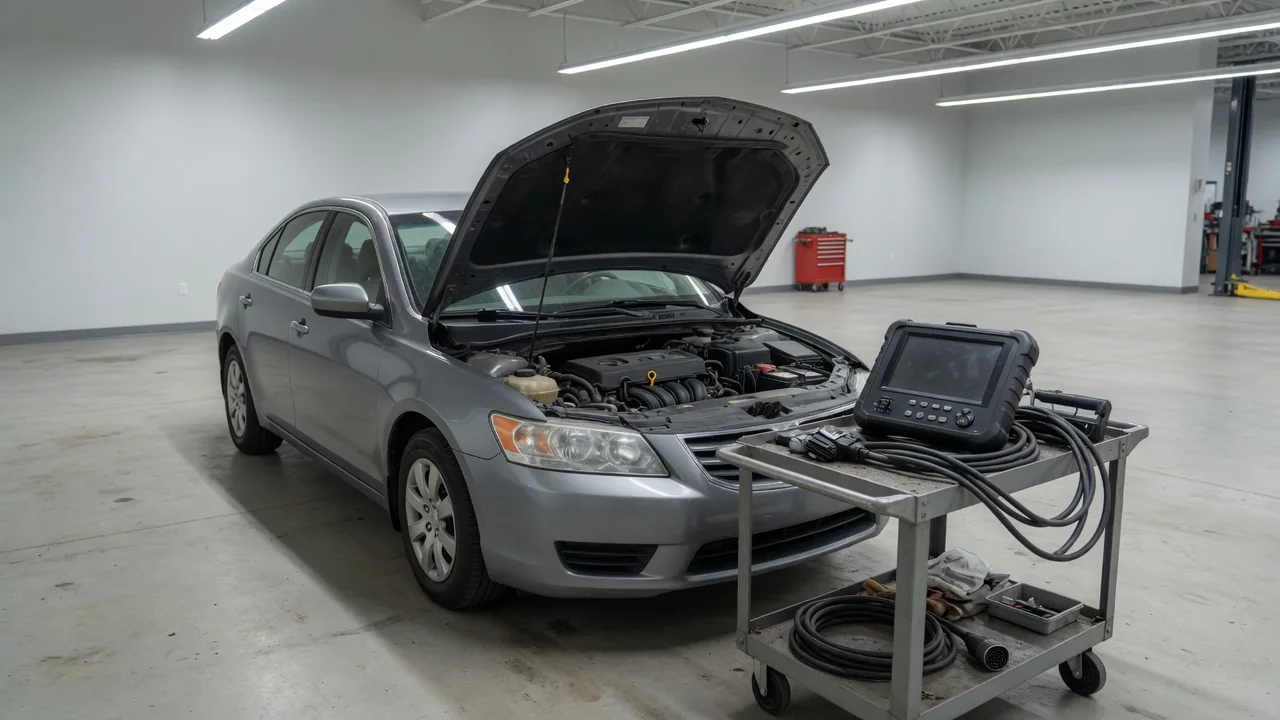
The P1351 code is a manufacturer-specific trouble code, so its meaning depends on the vehicle rather than on a single industry-wide definition. A scan tool may label it as an ignition control circuit, ignition coil, or glow plug control circuit concern, but that short text is only a starting point. Confirm make, model, year, and engine before treating P1351 as a failed part or choosing a repair.
Verify What P1351 Means for Your Vehicle
P1351 is manufacturer-dependent and has no single universal component or fault definition. Two vehicles can store the same alphanumeric identifier while pointing at entirely different systems. Before interpreting the code, gather the make, model, model year, engine, and the applicable vehicle service information. Those details determine whether the diagnostic path belongs with spark ignition, a control module output, or another monitored circuit unique to that application.
Some applications associate P1351 with an ignition coil or ignition control circuit, while certain diesel applications use the same identifier for a glow plug control circuit. Include only the definition verified for the vehicle being discussed; a neighboring model year or a different engine family may not share that meaning. A scanner's short description identifies a diagnostic starting point and does not establish which part needs replacement. Treat the readout as a request to inspect a named circuit, not as proof that a coil, plug, or controller has already failed.
Symptoms That Help Establish Urgency
When the verified definition is ignition-related, possible complaints can include rough running, misfires, stalling, or starting difficulty, because a disrupted ignition control circuit can interrupt spark delivery. Those signs still do not confirm which component is at fault. For a verified glow plug control application, cold-start difficulty may be relevant, especially in low ambient temperatures, and noticeable symptoms may be absent once the engine is warm. Driveability can look normal while the pending code or stored P1351 remains in memory.
Symptoms alone cannot confirm the affected component or prove that the P1351 code caused the complaint. Another misfire, fuel, or sensor fault can produce similar behavior at the same time. If the vehicle develops severe shaking, repeated stalling, or a flashing check-engine light, stop safely and arrange assistance rather than continuing to drive. Those conditions can indicate an active misfire or loss of control that needs professional evaluation, independent of any assumption about a particular ignition coil or glow plug.
Fault Areas to Consider After Confirming the Definition
After the vehicle-specific meaning is confirmed, organize possible causes around the circuit named by that definition: its power supply, ground, wiring and connectors, control output, and the monitored component. If the verified definition and circuit design involve spark, an ignition coil or ignition module may sit on that circuit. If the definition is a diesel glow plug control circuit, the relevant hardware is the glow plugs and their control equipment. Do not import parts from an unrelated application simply because they share the P1351 identifier.
A circuit code can reflect an electrical connection or supply problem without proving that a coil, plug, or controller has failed. Corroded terminals, a loose ground, pinched wiring, or an interrupted power feed can set P1351 while the monitored component still functions when it receives a valid command. Freeze-frame data may show the operating conditions when the fault set, which helps decide whether the issue is intermittent at a connector or present whenever the circuit is commanded. The code is evidence to interpret, not a parts list.
Safe First Checks for a P1351 Code
Record the complete scanner description, stored and pending codes, and available freeze-frame data before clearing anything. Note whether the fault appeared during a cold start, a warm restart, or normal driving, and whether there was recent repair work or battery trouble that could have disturbed power, grounds, or connectors. That context often matters more than the identifier itself, because an ignition control circuit and a glow plug control circuit are exercised under different operating conditions. Preserve the snapshot so later testing can match the recorded event.
Limit owner observations to accessible wiring and connectors with the engine off and cool. Look for obvious damage such as melted insulation, loose terminals, or contamination at a connector, without unplugging or probing components. Ignition spark testing, circuit bypassing, and powered electrical measurements require appropriate equipment and professional procedures; they are not safe first-owner checks. Manufacturer-dependent codes also require vehicle-specific confirmation, so a generic chart or a neighboring vehicle's pinout should not be used to decide which wire to disturb.
Professional Tests That Identify the Repair
A technician should use the applicable wiring diagram and manufacturer diagnostic procedure for the confirmed P1351 definition rather than a generic ignition or glow-plug flowchart. The purpose of checking circuit power, grounds, and wiring integrity is to learn whether the control module can supply and observe the circuit as designed. Those checks stay inside the published procedure; they are not a reason to jumper live circuits or substitute unapproved test methods. Vehicle-specific pin locations, expected states, and enable conditions belong in that service information.
Control signals and component response help distinguish a wiring fault from a failed component. If the command is present at the connector and the component does not respond as specified, attention shifts toward the coil, module, glow plug, or other monitored device named by the definition. If the command never arrives, the path through wiring, connectors, power, or the controller itself becomes the priority. Companion codes and the conditions recorded when the fault occurred help prioritize that testing, especially when freeze-frame data shows a cold start, a restart, or a particular load.
Repair the Confirmed Fault and Check the Result
Repairs should follow the test findings. That may mean repairing damaged wiring or connections, correcting a supply or ground fault, or replacing a component only after it has failed the vehicle-specific checks. Replacing an ignition coil or a glow plug solely because P1351 appeared may leave the underlying problem unresolved if the actual fault is a connector, a power feed, or a control-side issue. The identifier names a circuit condition; it does not by itself authorize a parts swap.
After the confirmed repair, verify the result with symptom checks and a rescan following the applicable manufacturer verification procedure. Drive or idle under the conditions that previously set the code when those conditions are known from freeze-frame data. A code that returns immediately or under particular conditions warrants further diagnosis; clearing it alone does not confirm a repair. Pending code status should be watched as well, because a fault that has not yet matured into a stored P1351 can still indicate that the circuit has not been restored.