P1349 Code: Vehicle-Specific Meaning, Symptoms and Repairs
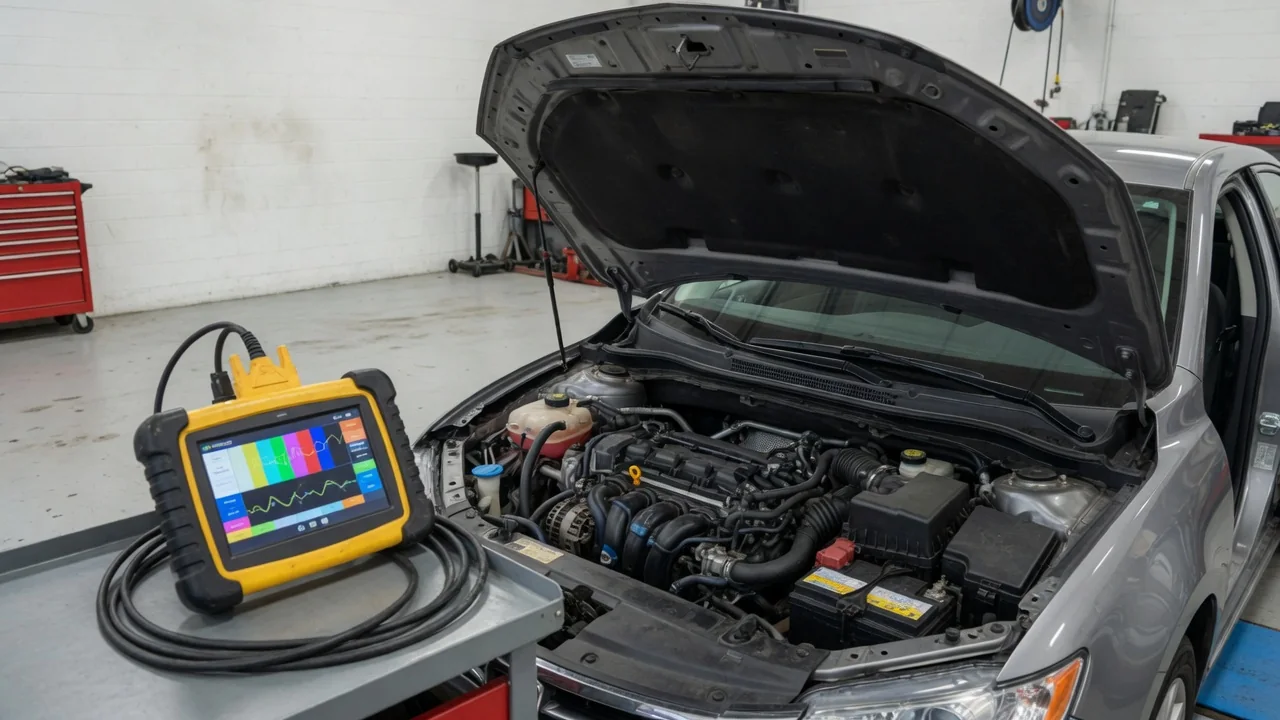
P1349 is a manufacturer-specific diagnostic trouble code, so its meaning is not universal. A generic scanner label for the P1349 code is only a starting point; the exact make, model, year, and engine, plus factory service information, determine what the control module actually recorded. Symptoms can range from a check-engine light alone to rough running, depending on that verified definition. The code flags a detected operating condition, not a failed part by itself.
Verify What P1349 Means for Your Vehicle
Unlike many generic powertrain codes, P1349 is manufacturer-dependent. Two vehicles can store the same identifier for entirely different monitored conditions, so interpretation must wait until the make, model, model year, and engine are identified. Vehicle-specific service information is the source that confirms the definition; a handheld scanner's short description is not enough, because those captions are often incomplete or borrowed from another application. Until that definition is confirmed, later steps should not assume a particular system is involved.
Variable valve timing and oil control valve explanations belong in the diagnosis only after the verified definition actually points to camshaft timing or oil-controlled actuation. If the confirmed meaning is electrical, mechanical, or unrelated to those systems, those topics should stay out of the plan. In every case, P1349 records that a control module detected an operating condition outside its programmed criteria. That evidence needs interpretation against the factory procedure; it does not, by itself, identify a failed part.
Possible Symptoms and When to Stop Driving
P1349 symptoms are not a single package. A check-engine light may be the only indication, or the engine may run roughly, deliver reduced power, or stall, depending on what the verified code meaning actually monitors. Some vehicles show no obvious drivability change while the diagnostic trouble code is stored. Those observations still matter, but they cannot confirm the underlying fault, because similar behavior can come from unrelated misfire, fuel, or sensor issues that happen to appear at the same time.
Urgency should follow warning indicators and how the vehicle actually behaves, not an assumption that continued driving is acceptable. Stop safely and arrange assistance if an oil-pressure warning appears, the engine makes severe noise, temperature climbs into overheating, or a flashing check-engine light arrives with rough running. Those signs can point to conditions that risk further damage even when P1349 is only one of the stored codes. Milder illumination without those warnings still warrants prompt diagnosis rather than a claim that the trip is risk-free.
Potential Causes After the Code Definition Is Confirmed
Once the factory definition is confirmed, possible causes must stay inside that diagnostic path. For a verified oil-controlled valve-timing application, incorrect oil level, oil that does not match the specified grade, or restricted oil flow can keep an oil control valve or actuator from moving camshaft timing as commanded. Engine oil condition matters in that context because varnish, debris, or aeration can slow hydraulic response. None of those conditions is proven by the code; they are only hypotheses the procedure may instruct a technician to evaluate.
Control-valve, actuator, electrical-connection, and mechanical-timing faults enter the investigation only where the vehicle-specific diagnostic procedure lists them as relevant. Companion codes and freeze-frame data help narrow that work by showing whether related circuits, misfires, or oil-pressure concerns were present at the same operating condition. Ranking likely parts by how often they fail elsewhere is not a substitute for that evidence, and replacing components solely because P1349 appeared does not establish the actual cause. Wiring inspection belongs in the same evidence-based sequence rather than as a first guess.
Safe Observations to Record Before a Shop Visit
Before any codes are cleared, record every stored and pending diagnostic trouble code along with available freeze-frame data. That snapshot preserves engine speed, load, temperature, and related values from the moment the condition was detected, which a later test drive may not recreate. Note whether any drivability change appeared during startup, warm idle, or ordinary driving, without trying to force the fault. Deliberately stressing the engine to reproduce P1349 can mask intermittent conditions or add risk when the verified meaning involves timing or lubrication.
If the confirmed definition makes engine oil condition relevant, check the oil level using the owner's manual procedure with the vehicle safely parked and the engine off. Document recent maintenance, oil that was added, visible leaks, and any repairs already performed. Limit inspection to accessible areas and do not touch hot exhaust, belts, or other moving components. Those notes give a technician context for wiring inspection and later tests without substituting for the factory diagnostic steps that still have to confirm what actually set the code.
Professional Tests That Establish the Cause
A technician starts from the confirmed vehicle-specific diagnostic procedure rather than from a generic P1349 description. Companion faults are reviewed first because related codes can change which circuit, sensor, or mechanical check comes next. On applicable variable valve timing systems, commanded and actual camshaft timing data are compared under the operating conditions the freeze-frame captured, without activating components as a shortcut. Divergence between commanded and actual values is still only a clue; it does not prove whether the oil control valve, actuator, wiring, or the mechanical timing hardware is at fault.
When the procedure calls for it, electrical testing of connectors, harness continuity, and control-circuit integrity requires the correct pinouts and specifications for that vehicle. Oil-pressure or oil-flow assessment likewise needs appropriate gauges or scan-tool parameters matched to factory limits, not a guess from dipstick appearance alone. Mechanical-timing inspection is warranted only after those hydraulic and electrical checks fail to explain the condition, because the code by itself cannot justify engine disassembly. Opening a timing cover without that supporting evidence can create extra work and still miss the actual fault.
Repairs and Evidence That the Fault Is Resolved
Each repair should follow a demonstrated fault, not the mere presence of P1349. Confirmed low oil level, damaged wiring found during inspection, a control component that failed its specified tests, or a mechanical timing problem verified by measurement are examples of findings that justify work. An oil change, additive, or replacement oil control valve is not a guaranteed remedy, because those actions only help when the procedure has already shown that lubrication, varnish, or that valve is the actual problem. Treating the code as a parts list invites repeat failures.
After the repair, verification means running the operating checks the service information requires, reviewing relevant scan data such as camshaft timing correlation or circuit status, and watching whether the diagnostic trouble code returns. Clearing the warning light does not establish a successful repair, because the lamp can stay off until the same condition is detected again. Repair scope still depends on diagnosis, access, and confirmed damage rather than on the identifier alone. Until those checks pass, P1349 should be treated as unresolved even if the engine seems smoother.