P1348 Code: What It Means by Manufacturer and How to Diagnose It
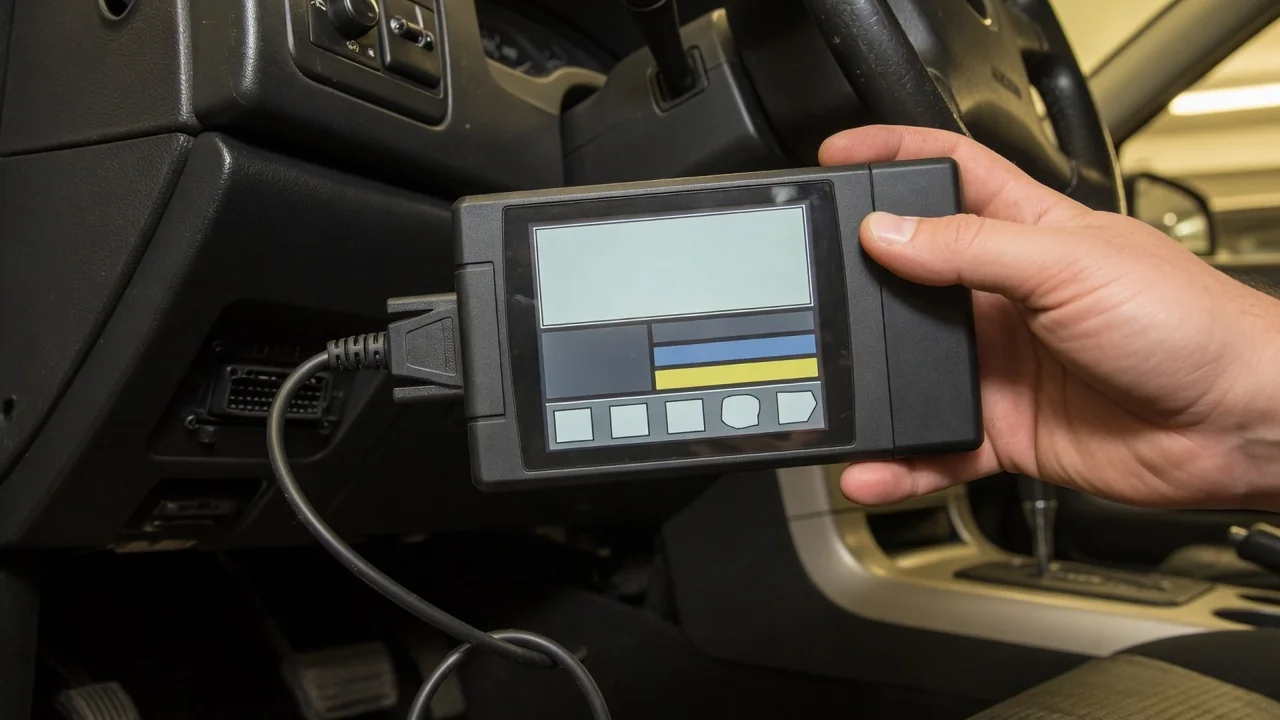
When your vehicle’s check engine light turns on and a scan tool pulls up P1348, the first challenge is figuring out what that code actually means for your exact car. Unlike generic powertrain codes that are uniform across most vehicles, P1348 belongs to the P1xxx manufacturer-specific range. The same number can point to different systems depending on the make, model, engine, and model year, so jumping to conclusions or buying parts without confirmation often leads to wasted time and money. Understanding how to verify the definition and work through diagnosis is essential before attempting any repair.
What the P1348 Code Means and Why Its Definition Depends on the Manufacturer
P1348 is a manufacturer-specific diagnostic trouble code, which means it falls outside the standardized OBD-II definitions that apply across all brands. While generic codes follow a consistent format, the P1xxx range is reserved for each automaker to assign its own meanings. As a result, the exact fault indicated by P1348 can vary dramatically from one vehicle to another, sometimes involving ignition, fuel, emissions, or even transmission-related circuits. There is no single universal explanation that covers every application, so the first step is always to identify what the code means for the specific vehicle in question.
When the control module stores P1348, it has detected that a monitored condition fell outside the expected limits. This could be a voltage reading that was too high or low, a signal that was missing when it should have been present, or a performance parameter that deviated from a calculated target. However, the code alone does not identify which component failed. It only points to a circuit, system, or function that needs further evaluation. Jumping from a raw code to a parts replacement often results in unnecessary expense because the root cause may be a wiring fault, connector corrosion, or even a software parameter rather than the sensor or actuator itself.
How to Confirm the Exact P1348 Definition for Your Vehicle
Confirming the exact P1348 definition requires more than a basic code reader that only displays the generic number. Many mid-range and professional scan tools can access enhanced or manufacturer-specific definitions stored in the vehicle’s control module or available through an online database. In some cases, even a capable tool may show only a generic description unless the correct make and model information is entered. The most reliable approach is to check factory service information using the vehicle identification number, because that ties the code to the exact production configuration and any applicable technical service bulletins or software calibration notes.
Before clearing the code, record the freeze frame data that the control module captured at the moment the fault was detected. This snapshot typically includes engine speed, coolant temperature, load, vehicle speed, and other operating parameters. These values help recreate the conditions under which the code set, which is invaluable during diagnosis. Also note whether any other codes are stored or pending. Some P1348 definitions are closely related to other diagnostics, and the presence of additional codes can change the interpretation. Clearing everything before recording these details erases information that may be difficult or impossible to recover later.
Symptoms That May Accompany P1348 and Whether It Is Safe to Drive
The symptoms associated with P1348 depend entirely on the confirmed definition and the specific system involved. In some vehicles, the only noticeable sign may be the illuminated check engine light, with no change in driving behavior. In other cases, the fault could cause rough running, hesitation during acceleration, stalling at idle, hard starting, or reduced fuel economy. Because the code can relate to so many different components, it is not safe to assume that any particular symptom will or will not appear. Observing and noting exactly how the vehicle behaves before, during, and after the code sets provides useful clues for diagnosis.
If the check engine light is flashing, the vehicle is indicating a condition that could damage the catalytic converter or cause a severe misfire. Under those circumstances, the vehicle should be driven as little as possible, at low speed and low load, and inspected promptly. Even when drivability seems normal, ignoring P1348 can lead to larger problems. An unresolved fault may affect emissions testing because readiness monitors may not complete, and a minor electrical issue can worsen into a no-start or component failure. The absence of immediate symptoms does not mean the code is harmless or will clear itself.
Possible Cause Categories to Consider After the Definition Is Confirmed
Once the exact definition is confirmed, the possible causes can be grouped into several broad categories rather than a fixed list of parts. The first category includes wiring and connector problems such as chafed insulation, broken strands inside the insulation, loose terminal tension, or corrosion in connectors. These issues are often checked early for many electrical fault codes because they can mimic sensor failures and are relatively common in vehicles exposed to moisture or vibration. The second category covers the sensors or actuators in the monitored circuit, which may fail electrically or mechanically. The third category includes the monitored component itself, and the fourth involves the powertrain control module or its software calibration.
Manufacturers sometimes publish technical service bulletins that describe known issues related to a particular code, including revised connectors, updated software, or revised test procedures. Checking whether any bulletins apply to the exact vehicle, engine, and production date can save hours of diagnostic time and prevent unnecessary parts replacement. However, no specific component should be assumed faulty solely because the code is present. The only reliable way to identify a failed part is through testing that follows the manufacturer’s diagnostic procedure, which typically includes measuring circuit resistance, checking reference voltages, and comparing live data to expected values under specific operating conditions.
Safe Checks You Can Do Before Visiting a Shop
Before visiting a shop, there are a few safe checks that can be performed at home, but only after recording all codes and freeze frame data. Once that information is saved, a visual inspection with the engine off and completely cool can sometimes reveal obvious problems. Look for disconnected, damaged, or corroded connectors and wiring in the area related to the confirmed definition. A broken wire, a connector that is not fully seated, or visible green corrosion on terminals can explain why the code set. However, this type of inspection is limited to what can be seen without disassembling major components or disturbing the system.
If the code is cleared and then reappears, noting the driving conditions when it returns can narrow the possible causes. For example, if it only sets after the engine reaches operating temperature, a heat-related connection or sensor drift may be involved. If it appears only during wet weather, moisture intrusion might be a factor. Do not probe ignition or high-voltage circuits, back-probe unfamiliar connectors, or run the engine with components disconnected, because these actions can damage electronics or cause injury. A visual check cannot confirm circuit integrity, sensor accuracy, or control module function, so if the code persists and no obvious problem is found, professional testing is the next logical step.
How P1348 Is Typically Resolved and When Professional Testing Is Needed
The correct repair for P1348 can only follow a confirmed diagnosis, and guessing at parts based on the code number alone frequently leads to spending money on components that do not fix the fault. Professional diagnosis generally involves following the manufacturer’s test procedure for the specific code, using wiring diagrams to trace the circuit, and measuring signals under controlled conditions. The technician may also check for software updates or compare the vehicle’s data to known good values. This systematic approach identifies the true root cause, whether it is a damaged wire, a defective sensor, or a control module calibration issue.
After the repair is completed, the vehicle is cleared of codes and a drive cycle is performed to verify that the fault does not return. The drive cycle is a specific sequence of operating conditions that allows the control module to run its self-tests and complete the readiness monitors. A successful repair is confirmed when the code remains absent after multiple drive cycles and all applicable readiness monitors have set to complete. If P1348 returns or the monitors never complete, further diagnosis is needed. Seeking a qualified technician is appropriate whenever the definition is unclear, the code keeps coming back, drivability is affected, or electrical testing beyond a visual inspection is required.