P1345 Code: Vehicle-Specific Meaning, Causes and Repairs
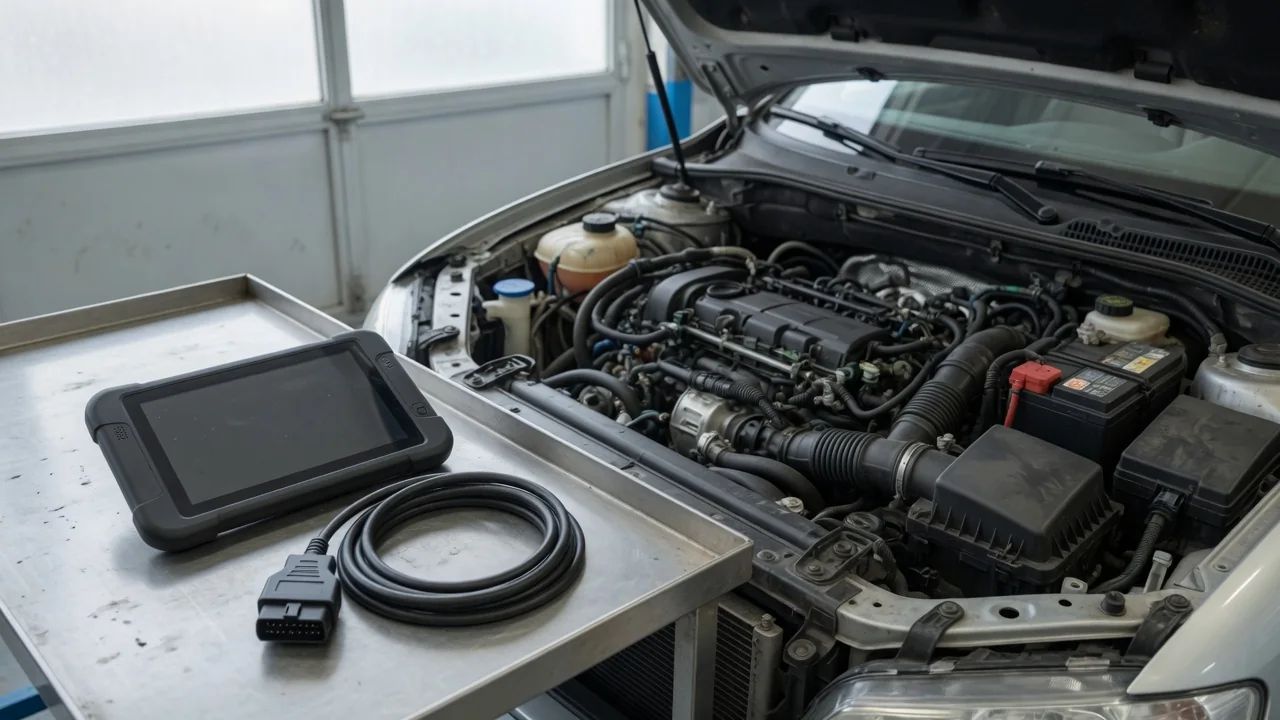
P1345 is a manufacturer-specific trouble code, so its meaning depends on the vehicle that stored it. On many General Motors applications it flags a crankshaft and camshaft correlation problem, but that interpretation is not universal. The P1345 code is evidence of a monitored condition, not proof that a sensor has failed. Confirm year, make, model, and engine, then match the definition to your control system before planning diagnosis or repair.
Verify What P1345 Means for Your Vehicle
Before treating P1345 as a known failure, record the year, make, model, and engine, then look up the manufacturer-specific definition for that powertrain. Scan-tool wording can differ from a generic code list, and the same alphanumeric identifier can describe different monitored conditions across brands. Many GM applications use P1345 for a crankshaft-to-camshaft position correlation fault, which means the control module saw crankshaft position and camshaft position signals that did not line up as expected. That GM meaning should not be assumed on every vehicle that displays P1345.
A stored P1345 code identifies that a monitor ran and found a condition outside its programmed limits. It does not, by itself, prove that a crankshaft position sensor, camshaft position sensor, or related part has failed. Wiring, timing hardware, or an installation error can produce the same flag. On non-GM vehicles, do not invent a meaning from a GM correlation description. Use the verified, vehicle-specific definition and the actual sensor or timing architecture of that engine. Until that confirmation exists, treat P1345 as a prompt for identification, not as a parts list.
Symptoms and Signs That Driving Should Stop
On GM applications where P1345 indicates a crankshaft and camshaft correlation fault, drivers may see a check-engine light along with difficult starting, rough running, misfires, or stalling. Those symptoms appear because ignition or fuel events depend on a consistent relationship between crankshaft position and camshaft position. Other vehicles storing the same code under a different definition may behave differently. Some engines show few noticeable driveability changes even while the monitor is failed. Symptoms cannot identify the failed component, because wiring, a sensor signal issue, and a mechanical timing problem can feel similar from the driver's seat.
A flashing check-engine light, severe shaking, repeated stalling, or abnormal mechanical noise are reasons to stop safely and arrange assistance rather than continue driving to diagnose later. Those signs can point to misfire severe enough to risk catalytic converter damage or to a timing-related mechanical problem that should not be forced. A steady warning light does not guarantee that continued driving is safe. Load, temperature, and engine speed can change how a correlation fault behaves, so a calm idle on the driveway is not proof the engine will stay stable in traffic.
Possible Causes on GM Correlation-Fault Applications
After the P1345 definition is confirmed as a GM crankshaft-to-camshaft position correlation fault, possible causes depend on engine design. On distributor-equipped engines, distributor indexing or alignment can be off, especially after distributor, ignition, or timing-cover work. The rotor and camshaft-driven distributor must present camshaft position information in the expected relationship to crankshaft position. That indexing discussion applies only to engines that still use a distributor. Coil-on-plug or distributorless designs need a different look at camshaft sensors, reluctors, and mechanical valve timing rather than distributor clocking.
Damaged wiring, poor connections, and crankshaft or camshaft sensor signal faults can also set the code and require testing rather than automatic replacement. Mechanical timing problems, a stretched or jumped timing set, worn distributor bushings or gears, or a damaged tone wheel or cam signal target can shift the apparent relationship between the two sensors. None of these items should be ranked by how often they fail, because that frequency is not established here. The cause list is useful only after the code definition and the engine's sensor and timing architecture are confirmed.
Safe Checks Before Authorizing Repairs
Before clearing anything, record all stored and pending codes and save available freeze-frame data. Freeze-frame captures operating conditions when the P1345 code set, such as engine speed, load, and temperature, which later helps a technician compare those conditions with current scan data. Note when symptoms occur and whether recent work involved a distributor, a crankshaft or camshaft sensor, a timing chain or belt, or related connectors. That history often matters more than the code number itself, because an installation error after service can look identical to a failed sensor on a scan tool.
With the engine off and cool, inspect accessible wiring and connectors for obvious damage, corrosion, or loose terminals without taking the engine apart. Do not probe sealed connectors or pull sensors unless you know the circuit design. Companion codes and the scan-tool's own wording still need vehicle-specific interpretation, because another manufacturer may use P1345 for a different monitor. Clearing the code is not a repair. If the underlying correlation, circuit, or mechanical condition remains, the monitor can set P1345 again, and valuable freeze-frame evidence will be gone.
Professional Tests That Identify the Cause
A technician should follow the application-specific diagnostic procedure for that engine and check sensor circuits before recommending parts. That usually includes verifying power, ground, and signal integrity at the crankshaft and camshaft position sensors, then comparing live data with the expected pattern for that application. Scan-data review and crankshaft or camshaft waveform testing, when applicable, show whether the signals are present, noisy, dropped, or out of expected alignment. Sensor signal testing distinguishes a circuit problem from a correlation problem caused by mechanical valve timing or distributor position.
On some distributor-equipped GM engines, diagnosis includes a specified cam retard offset check that compares camshaft position information with crankshaft position. Operating conditions and any adjustment belong with a qualified technician using the service information for that engine, not with a driveway shortcut. Mechanical timing or distributor inspection becomes necessary when electrical tests show the sensors and circuits are producing plausible signals that still do not correlate. A basic code reader can display P1345, but it cannot capture waveforms, measure cam retard offset, or inspect timing hardware.
Evidence-Based Repairs and Confirmation
Repairs should follow confirmed findings rather than the code number. Wiring repair is appropriate when testing proves an open, short, or poor connection. Incorrect distributor installation is corrected only on engines that use a distributor and only after indexing is shown to be wrong. A crankshaft or camshaft position sensor should be replaced after the circuit and signal are proven faulty, not because both sensors are convenient to change together. Mechanical timing repair is reserved for verified chain, belt, gear, or target damage. Do not treat dual-sensor replacement as a standard P1345 fix.
After the repair, check whether that exact vehicle and procedure call for a relearn or calibration. Some control systems need a crankshaft or camshaft variation relearn; others do not, so it is not universally required. Confirmation is more than watching the light go out. Reassess the original symptoms, verify that relevant scan data now shows an acceptable crankshaft and camshaft relationship, and operate the vehicle under the conditions the manufacturer uses to run the monitor. If P1345 or a related code returns, the repair did not resolve the correlation or circuit condition that set the original flag.