P1339 Code: Vehicle-Specific Meaning, Diagnosis and Repairs
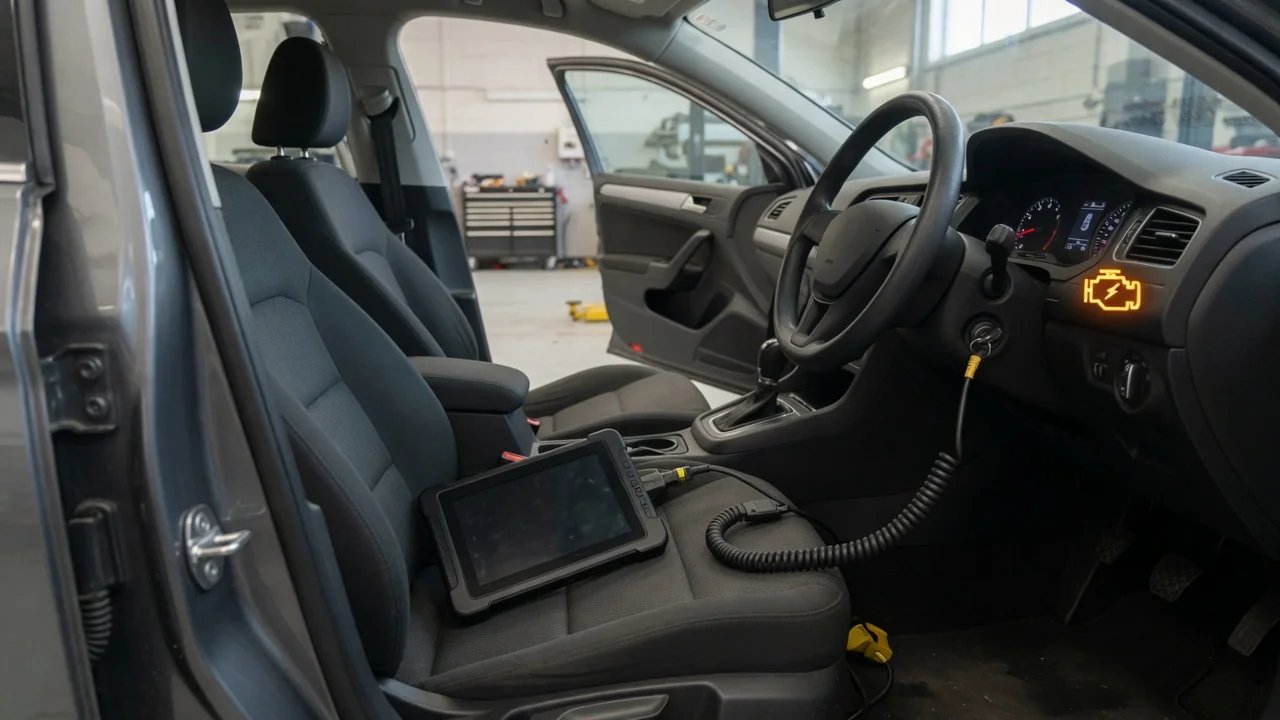
The P1339 code is a manufacturer-specific diagnostic trouble code. Unlike generic powertrain codes that share one SAE meaning, P1339 does not have a single universal definition. A check engine light or stored P1339 entry should be interpreted only after make, model, year, engine, and vehicle-specific service information are identified. Treat the code as evidence that the engine control module recorded a condition, not as proof that any particular part has failed.
Confirm What P1339 Means for Your Vehicle
P1339 is a manufacturer-specific trouble code, so the same numeric identifier can describe different monitored conditions depending on brand and control software. Confirm make, model, model year, engine, and the diagnostic information that applies to that exact application before assigning any meaning. A generic scanner may show a short text string beside P1339, yet that wording can be incomplete, outdated, or borrowed from another manufacturer. Treat it as a starting label until vehicle-specific service information confirms or replaces it.
Do not treat an unofficial description as verified unless it is tied to the stated application through manufacturer documentation. Where the official wording cannot be confirmed, leave the meaning unresolved rather than guessing at a sensor, circuit, or mechanical system. That unresolved status still matters: it shows P1339 is a stored diagnostic trouble code from the engine control module and that further identification is required. Companion codes belong in the same step, but they do not substitute for the vehicle-specific definition of P1339 itself.
Record Symptoms and Recognize When to Stop Driving
Note whether the check engine light is steady or flashing and whether starting, idle quality, available power, or engine sound has changed since the P1339 code appeared. Write down when the warning showed, whether it returned after a restart, and any related dashboard messages. Those notes help a technician match freeze-frame data to real driving, but symptoms alone cannot establish what P1339 means or which system set it. Two vehicles can share similar running complaints while this manufacturer-specific trouble code points at entirely different monitored conditions.
Stop as soon as it is safe and arrange assistance if the engine shakes severely, stalls repeatedly, overheats, or the warning light flashes while the engine runs poorly. Those conditions can indicate damage risk that should not be sorted out from the roadside. Apparently normal driving does not prove continued use is safe, because urgency depends on the verified definition of P1339 and the vehicle's present condition. Until that definition and the current running state are known, treat unexplained power loss, unusual noises, or a flashing malfunction indicator as reasons to limit further operation.
Identify Possible Causes From the Verified Definition
Once the vehicle-specific meaning is confirmed, possible causes should follow that definition and its diagnostic procedure rather than a generic P1339 parts list. If the official description concerns a circuit, wiring, connectors, power and ground, and the named sensor or actuator are only candidates. If it concerns a mechanical or control-system condition, those areas become relevant instead. Listing every imaginable engine fault is not useful, because the engine control module stored P1339 against a specific monitor. Causes the applicable service information does not support should stay off the list until evidence appears.
A code that names a component or circuit does not prove that the part has failed or needs replacement. Open circuits, poor connections, supply problems, and related mechanical conditions can produce the same stored result. Recent repairs, battery disconnects, jump starts, and the timing of the first symptom provide diagnostic context, but they are not confirmed causes by themselves. Do not label any failure as common for P1339 without evidence for that exact application. Until tests distinguish among the supported possibilities, treat the code as a reason to investigate, not as a parts order.
Gather Useful Diagnostic Information Safely
Before clearing anything, record the complete P1339 code description shown by the scanner, whether the code is current or stored, any companion codes, and available freeze-frame data such as engine speed, load, coolant temperature, and vehicle speed when the monitor failed. Note whether the code appeared during starting, idling, or driving, but do not recreate unsafe conditions to force the fault. Companion codes can narrow the investigation by showing related monitors, yet they do not automatically establish which fault occurred first or which one turned on the check engine light.
Limit owner inspection to dashboard information, service history, and damage that is readily visible with the vehicle parked and the engine off. Look for obviously loose connectors, damaged harnesses, or recent work near the engine control module only if those items can be seen without reaching into a hot or running engine bay. Do not unplug components, probe powered circuits, or work near moving belts, fans, or exhaust. Those actions can create new faults, erase useful data, or cause injury. Recorded scan data and careful notes are more valuable than improvised electrical testing.
Understand What Professional Testing Must Establish
A technician starts with vehicle-specific service information to choose tests that match the confirmed meaning of P1339, not a generic flowchart for every manufacturer-specific trouble code. Depending on that meaning, relevant work may include circuit measurements, signal analysis, live scan data from the engine control module, or mechanical checks the procedure actually calls for. Those tests must show whether the stored condition came from a failed component, a wiring or supply problem, or an underlying mechanical issue. Skipping that distinction often leads to replacing a named part that still tests correctly.
A useful shop handoff includes make, model, year, engine, the recorded P1339 description and status, companion codes, freeze-frame data, a symptom timeline, and notes about recent repairs or battery events. That packet lets the technician enter the published diagnostic path without repeating unsafe owner experiments. Powered-circuit work, pin-fit checks, and mechanical inspections belong in the shop with the correct information and equipment. The goal is a documented result that either confirms a specific fault path or shows why P1339 remains unexplained pending further manufacturer-directed checks.
Choose a Confirmed Repair and Verify the Result
Repair categories follow the demonstrated fault, not a universal P1339 fix. Wiring repair, connector service, component replacement, programming, or calibration is appropriate only after tests show that path for the confirmed definition. Clearing the diagnostic trouble code by itself does not repair the underlying problem and can remove freeze-frame data still needed for verification. Any replacement part or control-module procedure must be confirmed for the vehicle; a look-alike part or an unverified reflash can leave the original monitor failing. Match the repair to the test result, then plan how that result will be rechecked.
After the confirmed repair, verification includes follow-up scanning for P1339 and companion codes, review of the original symptoms, and completion of the diagnostic checks specified for that application. Monitor-completion requirements, when service information calls for them, belong in that verification rather than assuming a dark check engine light means the fault is gone. If the code returns, diagnosis starts again from the current data rather than repeating the last parts change. There is no guaranteed single-part solution and no fixed repair cost that applies to every P1339 case.