P1334, P1335 and P1336 Codes: Vehicle-Specific Meanings and Diagnosis
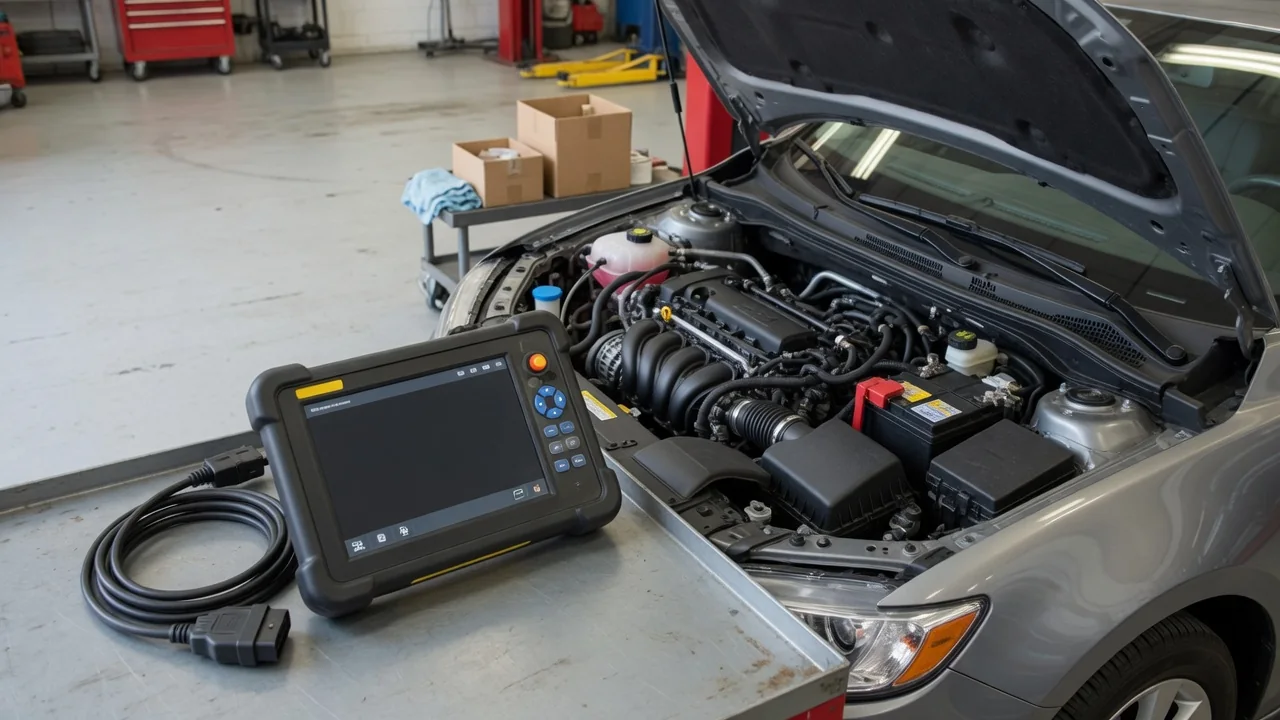
P1334, P1335, and P1336 are manufacturer-specific trouble codes that often involve the crankshaft position sensor or crankshaft position variation learn, though another make may use the same numbers differently. Confirm the vehicle's definition in service information first. A diagnostic scan tool retrieves the codes and freeze-frame data, but the number alone does not prove sensor failure or that a relearn is the only remedy.
P1334: Confirm the Vehicle-Specific Definition
P1334 cannot be interpreted until the vehicle's make, model, model year, and engine are known. This manufacturer-controlled code does not have a universal crankshaft position sensor definition that applies across brands. One application may monitor engine timing signals from a crankshaft sensor, while another may assign P1334 to an entirely different system. Checking the exact definition in service information written for that vehicle is required; manufacturer examples belong in a diagnosis only after that application is verified.
The confirmed definition establishes which circuit, signal, or learning function the control module was monitoring when it stored P1334. It also identifies the conditions that must be met for the fault to set, which a generic description cannot supply. Even after that meaning is known, the code remains evidence to interpret rather than proof a part has failed. Wiring, connectors, the sensor, a related mechanical condition, or a software process could all produce the same stored result, so the definition only points the diagnosis; it does not name the failed component.
P1335: Identify the Monitored System Before Troubleshooting
P1335 likewise requires verification of its meaning for the specific vehicle before anyone assigns it to a sensor, a signal, or another system. A diagnostic scan tool often prints a short label that sounds definitive, yet that abbreviated description can omit application-specific diagnostic conditions such as how long a signal must be missing, how far it may deviate, or which other inputs the module compares. Relying on that snippet, or on the fact that P1334 and P1336 sit nearby, can send troubleshooting toward the wrong circuit.
When the verified definition concerns crankshaft position sensing, the module is typically watching the repeating pulse that reports crankshaft rotation and using that information for spark, fuel, and engine timing. A P1335 in that context may indicate the signal is absent, irregular, or out of expected relationship with another engine-speed input, depending on the published criteria. Subsequent checks must stay tied to that confirmed definition. Adjacent code numbers do not share a cause by default, and treating P1335 as interchangeable with P1334 or P1336 skips the monitored system the manufacturer actually specified.
P1336: Establish Whether Variation Learning Applies
P1336 is frequently associated with crankshaft position variation learn, but that association is not automatic. The vehicle-specific definition must be verified before the code is described that way. On applications that do use this meaning, variation learning records the unique characteristics of the crankshaft signal, including tooth-to-tooth differences on the reluctor or tone wheel, so engine management can distinguish normal mechanical variation from a true misfire or timing anomaly. The learned profile becomes a reference the control module uses during later operation.
An incomplete, missing, or outdated learned value does not by itself prove the crankshaft position sensor has failed. A battery disconnect, control-module replacement, interrupted procedure, or a repair that changed the rotating assembly can leave the stored profile unusable even when the sensor and its wiring are intact. Vehicle-specific service information establishes whether a relearn is required, what prerequisites must already be met, and whether other faults must be resolved first. Activation steps and engine-speed instructions belong only in that official procedure, not in a general overview.
Symptoms to Record and When to Stop Driving
Once the definitions of P1334, P1335, and P1336 are confirmed for the vehicle, a warning light, starting difficulty, rough running, or stalling may appear as possible symptoms when those behaviors match the monitored fault. A crankshaft signal problem can interrupt spark and fuel delivery, which is why starting and idle quality sometimes suffer. The same vehicle may show no obvious driving complaint if the module can still run the engine while storing the code, especially with a variation-learn issue. Symptoms alone cannot distinguish a wiring fault from a sensor, a timing-signal problem, or a missing learned value.
Note whether the complaint occurs during starting, after the engine has warmed, or after recent work such as a battery service, sensor replacement, or engine repair, without trying to force a stall to confirm it. That timeline helps a technician compare observations with freeze-frame data later. If the engine stalls repeatedly, shakes severely, loses major power, or the malfunction indicator flashes, stop in a safe place and arrange assistance. Those conditions can indicate misfire or a loss of engine timing signals that is unsafe to continue driving through.
Possible Causes and Safe Observations
When service information confirms a crankshaft signal fault for P1334, P1335, or P1336, possible contributors include the crankshaft position sensor itself, a loose or corroded connector, damaged sensor wiring, a cracked or contaminated signal target on the reluctor, or a mechanical timing condition that changes the relationship between crankshaft and camshaft pulses. None of those is established by the code number. On a confirmed variation-learn application, recent repairs, a replaced control module, or an interrupted learning event can be equally relevant if that history is documented for the vehicle.
Safe owner observations stay limited. Record recent repair history, then with the engine off and cool look only for readily visible loose connectors or obviously damaged wiring in the area of the crankshaft sensor if that location is accessible without removing covers or reaching near belts and pulleys. Probing circuits, working near moving components, disconnecting parts, or attempting any timing-system work is outside owner checks. Those actions can create new faults, injure someone, or disturb engine timing signals that a technician still needs to evaluate with the original evidence intact.
Professional Testing, Repair Decisions and Verification
Before any codes are cleared, a technician should capture stored, pending, and accompanying codes along with freeze-frame data from the diagnostic scan tool. Freeze-frame data records engine speed, load, temperature, and related inputs at the moment the fault set, which later helps confirm whether the event matches a crankshaft signal dropout, a failed variation learn, or an unrelated condition. Clearing first erases that snapshot. The applicable diagnostic procedure then directs circuit tests or crankshaft signal analysis only when the confirmed definition and the published flowchart call for them.
Repairs must follow those test findings. Replacing a crankshaft position sensor or requesting a crankshaft position variation learn solely because P1334, P1335, or P1336 appeared can leave the true cause unresolved if the wiring, the signal target, mechanical timing, or a prerequisite fault was never checked. After any prescribed learning procedure, confirmation is required that the process completed as specified for that vehicle and that the original fault and driving symptoms do not return under the verification conditions listed in service information, such as a complete drive cycle appropriate to the monitor.