P1288 Code: Verify Its Meaning, Symptoms and Repair Path
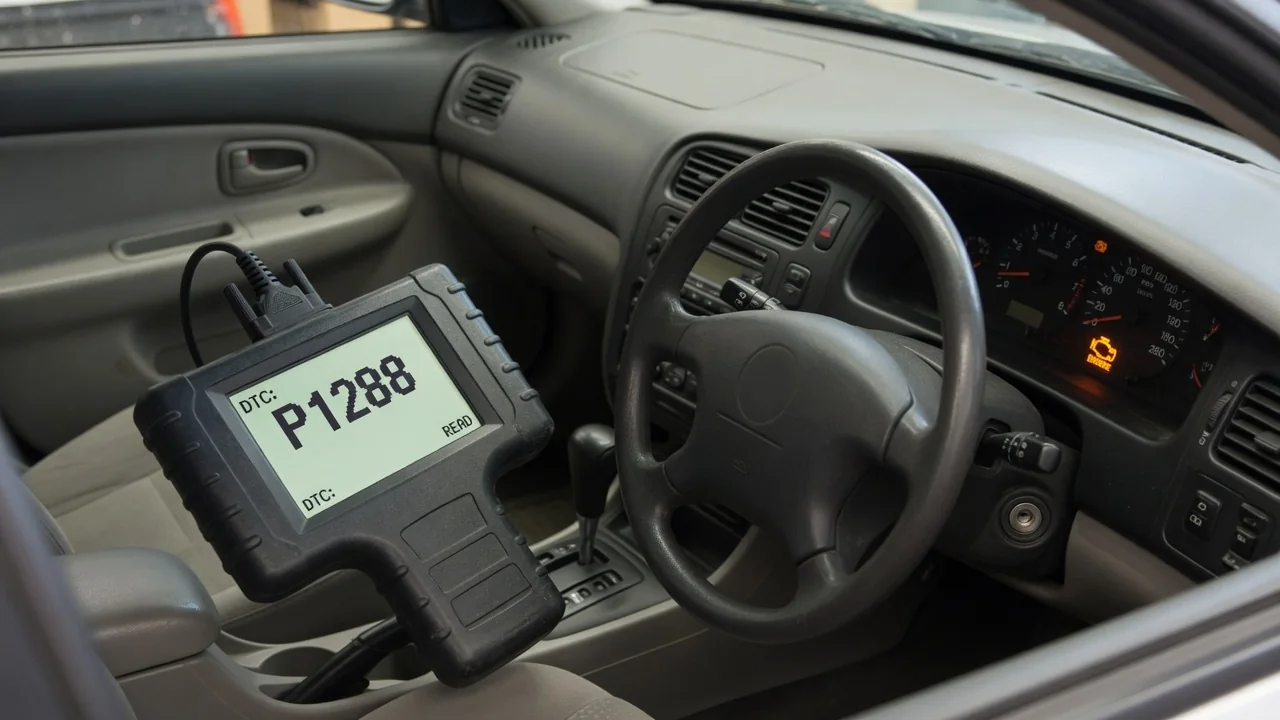
A P1288 code displayed on a scan tool creates more questions than answers because it is not a single universal fault. Unlike generic OBD-II codes with standardized meanings, P1288 is a manufacturer-specific trouble code, so its definition changes by vehicle. Without confirming the year, make, model, engine, and sometimes VIN, even an experienced owner cannot identify which system is involved. The same code may refer to a sensor circuit on one car and a performance monitor on another, making vehicle-specific service information essential before any repair.
Verify What P1288 Means for the Vehicle
P1288 must be verified against the exact vehicle because automakers assign different meanings to the same numeric identifier. A generic scanner may show a short description such as "cylinder head temperature sensor circuit high" or "fuel pump secondary circuit fault," but that text is drawn from a database that may not match the model in front of you. Confirming the year, make, model, and engine narrows the possibilities, and in some cases the VIN and powertrain configuration are needed because even trim levels or emissions packages can alter diagnostic definitions.
The reason for this verification is straightforward: the freeze-frame data and pending codes associated with P1288 will only make sense once the code's true definition is known. A technician working from a generic description might test the wrong circuit, miss a performance-related condition, or replace a component that was never failing. Manufacturer service information defines the exact enable criteria, such as engine temperature thresholds or electrical signal windows, that set the code. Without that documentation, the code is just a starting point, not a diagnosis.
Record Symptoms Without Assuming Their Cause
Symptoms are not standardized for P1288, so recording what the driver observes requires care. A confirmed definition may involve a coolant sensor, an idle control motor, or an exhaust valve, and each system produces different warning signs. One owner may notice a rough idle or hesitation, another a temperature gauge reading that climbs higher than normal, and a third may see no change at all. Treating any single symptom as proof of a particular failure would misdirect the diagnostic process, especially before the code's vehicle-specific meaning is verified.
Note when the concern appears: at startup, after warm-up, under acceleration, or only when the air conditioning is on. Also record whether the check engine light is steady, flashing, or intermittent, and whether other warning lamps such as the temperature light or oil-pressure light are involved. A stored P1288 can remain in memory long after the triggering event, even if the vehicle now drives normally. Without a written record of these conditions, the technician will lose valuable clues about when the fault occurs and what systems may interact.
Recognize When Driving Should Stop
The presence of P1288 alone does not tell you whether it is safe to continue driving, because the code does not indicate the severity of the underlying issue. However, some accompanying symptoms demand immediate attention regardless of the code's exact meaning. If the temperature gauge enters the red zone, steam or smoke appears from under the hood, or the red oil-pressure warning illuminates, the correct action is to pull over as soon as safely possible and shut off the engine. Continuing to drive under those conditions can cause severe mechanical damage.
A flashing check engine light is a separate warning that the engine control module has detected a misfire severe enough to damage the catalytic converter. Severe rough running, stalling, or a sudden loss of power also justifies stopping in a safe location and arranging prompt assistance. Once stopped, keep observations limited to a parked vehicle in a safe location. Do not open a hot cooling system, touch moving components, or attempt repairs on the roadside. The goal is to gather information for the technician, not to risk injury or make the problem worse.
Separate Possible Causes From a Confirmed Fault
Once the exact P1288 definition is confirmed, possible causes can be listed but not ranked without testing. Some definitions point to an electrical circuit, such as a sensor signal that is out of range or a short to power or ground. In those cases, the diagnostic path includes checking wiring, connectors, power supply, and ground integrity before replacing any sensor. A poor connection at a corroded terminal can produce the same code as a failed component, and only voltage or resistance checks under the manufacturer's specified conditions can tell the difference.
Performance-related definitions require a different approach. For example, if the code means "intake manifold runner control stuck open," the technician must verify that the runner actually moves when commanded, not just that the position sensor reports a change. Using live data from a scan tool, the technician can observe the commanded state versus the reported state and look for mismatches. Testing the system's actual operation, along with the accuracy of its reported data, separates a failed actuator from a faulty sensor or a mechanical obstruction that prevents movement.
Preserve Evidence and Plan Diagnostic Testing
Before clearing anything, save the evidence. Record the exact code description as shown on the scan tool, along with any pending codes and available freeze-frame data. Freeze-frame data captures engine speed, coolant temperature, fuel trims, and other parameters at the moment the code was set, which helps the technician reproduce the fault conditions. Also note recent repairs, battery disconnections, or aftermarket installations, because low system voltage or disturbed wiring can trigger false or related codes. Write down the conditions when the warning first appeared: weather, road speed, engine load, and any unusual noises.
A professional diagnostic session begins with a full scan of all control modules, not just the engine computer. Related codes from other systems can point to a shared power supply, communication network issue, or a common ground that affects multiple sensors. The technician then follows the vehicle-specific diagnostic procedure, which may include checking live data streams, monitoring sensor values while wiggling harnesses, and comparing actual readings to expected ranges. This process is done with the ignition on or engine running only as specified by the manufacturer, using safe test equipment and avoiding any action that could create a short circuit or personal injury. The goal is to narrow the fault to a specific circuit, component, or software calibration, not to guess based on code frequency.
Choose the Repair and Verify the Result
The repair must address the demonstrated fault, not just clear the code. If testing identified a broken wire or corroded connector, repairing that connection resolves the cause. If a sensor was shown to be out of specification under exact test conditions, replacement is justified. If the problem was a binding mechanism or a failed actuator, the repair may involve cleaning, adjustment, or replacement. Clearing the code or disconnecting the battery to turn off the light does not mean the issue is fixed; the diagnostic monitor will run again and set the code if the fault remains.
After the repair, verify the result under safe conditions. The technician should clear all codes, perform any necessary relearn procedures, and then drive the vehicle through the conditions that originally set the code if they are known. A post-repair scan should show no returning codes and no pending codes. The driver should confirm that the original symptom, such as a rough idle or temperature fluctuation, is gone. Bring the vehicle details, the original scan report, written symptom notes, and any recent service history to the appointment; this information saves diagnostic time and helps the technician confirm that the correct P1288 definition was used.