P1285 Code: Verify Its Meaning, Causes and Repair Steps
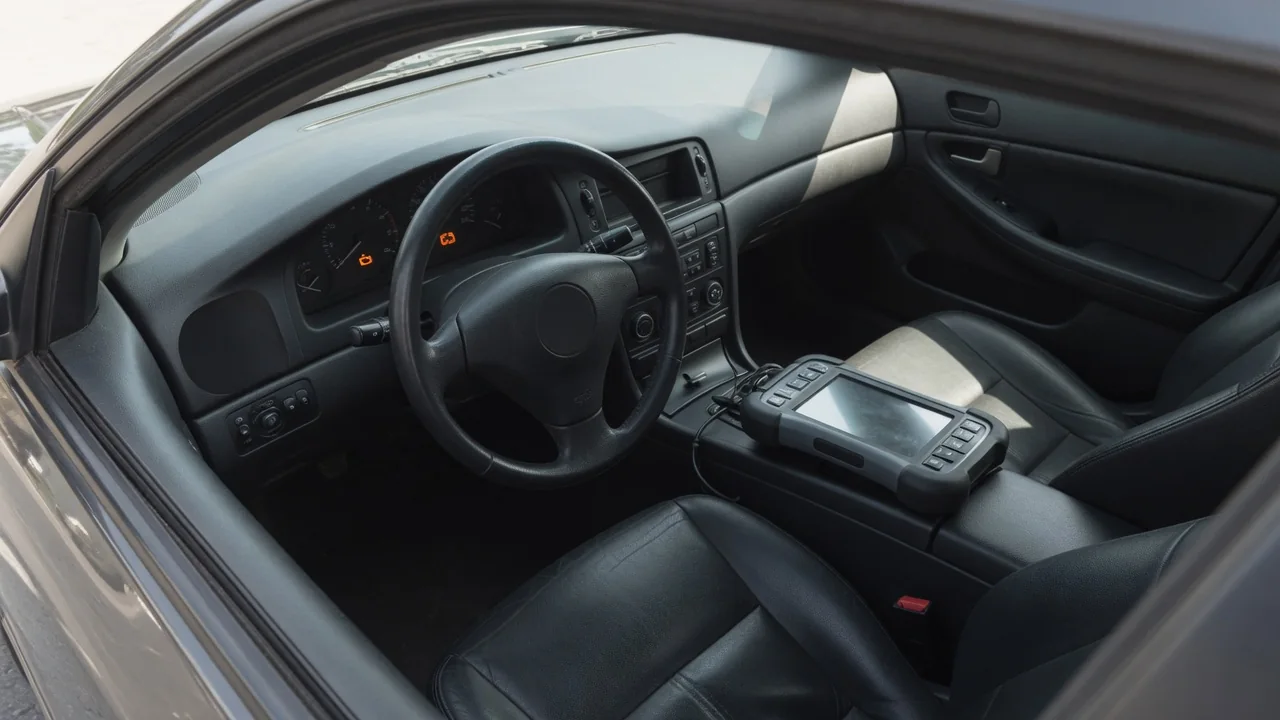
P1285 is a manufacturer-specific diagnostic trouble code, not a definition that applies the same way on every vehicle. A scan tool may show a brief label, but that wording still needs confirmation against the make, model, year, engine, and applicable service information. Until that application is verified, P1285 remains evidence to interpret rather than proof that a named part has failed or that continued driving is automatically safe.
Verify What P1285 Means for Your Vehicle
P1285 does not have one meaning that applies to every manufacturer, engine family, or model year. Some brands use this diagnostic trouble code for a temperature-related protection strategy, while others assign it to a different monitored circuit or operating condition. The vehicle identification number, engine designation, and the service information written for that application are what identify the intended definition. Interpreting P1285 from a generic code list, a neighboring vehicle, or a memory of another repair can send testing in the wrong direction.
A scan tool's short description is a convenience label, not a substitute for the manufacturer's definition. Two tools can word the same stored P1285 differently, and a truncated phrase can look similar to an unrelated code. Confirm the description against the exact vehicle application before treating any cause, test, or repair as relevant. After that confirmation, every later step—symptoms, wiring checks, component decisions, and repair verification—should stay tied to the documented P1285 setting conditions rather than to a guessed system.
Record Symptoms and Decide Whether to Keep Driving
A stored P1285 by itself cannot tell you how severe the condition is or whether it is safe to keep driving. Record what the engine warning light or message center showed, how the gauges looked, and any change in idle, power, or temperature at the moment the warning appeared. Note whether the event happened at startup, during warm-up, under load, or after a long idle. Those notes are observations that help a technician match the verified definition; they are not proof of a failed part.
If the verified P1285 definition concerns temperature protection, watch for signs that belong to that strategy rather than treating them as universal P1285 symptoms. A temperature warning, visible steam, a sudden drop in power, or an unusual engine sound can matter when the documented condition is heat-related, but the same code on another application may have nothing to do with cooling. Stop safely and arrange assistance if you see overheating warnings, steam, severe power loss, or abnormal engine noise. Continuing to drive through those conditions can add damage that the stored code never described.
Identify Causes Supported by the Verified Definition
Possible causes for P1285 should be organized around the system and the code-setting conditions documented for that vehicle, not around a generic list of popular parts. Depending on the application, the control module may set P1285 because an actual operating limit was reached, or because a signal describing that limit was inaccurate. An implausible reading can look like a mechanical problem until the documented conditions are compared with live sensor data. The verified definition is what decides whether you are looking at a protection event, a circuit issue, or a reported value that does not match reality.
A sensor, connector, or wiring fault belongs in the discussion only when the vehicle's diagnostic procedure actually evaluates those items for P1285. A named sensor in a scan-tool label is not an automatic replacement recommendation, and no cause should be labeled common without vehicle-specific evidence. Connector corrosion, a damaged pin, or an open or shorted circuit can matter when the procedure tests them, yet they remain unproven until those checks are done. Keep possible causes limited to the documented system so later testing does not wander into unrelated components.
Preserve Diagnostic Evidence and Make Safe Observations
Record the exact P1285 description shown by the scan tool and save any freeze-frame data before clearing codes or disconnecting the battery. Freeze-frame information can include operating values such as engine speed, load, and temperature at the moment the diagnostic trouble code set, which later live sensor data can be compared against. Note whether the engine warning light appeared during startup, warm-up, steady driving, or another identifiable operating condition. Clearing P1285 too early erases that snapshot and can make an intermittent condition much harder to recreate under controlled testing.
Safe observations can be made from the cabin or around a parked vehicle without reaching near hot or moving parts. Look for warning messages, unusual gauge behavior, visible ground spots after parking, or odors that were not present before the warning. Do not open a hot cooling system, disconnect components to see what happens, or deliberately recreate a condition that could overheat the engine or damage it. Those actions can injure someone or destroy remaining diagnostic evidence that a technician still needs.
Understand What Professional Testing Must Establish
A technician should confirm the manufacturer's P1285 definition for that vehicle identification number and follow the diagnostic sequence written for it, rather than skipping to a familiar part. Freeze-frame data and live sensor data help assess whether the recorded condition is plausible: a temperature, circuit, or protection value that matches the stored snapshot supports the documented setting path, while a mismatch can point toward an inaccurate signal. One normal reading after the engine has cooled or after a restart does not prove the original event was imaginary.
Application-appropriate circuit checks, sensor validation, and mechanical testing belong in that sequence when the service information calls for them. Those steps establish whether the control module received a valid signal, whether a connector or wire is at fault, or whether the monitored system actually reached the documented limit. Intermittent P1285 conditions may require further evaluation under the same operating state captured in freeze-frame data. Completing a repair before those questions are answered, or treating a single good reading as a finished diagnosis, leaves the original setting condition unproven.
Match the Repair to the Finding and Verify the Result
Repairs should match confirmed findings, such as repairing a documented circuit fault, replacing a component that failed its specified test, or correcting the verified underlying system problem. Clearing P1285, disconnecting the battery, or turning the engine warning light off with a scan tool does not correct the cause; the diagnostic trouble code can return as soon as the same setting conditions occur. Parts replaced because they appeared in a short description, without a failed test, can leave the original problem in place and create extra work later.
After the confirmed repair, complete the post-repair checks specified for that vehicle, including confirming normal operation and checking whether P1285 returns. Repair verification may include a road test under the same conditions stored in freeze-frame data and a rescan for the diagnostic trouble code. If the warning or the original symptoms recur, return for diagnosis instead of repeating the same replacement. Repair scope depends on the verified fault and the access required to reach the affected circuit, connector, or component, which varies by application and is not a universal P1285 procedure.