P1283 Code: Vehicle-Specific Meaning, Diagnosis and Repairs
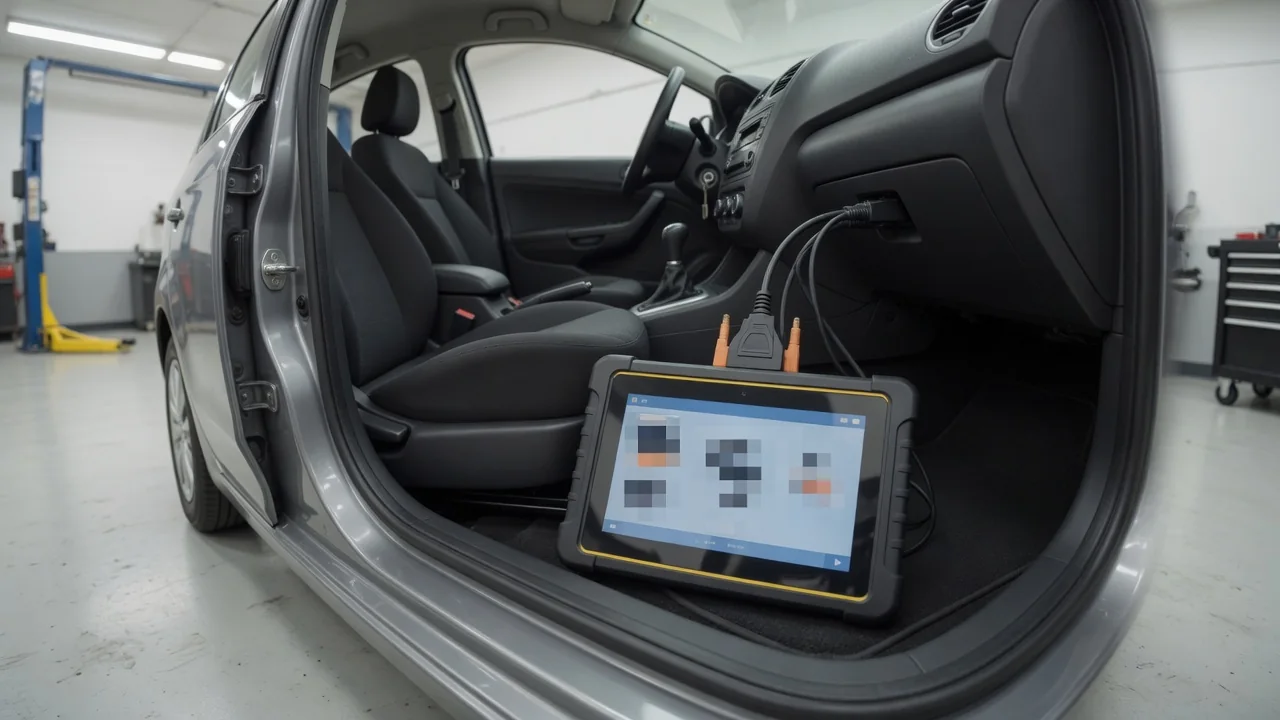
The P1283 code is a manufacturer-specific diagnostic trouble code, so its meaning is not the same on every vehicle. Before treating any part as failed, identify the make, model, year, engine, and vehicle identification number, then confirm the definition in that vehicle's service information. A stored P1283 records a detected condition; it does not, by itself, prove which component needs replacement or whether the car is safe to drive.
Verify What P1283 Means for Your Vehicle
P1283 is a manufacturer-specific trouble code, which means it cannot be assigned one universal component, system, or failure definition. Two vehicles that both store P1283 may be reporting entirely different monitored conditions. Start by confirming the make, model, model year, engine, and other vehicle identification details, including the vehicle identification number when service information is organized that way. Those identifiers keep the lookup in the correct family of control modules and calibration data rather than a generic code list that was written for a different manufacturer.
Confirm the definition and the matching diagnostic procedure in vehicle-specific service information. A scan tool's abbreviated description of the P1283 code can be incomplete, truncated, or borrowed from another application, so it is not enough to decide what failed. A stored diagnostic trouble code records that a control module detected a condition that met its enable criteria; it does not establish which part needs replacement. Treat P1283 as evidence to interpret against the confirmed definition, then follow the published tests rather than assuming a failed sensor, actuator, or module from the number alone.
Record Symptoms and Decide Whether to Keep Driving
Useful observations include whether the check engine light is steady or flashing, how the engine starts, idle quality, any loss of power, unusual noises, temperature warnings, and when the problem occurs, such as cold start, highway load, or after a recent repair. Write those details down with the date and operating conditions because they later help a technician compare freeze-frame data with real driving. Symptoms still depend on the verified meaning of P1283 for that vehicle. The same diagnostic trouble code can appear with a drivability complaint on one application and with no noticeable change on another.
The P1283 code alone cannot establish whether continued driving is safe, because safety depends on the confirmed system, the severity of symptoms, and other warnings present at the same time. If the vehicle still starts, idles, and drives without overheating, stalling, or loss of control, many owners still arrange prompt diagnosis rather than ignore a stored manufacturer-specific trouble code. Stop safely and seek assistance for severe shaking, stalling, overheating, smoke, or a flashing check engine light. Those conditions can indicate an immediate mechanical, thermal, or combustion problem that should not be driven through.
Connect Possible Causes to the Confirmed Definition
Possible causes belong only to the system identified by the vehicle-specific P1283 definition. Once that definition is confirmed, the applicable procedure may include wiring, connectors, a monitored component, or an underlying system condition that would make the control module set the same diagnostic trouble code. A high-resistance pin, a damaged harness near a heat source, or a mechanical problem the sensor is designed to report can all enter that diagnosis when the published steps support them. Do not treat any of those as common across all vehicles that store P1283.
A sensor can report a real abnormal condition without being defective. If the monitored circuit is working, live sensor data may show a value outside the expected range because of fuel, air, mechanical, thermal, or control issues in the system the sensor observes. Replacing that sensor because P1283 is stored, without the specified tests, can leave the original condition in place and add a new variable. Avoid recommending a part from the code number alone. The correct next step is to stay inside the confirmed definition and let the procedure decide which circuit, component, or system condition to evaluate.
Gather Useful Evidence With Safe Initial Checks
Before clearing anything, record all stored and pending codes, their status, and available freeze-frame data. Pending codes can show a condition that has not yet matured into a confirmed diagnostic trouble code, and freeze-frame data captures engine speed, load, temperature, and related readings at the moment P1283 set. Note recent repairs, battery interruptions, and the driving conditions that preceded the warning, without treating timing as proof of causation. A battery disconnect after a jump start can erase modules' learned data and stored snapshots, which makes later diagnosis harder even when it is not the root cause.
With the vehicle parked, the engine off, and components cool, look for obvious damage or loose connections in accessible areas that are relevant to the confirmed definition. A connector that is unseated, a harness that is rubbing, or contamination around a related fitting can be worth noting, but visual inspection is not a substitute for the specified tests. Limit owner checks to observation and scanner readings. Leave disassembly, electrical probing, and any work around hot, moving, or pressurized components to a qualified technician so that a simple look for evidence does not become an unsafe repair attempt.
Use Professional Testing to Identify the Fault
The applicable diagnostic procedure determines the order of testing and whether accompanying codes change that sequence. Related pending codes or a second stored diagnostic trouble code can point to a shared power supply, ground, communication network, or mechanical condition that should be addressed before isolated P1283 tests. A technician uses freeze-frame information and live sensor data to reconstruct the operating conditions that triggered the code, then compares those snapshots with current readings at similar speed, load, and temperature. That comparison helps decide whether the fault is present now or was captured under a specific, possibly intermittent, set of conditions.
When the verified definition supports them, professional steps may include circuit checks, component evaluation, and system-performance testing rather than a single scanner snapshot. One live reading can be normal while the enabling conditions that set P1283 are not present, so a passing screen does not prove the monitored circuit is healthy. Intermittent faults often require additional observation, a road test that matches freeze-frame data, or repeated monitoring before a repair is justified. Manufacturer-dependent codes still need vehicle-specific confirmation at this stage, because the same P1283 number can demand different tests on a different control strategy.
Repair the Proven Cause and Verify the Result
Repairs should follow test findings, such as correcting a verified connection fault, repairing a confirmed system problem, or replacing a component that fails the specified tests. Clearing P1283 or disconnecting the battery does not repair the underlying condition. It can also erase freeze-frame data, pending codes, and other diagnostic evidence that would have shown when and how the code set. If a connector was the proven issue, restoring a sound connection and protecting the circuit is the repair; installing an untested part because the scan tool displayed P1283 is not.
Post-repair verification uses the applicable service procedure, code-status checks, and confirmation that the original symptoms have resolved. That repair verification may include a drive cycle that allows the monitor to run, a review of live sensor data under the same conditions captured in freeze-frame, and a check that P1283 does not return as stored or pending. If the check engine light comes back, resume diagnosis with the saved evidence rather than repeating speculative part replacement. A returning manufacturer-specific trouble code means the earlier conclusion was incomplete, not that the next similar part is automatically at fault.