P1281 Code: Vehicle-Specific Meaning, Causes, and Repairs
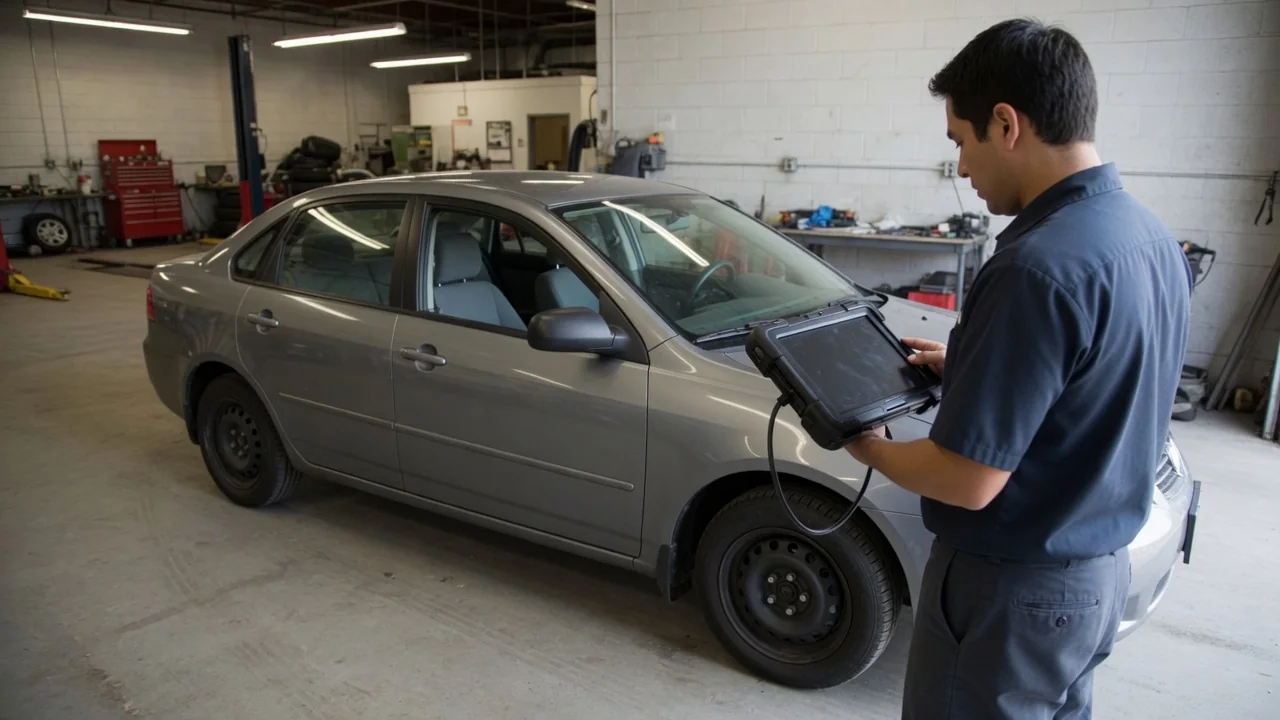
The P1281 code is a manufacturer-specific trouble code, so its meaning is not the same on every vehicle. Before assuming a cooling problem, confirm the definition for the exact make, model, year, and engine using applicable service information. On some applications, P1281 points to engine coolant temperature that never reached the expected operating range during a warm-up cycle. That interpretation is useful only after it is verified for the vehicle in question.
Verify What P1281 Means for Your Vehicle
P1281 is not a universal powertrain definition. The same alphanumeric string can describe different conditions depending on the manufacturer, so the first step is to look up the official description for that vehicle's make, model, year, engine, and the service information that applies to it. Interpreting the code from a generic list can send diagnosis toward the wrong system. Until the vehicle-specific meaning is confirmed, treat P1281 as stored evidence that the control module saw a condition it was programmed to flag, not as proof of a failed part.
On some vehicles, that confirmed meaning is engine coolant temperature failing to reach the expected operating range during warm-up. That is one application-specific use of P1281, not a definition that can be assumed for every car or truck that stores the code. Cooling-system discussion that follows applies only after that temperature-range meaning has been verified. If the service information assigns P1281 a different description, follow the diagnostic procedure written for that definition instead of thermostat or coolant-sensor tests that belong to another application.
Symptoms When P1281 Refers to Insufficient Warm-Up
When P1281 has been confirmed as an insufficient warm-up fault, drivers may see a check-engine light and a temperature gauge that climbs slowly or stays lower than usual. Cabin heat can feel weak because the heater core depends on coolant that has reached operating temperature. Those signs are consistent with delayed warm-up, but they are not unique to one component. A stored P1281 code can appear after a trip that never allowed the engine to heat as the control strategy expected, even if the driver noticed only a light on the dash.
Some drivers notice no change in drivability at all. The temperature gauge is a filtered display, not a laboratory reading of actual engine coolant temperature, so a needle that looks normal cannot rule the fault in or out. A stored warm-up fault is also not evidence of overheating; the two conditions point in opposite thermal directions. Weak heater output does not identify a failed thermostat, a failed coolant temperature sensor, or any other specific part. It only indicates that heat at the vents did not match what the driver expected.
Possible Causes of a Coolant Temperature Fault
A thermostat that stays open, or that opens at the wrong point in the warm-up cycle, can keep coolant circulating through the radiator before the engine reaches the expected operating temperature. The control module then compares measured coolant temperature against its strategy and can store P1281 when the rise is too slow or incomplete. That pattern is a reason to evaluate thermostat operation, not an automatic replacement order. Low coolant or air in the system can also disrupt circulation and delay heat-up, but those conditions need their own cause identified rather than being treated as the entire diagnosis.
A coolant temperature sensor, damaged wiring, or a poor connector can report a temperature that does not match the engine. Misleading data can look like a warm-up problem even when the cooling system is circulating normally. Ambient temperature and freeze-frame data from the trip that set the code help a technician judge whether the recorded driving conditions made the fault more likely, without treating cold weather as a complete explanation. Short trips, idle-heavy driving, and unusually low outside temperatures can slow warm-up, yet the same P1281 code can also appear when a component or circuit is at fault.
Safe Observations Before Scheduling Diagnosis
Before anything is cleared, record every stored code and capture available freeze-frame data. Those snapshots show engine coolant temperature, vehicle speed, engine load, and related values at the moment the module decided P1281 was present, which later tests cannot recreate. Note the outdoor temperature, how long the trip lasted, whether cabin heat was weak, which dashboard warnings appeared, and whether any recent cooling system diagnosis or service was performed. That context helps a shop distinguish a one-trip warm-up issue from a repeating pattern without discarding information the control module already collected.
With the vehicle parked and fully cool, check the coolant reservoir level using the owner's manual markings and look for wet spots, dried coolant stains, or drips around hoses and the radiator. Do not open a hot cooling system; pressure and temperature make that unsafe. Overheating warnings, steam, substantial coolant loss, or a sudden drop in cabin heat while engine temperature appears to climb are reasons to stop driving and seek assistance. Those signs are not the same as a slow warm-up P1281, and they deserve immediate attention rather than continued operation.
Professional Tests That Can Identify the Cause
A technician typically starts cooling system diagnosis by reading cold-engine temperature data and comparing it with ambient conditions. A sensor that already reports a hot engine when the vehicle has sat overnight is implausible and points toward the circuit rather than a stuck-open thermostat. After a cold start, warm-up is monitored against the vehicle-specific specifications in service information, not against a generic time or gauge position. That comparison shows whether engine coolant temperature is actually lagging, or whether the module is being fed a value that never tracks real operating temperature.
Thermostat operation is judged by how actual coolant temperature behaves as the engine works through a warm-up cycle, not by replacing the part first and hoping the P1281 code disappears. When readings are implausible or drop in and out, electrical testing of the coolant temperature sensor circuit can separate a wiring or connector fault from a mechanical cooling problem. Leak testing and evaluation for trapped air become appropriate when the level is low, circulation looks incomplete, or recent service may have left air in the system. Those checks belong in a shop equipped for pressurized cooling work.
Repairs and Confirmation That P1281 Is Resolved
Repairs should follow verified findings. A thermostat that fails to close or open as designed may be replaced, a leak may be sealed, or a sensor circuit may be repaired, but the P1281 code itself is not a parts list. Coolant type, fill method, and component specifications are vehicle-specific, and cooling-system procedures that involve opening, filling, or bleeding the system belong with professional service when those steps are required. Guessing at a thermostat or coolant temperature sensor without confirming the fault can leave the original problem in place and add another variable.
Erasing the code without correcting the condition does not resolve P1281 and can wipe freeze-frame data that still explains how the warm-up cycle failed. After the appropriate repair, confirmation means watching the engine reach operating temperature in a normal pattern, checking for leaks once the system is hot enough to reveal them safely, and allowing the relevant monitor to complete. The fault should not return under the driving conditions that apply to that vehicle's strategy. Only then is it reasonable to treat the P1281 code as addressed rather than merely cleared from memory.