P1264 Code: Meaning, Symptoms, and Fixes
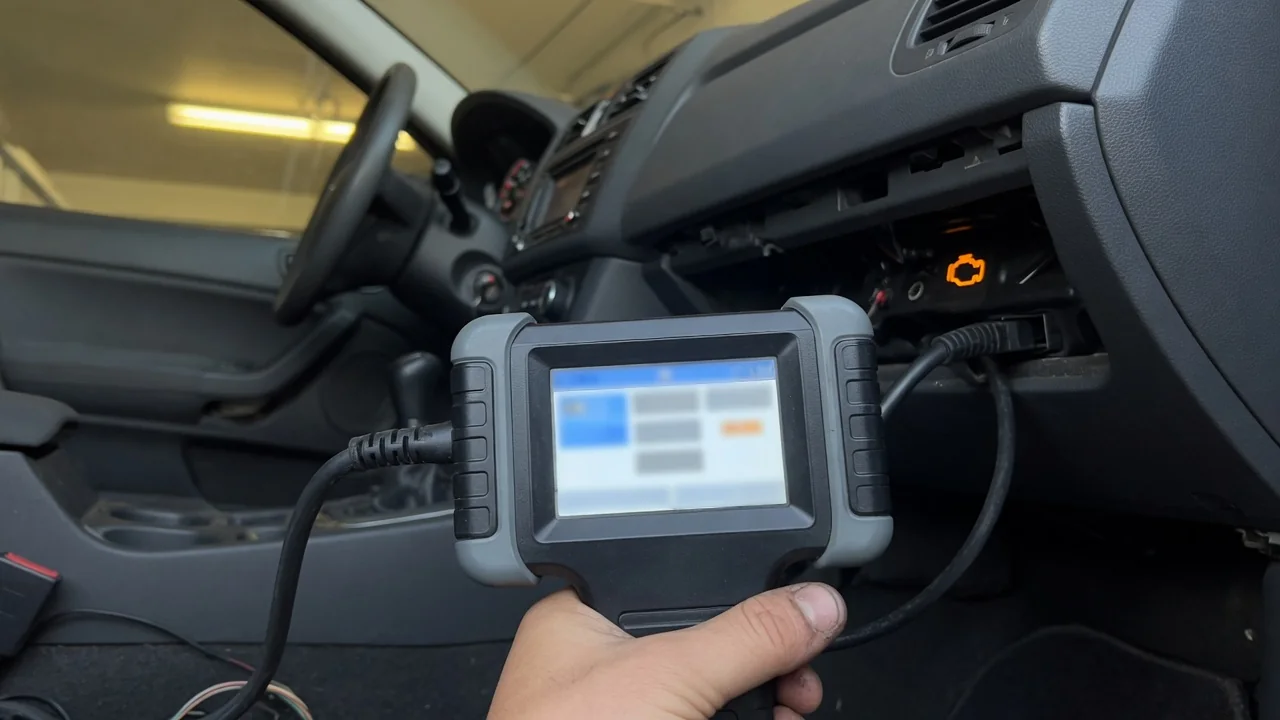
When a scan tool pulls P1264, the first thing to understand is that this code does not have one universal meaning. P1xxx trouble codes are reserved for manufacturer-specific diagnostics, so the definition changes by make, model, year and engine. A generic list may call it an injector or glow plug fault, but your vehicle could use the same number for an entirely different circuit. Before chasing symptoms or buying parts, confirm exactly what P1264 means for your powertrain control module.
What P1264 Means and Why the Definition Depends on the Manufacturer
Because P1264 is a P1xxx code, it sits in the range that automakers can assign to systems not covered by generic OBD-II definitions. Ford, Volkswagen, BMW or GM may each use the number for different diagnostics, such as a fuel pressure sensor, a camshaft actuator or a turbocharger control circuit. Even within one brand, the meaning can vary between engine families. Starting with an online definition written for another brand is a sure way to misdiagnose the vehicle, replace the wrong part and still have the check engine light return.
The correct starting point is the code description shown by a scan tool that can read enhanced manufacturer codes, along with the freeze frame data captured when the fault set. Freeze frame records parameters like engine load, coolant temperature and RPM, which help a technician reproduce the condition. Factory service information for the specific vehicle will explain what the code monitors and what conditions set it. Without that confirmation, any repair attempt is a guess.
How to Read P1264 Correctly With a Scan Tool
Before clearing P1264, record everything the scan tool displays: the full code text, freeze frame data and any other stored or pending codes. Freeze frame is especially valuable because it shows the operating conditions at the moment the fault occurred, such as a hot engine under acceleration or a cold start at idle. A basic generic OBD-II reader may only show the number or a vague description, while a professional tool or a dealership-level scan tool reveals the exact manufacturer text that tells you what circuit or function is involved.
Related codes stored with P1264 often narrow the diagnosis more than P1264 alone. For example, if the manufacturer uses P1264 for a fuel injector circuit and another code reports low voltage on a shared power feed, the wiring harness becomes the likely suspect. Clearing the code before writing down the information erases freeze frame data and pending codes, which can make the fault much harder to find. Keep a record and let the technician see the evidence.
Symptoms Drivers May Notice With a P1264 Code
Drivers may notice a check engine light that stays on steadily, or in some vehicles a flashing light that signals a misfire severe enough to damage the catalytic converter. Drivability symptoms can include rough idling, hesitation on acceleration, reduced power or hard starting, but none of these are guaranteed for every P1264 definition. Because the code is manufacturer-specific, one vehicle might run perfectly normally while another has a noticeable stumble off idle.
Some vehicles may show no symptoms at all, especially if the code sets from a stored electrical fault or a monitoring function that does not immediately affect running. Even a silent code should not be ignored, because the underlying condition could worsen or allow a secondary failure. Note when symptoms appear, such as only on a cold start, under load, or at a specific RPM. That timing helps a technician interpret freeze frame data and plan the diagnostic path.
Possible Causes Once the Vehicle-Specific Definition Is Confirmed
Once the vehicle-specific definition is confirmed, possible causes fall into a few broad categories that technicians consider. The fault may be in the wiring harness or an electrical connector, such as a rubbed wire, a spread terminal or a corroded pin. A sensor or actuator on the circuit may have failed, or there may be a power or ground supply problem that affects multiple components. In some cases the powertrain control module itself is faulty, though that is usually a last conclusion after circuit testing.
No cause should be named as more common than another without data for that exact vehicle and engine. Replacing a part on a guess often fails because the code is just a symptom of an electrical problem that could be in the wiring, not the component. For example, a P1264 related to an injector circuit might be caused by a bad injector, but it could also be a broken wire or a failing driver inside the control module. Proper testing separates the true cause from a coincidental fault.
Safe Checks You Can Do Before Visiting a Shop
Before visiting a shop, a driver can safely make visual observations without disassembling anything. Look for obviously damaged wiring, such as insulation rubbed through or a harness that touches a hot or moving part, and check accessible connectors for loose fit or corrosion. Battery terminal condition matters because low system voltage can create false codes in many electronic circuits. These checks are limited to what can be seen; probing any circuit with a meter could risk damage or injury without proper training.
It is also worth asking if the manufacturer has published service bulletins for the vehicle, which a dealer or official service information source can confirm. Bulletins may describe a known issue and an updated repair procedure, but they are not guaranteed to exist for every P1264 complaint. Basic visual checks can identify an obvious problem like a disconnected sensor, but they cannot prove that a part is good or measure voltage, ground or signal integrity.
When Professional Diagnosis and Repair Are Needed
Confirming the fault usually requires circuit testing, live data review and the manufacturer's test procedures. A technician may measure resistance and voltage at the component connector, check for shorts to power or ground, and observe live sensor values while the condition occurs. Professional diagnosis is especially important if the check engine light is flashing, the vehicle loses power or stalls, or a fuel smell is present. Those symptoms can indicate a safety risk or a condition that may damage expensive emissions components.
Repair options depend on what the diagnosis finds and may include repairing wiring, replacing a failed component, or updating module software if the manufacturer has issued a calibration fix. Ask the shop what test results led to the recommendation and ask to see the values that proved the part failed. A professional repair should address the root cause shown by testing, not just replace the part named in the code description.
Driving With P1264 and Preventing Repeat Codes
Whether it is safe to keep driving with P1264 depends entirely on the confirmed manufacturer definition and the symptoms. If the code affects an emissions monitor but the engine runs normally, short-term driving may be okay. If the vehicle is misfiring, stalling or down on power, continuing to drive could risk further damage. There is no one-size-fits-all answer, so use the actual symptoms and the specific code meaning to decide, not a general online statement.
If P1264 returns after being cleared, the underlying fault is still present. Clearing the code does not repair anything and may erase evidence needed for diagnosis. Good practices that help prevent repeat codes include keeping the battery and charging system healthy, protecting wiring from heat and abrasion, and addressing check engine lights promptly. After any repair, recheck for codes and confirm the monitor has completed its self-test before assuming the fix worked.