P1247 Code: Verify Its Meaning, Symptoms, and Repair Steps
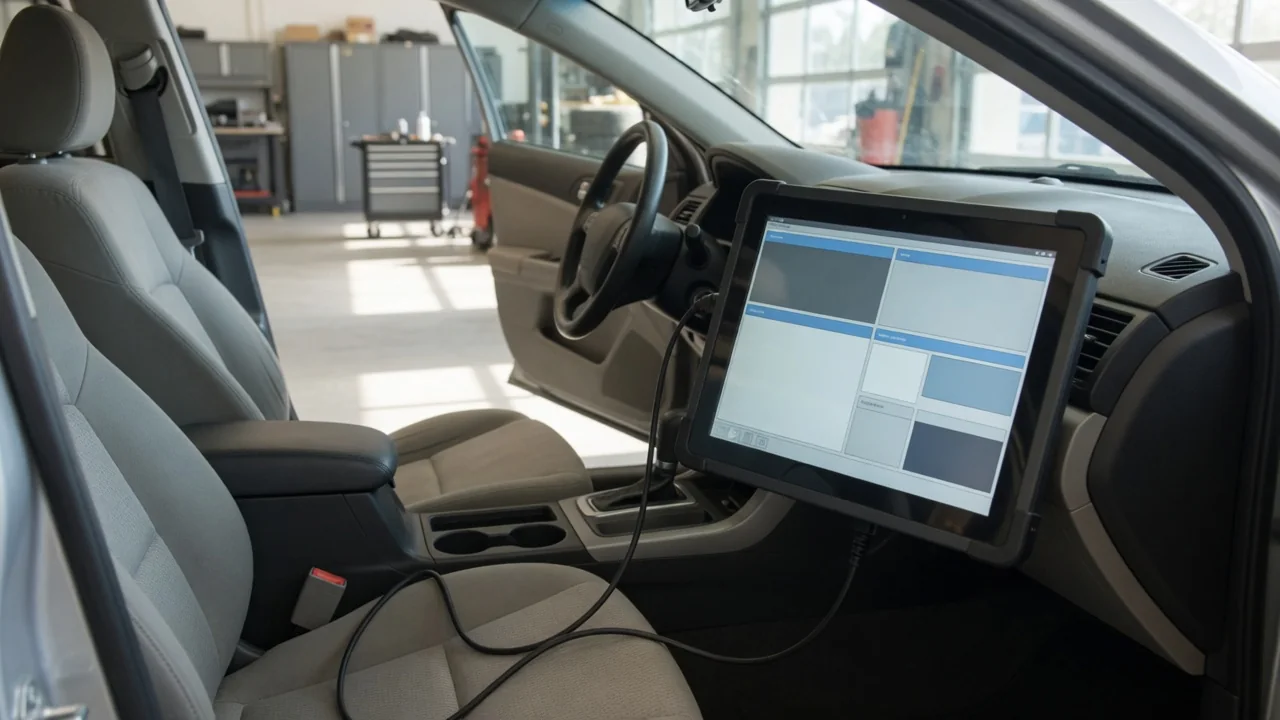
The p1247 code is a manufacturer-specific trouble code, not a single industry-wide definition of a failed part. Before any interpretation, confirm the vehicle identification number, make, model, model year, engine, and the module that stored the diagnostic trouble codes. A scan-tool label is a starting point. P1247 reports a detected condition that still needs vehicle-specific service information, freeze-frame data, and a factory diagnostic procedure before any repair path is chosen.
Verify What P1247 Means for Your Vehicle
P1247 does not map to one universal component or failure across all vehicles. Different manufacturers can assign that same alphanumeric identifier to different monitored conditions, so treating it as a generic parts list is incorrect. Confirm the definition using the vehicle's make, model, model year, engine family, and the applicable service information for that powertrain. The vehicle identification number helps a technician retrieve the correct factory diagnostic procedure instead of a look-alike description written for another application.
Record which module reported the p1247 code and copy the exact wording shown on the scan tool, including any manufacturer text that names a circuit, sensor range, or control function. A generic scanner may display a shortened or borrowed label that does not match the powertrain control module's actual set condition. Even after the definition is confirmed, that description only identifies a detected condition. It does not, by itself, prove which part has failed or which component should be replaced.
Symptoms to Record and Signs to Stop Driving
Once the meaning of P1247 is verified for that vehicle, treat warning lights, hard starting, rough running, or reduced power as observations, not as proof of a particular failed part. Their relevance depends on the confirmed definition and on whether those behaviors match the monitored system. The p1247 code can also be stored with no obvious change in how the vehicle drives, so the absence of a drivability complaint does not mean the stored condition is irrelevant. Note when any change appeared relative to startup, warm operation, or acceleration.
Record those conditions as they occurred in normal use. Do not try to recreate unsafe behavior on the road just to see whether the light returns. Driving safety cannot be judged from P1247 alone because the identifier does not describe severity for every application. If the vehicle has severe power loss, repeated stalling, overheating, smoke, or a fuel odor, stop in a safe location and seek assistance. Those signs matter independently of the stored diagnostic trouble codes and should not be ignored while waiting for a scan.
Potential Causes Within the Confirmed P1247 Definition
Possible causes belong to the system named in the vehicle-specific definition of P1247, not to a generic catalog of unrelated sensors and actuators. If the confirmed description involves a monitored circuit or control function, the factory diagnostic procedure may call for checks of wiring, connectors, power supply, grounding, or signal integrity before any part is condemned. Those electrical paths can produce the same stored condition as a failed device, which is why a code reading is not a parts list. Testing follows the procedure written for that vehicle.
Mechanical or operating-condition causes belong in the discussion only when the confirmed definition and later test results support them. Without that support, listing a pump, valve, or sensor as a typical failure is speculation. Neither a named sensor nor the powertrain control module should be condemned from the p1247 code alone. Modules can set diagnostic trouble codes when they receive implausible data, lose a ground, or see an out-of-range signal, and those conditions are established by measurement, not by assuming the reporting controller is defective.
Information to Save Before Clearing the Code
Before clearing anything, record every stored and pending code, each code's status, the reporting module, and all available freeze-frame data. Pending codes show conditions that have not yet met the criteria for a fully stored fault, and freeze-frame snapshots capture engine speed, load, temperature, and related operating values at the moment the condition was logged. Accompanying diagnostic trouble codes and those captured conditions help a technician choose the next test. They still do not prove a cause, but they prevent a blind reset that erases the only evidence of when P1247 set.
Also document recent repairs, battery disconnects or charging problems, when symptoms started, and whether the p1247 code has appeared before. That history can distinguish a new event from a returning condition after an incomplete repair. Owner checks should stay limited to accessible visual observations with the vehicle parked, the engine off, and components cool: loose connectors that can be seen without disassembly, obvious damage, or fluid on the ground. Leave connector probing, circuit measurements, disassembly, and any pressurized-system checks to qualified technicians following the applicable service information.
Professional Tests That Can Establish the Fault
A professional diagnosis should follow the factory diagnostic procedure written for the exact vehicle and the verified meaning of P1247. That sequence is built around the monitored system, not around a universal flowchart. A technician may compare live scan data with the freeze-frame snapshot, then move to circuit testing or system-specific mechanical checks only as the service information directs. Those steps exist to confirm that the detected condition is real, to separate an intermittent signal problem from a failed component, and to locate the source before any repair is recommended.
Intermittent faults are a particular reason one visual inspection may not capture the problem. Symptom history, pending codes, and monitored data over a drive cycle can show whether the condition appears with heat, vibration, or a specific operating range. Test results, not the identifier itself, should support the repair recommendation. Unsupported universal specifications, such as a single resistance value or a pressure limit copied from another vehicle, do not apply across manufacturers. Hazardous probing of live high-current circuits, fuel systems, or moving parts is not an owner task and is not required to understand what the p1247 code represents.
Repair the Confirmed Cause and Verify the Result
Repair should address the demonstrated fault, such as a verified open in a connector, a damaged wire, or a component that failed the tests specified for that vehicle. There is no universal P1247 fix because the identifier is manufacturer-specific and the failed item is established only after diagnosis. Clearing the code or disconnecting the battery can turn the lamp off for a time, but that action does not prove the underlying condition is gone. Repair verification requires following the applicable service procedure after the work, not assuming a reset equals a completed repair.
After the confirmed cause is corrected, rescan the powertrain control module and any other reporting controllers, confirm that P1247 and related pending codes have not returned, and check that the original symptoms no longer appear under the same operating conditions captured in freeze-frame data. If the p1247 code comes back, review the evidence and the diagnostic path before replacing additional parts. Cost depends on the confirmed fault and the access required to reach it, which cannot be stated as a single figure for every vehicle that stores this manufacturer-specific trouble code.