P1221 Code: Vehicle-Specific Meaning, Symptoms, and Diagnosis
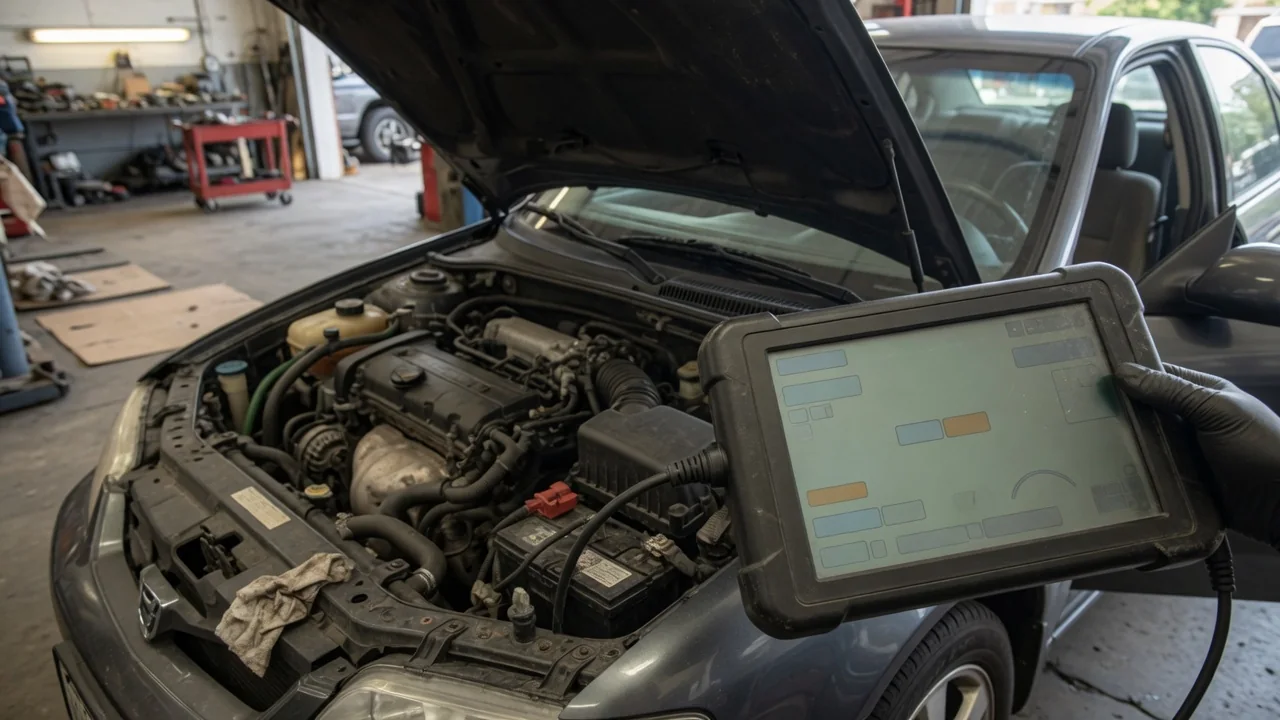
P1221 is a manufacturer-specific trouble code, so its definition changes between automakers, models, engine families, and even control modules. A generic scanner may display only a brief description that does not match the vehicle’s engineering data. Before interpreting the fault or ordering parts, the exact vehicle identification number and module reporting the code must be verified. This article explains how to approach the P1221 code safely: confirm its meaning, record symptoms, preserve diagnostic evidence, and pursue a targeted repair.
Verify What P1221 Means for Your Vehicle
P1221 cannot be given one universal meaning because the same numeric code is assigned to different circuits or operating conditions by different manufacturers. One vehicle might use it for a throttle position sensor correlation fault, while another applies it to a fuel pump control circuit or a variable valve timing actuator. The only reliable way to decide what P1221 indicates is to compare the code against the factory service information for that exact make, model, year, engine, and control module. VIN-based lookup and module identification narrow the definition from a generic possibility to a specific diagnostic path.
A generic scan tool often shows a short code title such as “Throttle Position Sensor Circuit” but cannot contain every manufacturer’s interpretation. The code text may come from an industry database rather than the vehicle’s calibration, and the same P1221 may be stored by the engine controller, transmission controller, or another module with different meanings. Therefore the reporting module must be recorded, and the code definition should be confirmed in the appropriate service manual. Relying on the scanner’s one-line description can send a diagnosis toward the wrong system and waste testing time on unrelated components.
Symptoms and Warning Signs to Record
The symptoms that appear with P1221 vary widely because the code’s meaning changes by application. Some drivers may notice an illuminated check engine light or a reduced power message, while others experience rough idle, hesitation on acceleration, stalling, or hard starting. These observations are valuable only when documented with the exact operating condition: engine cold or warm, idle or cruise, light load or heavy throttle. Without that context, a technician cannot match the symptom to the setting criteria for the verified code definition. A stored fault does not guarantee any drivability complaint is present.
A P1221 can be stored as a pending or confirmed code without the driver noticing a change in performance. Conversely, repeated stalling, unpredictable throttle response, or a sudden loss of power while driving creates a safety risk and should not be ignored while attempting to gather data. If the vehicle cannot be controlled normally or stalls in traffic, the safest action is to stop when possible and arrange towing. Continuing to drive with an intermittent throttle or fuel delivery fault may place the driver and others in danger, and the symptoms alone cannot identify the failed component or wiring fault.
Possible Causes Depend on the Confirmed Definition
Every possible cause of P1221 must be tied to the confirmed vehicle-specific definition and its enabling conditions. For one definition, the diagnostic procedure may point to wiring, loose connectors, or a power supply issue; for another, it may involve a sensor or actuator controlled by the reporting module. Without that verified criteria, suggesting a throttle body, accelerator pedal, fuel pump, or valve timing component is guesswork. The fault code indicates that the module detected a circuit or operating condition outside expected limits, not that a particular part has physically failed.
Electrical and mechanical faults can both set P1221, but a detected problem is not proof of a failed component. A poor ground, rubbed-through wire, water intrusion, or intermittent connector can create the same code as a damaged sensor. Therefore replacing a part based only on the code definition risks leaving the true fault unrepaired. The diagnostic value of P1221 is that it points to a starting area, not a verdict. Manufacturer-specific fault trees usually require checking power, ground, signal integrity, and commanded operation before condemning the named component.
Preserve Useful Clues Before Clearing Codes
Before clearing P1221 or disconnecting the battery, record every piece of evidence available: all stored and pending codes, the module that reported each code, freeze-frame data, and the odometer reading. Freeze-frame captures the operating conditions when the fault was set, such as engine speed, coolant temperature, and load. Accompanying codes often matter because one fault can trigger another, and a technician uses that relationship to select the correct diagnostic path. Clearing codes erases this snapshot, and a battery disconnect can reset learned values, making the diagnostic less efficient.
The circumstances of the first warning light and any recent work are equally useful history. A repair that disturbed a harness, a battery replacement, or exposure to deep water may be relevant, but the owner should only record facts, not assume causation. Safe owner-level checks are limited to visible, accessible items with the vehicle parked and powered off, such as noticing a loose connector cover or rodent damage without touching electrical terminals. Probing wires, disconnecting sensors, or reaching near moving parts is unsafe and can induce new faults that confuse the diagnosis.
What Professional Diagnosis Should Establish
A professional diagnosis should begin by confirming the exact P1221 definition and following the factory fault tree for that vehicle. The technician verifies the conditions under which the code sets and then compares live data to expected values during the same operating state. For example, a throttle correlation code may require viewing two position signals at idle and part throttle, while a fuel pump code may require checking commanded duty cycle and feedback. Matching the test to the verified definition prevents unnecessary component testing and keeps the repair targeted.
Intermittent P1221 codes require more than a quick scan. The technician may need to document the exact speed, temperature, and load when the code returns, then attempt to reproduce those conditions while monitoring live data. Circuit testing with a multimeter, oscilloscope, or scan tool bi-directional control can narrow the cause, but these procedures involve electrical probing and actuating components, so they belong with trained personnel. No hazardous procedural instructions should be attempted by an owner. The goal is to demonstrate the fault condition, not guess and replace parts.
Choose a Repair and Verify the Result
The correct repair follows the demonstrated fault. If testing shows high resistance in a connector, the repair may be terminal repair or harness replacement. If a sensor fails its response test under specified conditions, that sensor is replaced. Some vehicles require a calibration, relearn procedure, or control module programming after the repair, and this requirement must be confirmed for the specific model and repair performed. Failing to perform a required idle learn or throttle reset can leave the vehicle running poorly even though the original fault was corrected.
Verification after repair includes a rescan to confirm P1221 is no longer present, followed by the applicable service procedure and a test drive that reproduces the original setting conditions. Clearing the code alone proves nothing, because the fault can return on the next drive cycle. A returning code means the original diagnosis was incomplete or a related fault remains. Repair estimates vary with diagnostic time, access difficulty, and the confirmed scope, but precise prices cannot be quoted without vehicle-specific labor and parts information.